
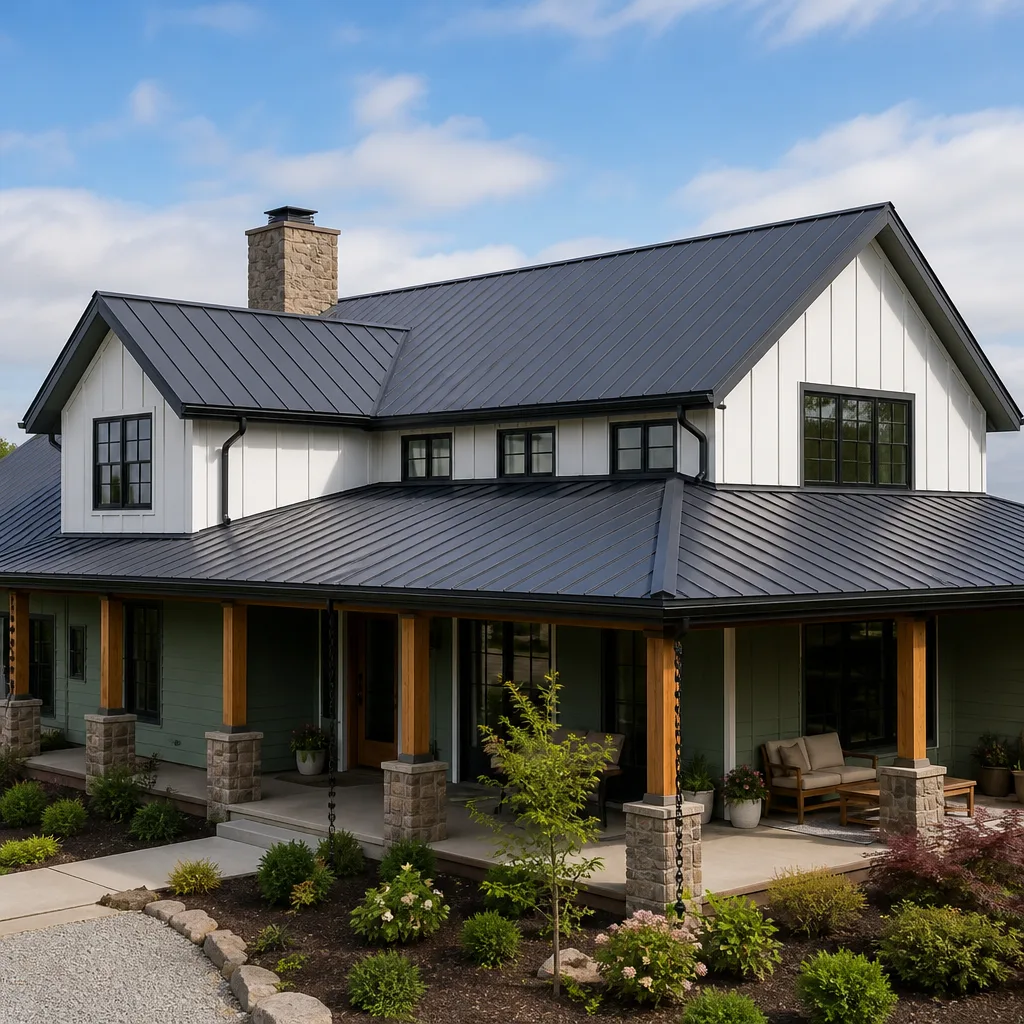
 Metal roofing
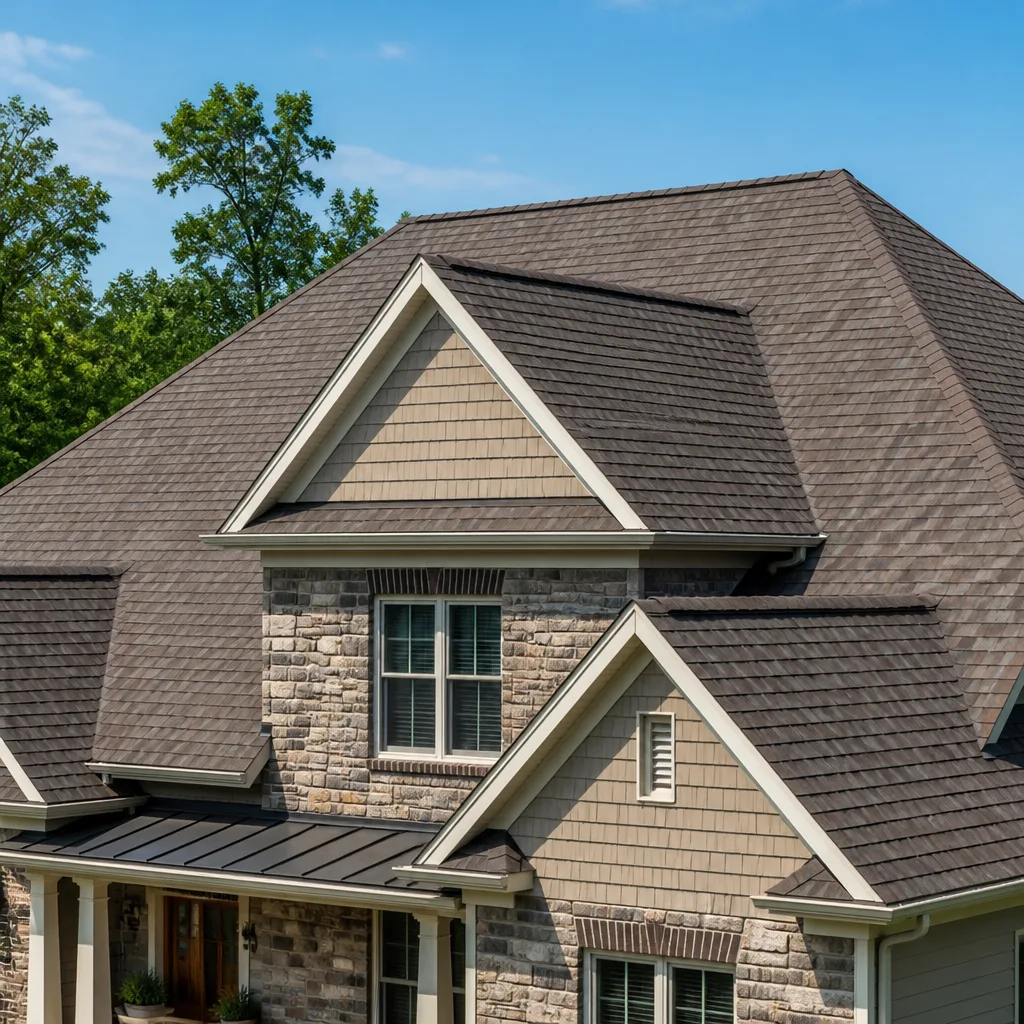 Architectural shingles
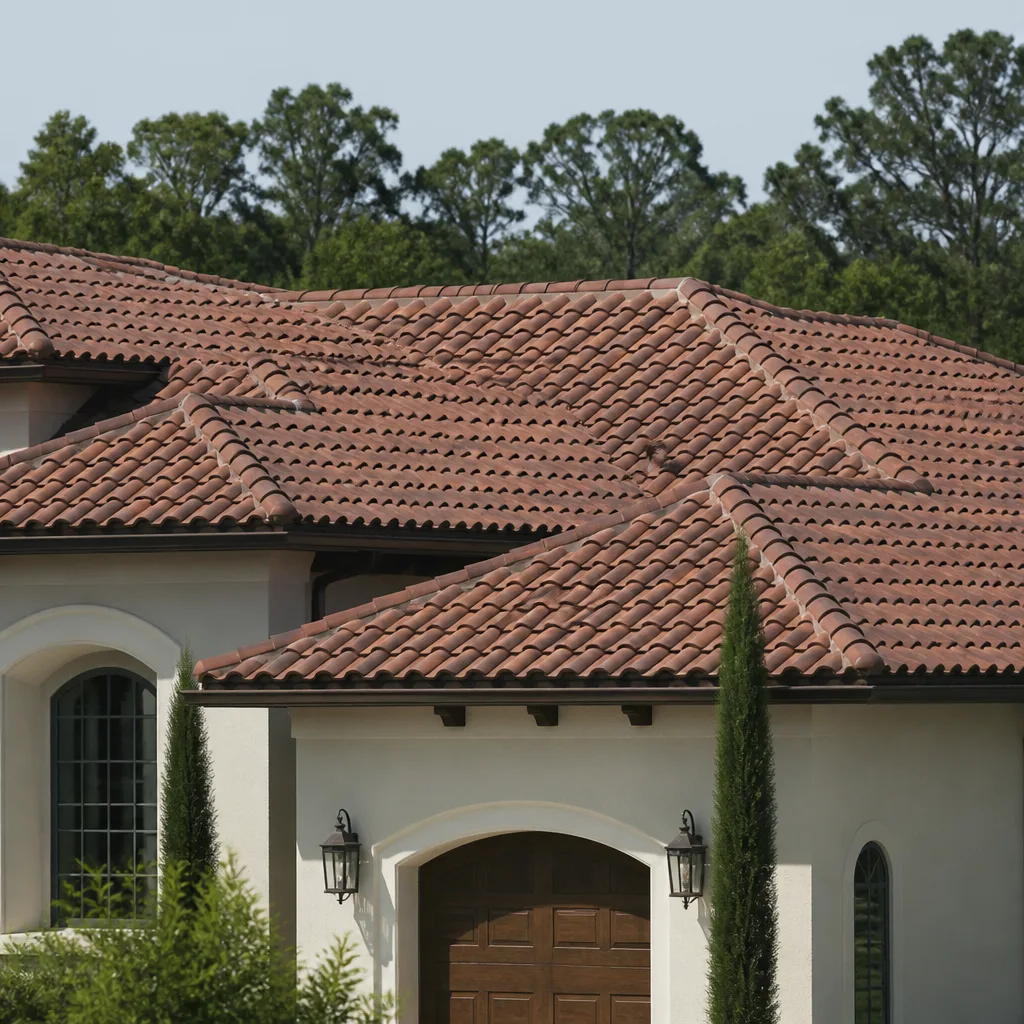 Tile roofing
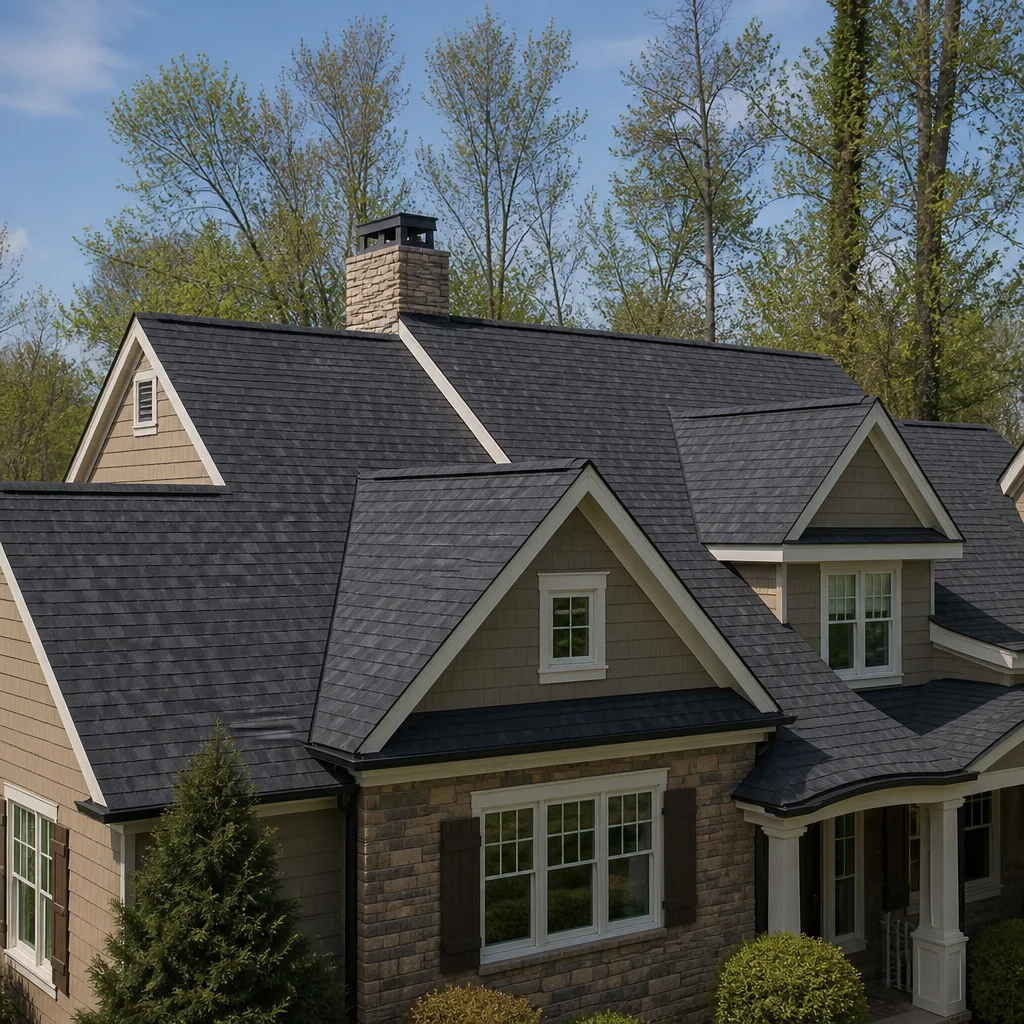 GAF
GAF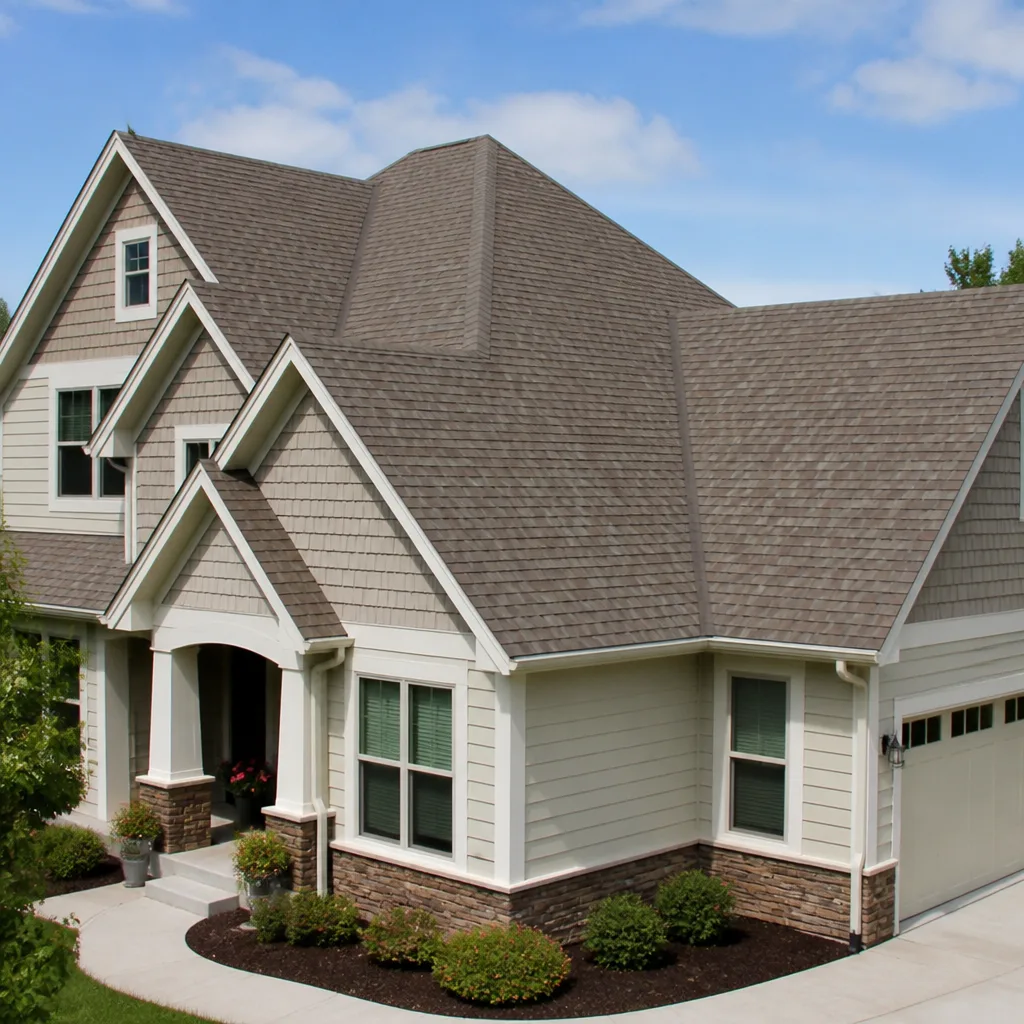 Owens Corning
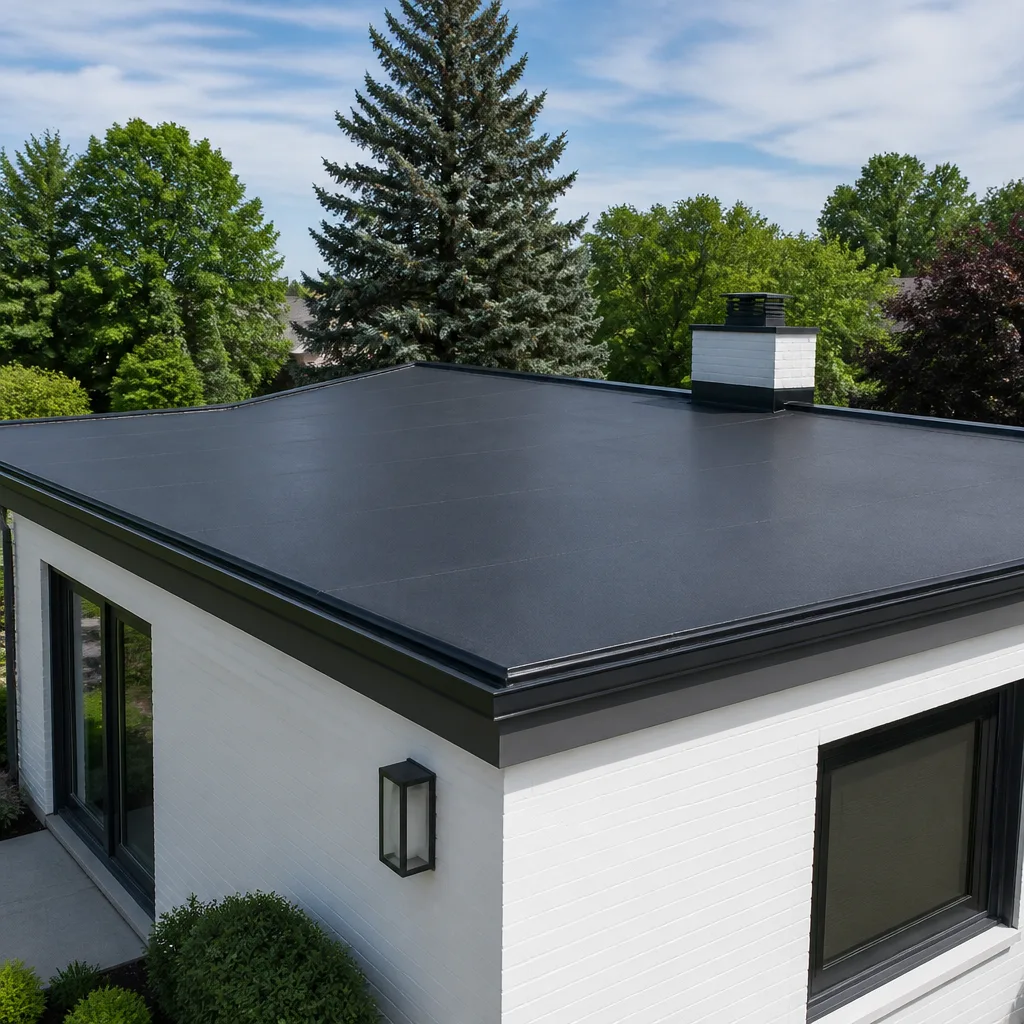 Flat & low-slope
Free roof inspection with deck photos before we talk money - GAF and Owens Corning certified installation
CertainTeed Ridge Vent Installation: The Santa Clarita Owner’s Guide
CertainTeed ridge vent installation in Santa Clarita typically runs $850 to $1,600 installed on a standard single-story home, and we stock CertainTeed-compatible ridge vent material on our trucks for same-visit replacement. Most homeowners discover the problem after a hot Santa Clarita summer: they notice granules in the gutters, a musty smell in the attic, or shingles lifting at the ridge line and realize the vent that should be exhausting heat and moisture has stopped doing its job. When a ridge vent fails, your attic turns into an oven in August and a condensation trap in January, which shortens the life of everything under that roof deck.
Which CertainTeed Models This Applies To
The CertainTeed ridge vent line breaks down into a few distinct products, and matching the right one matters more than most people expect. The ShingleVent II is the most common one we see on Santa Clarita homes built in the last 15 years: it’s a rigid, shingle-over vent with a 12-inch profile and an external baffle system designed to deflect wind-driven rain. The older ShingleVent I and the Minnesota series are narrower at 9 to 10 inches and use a different internal baffle pattern, so a straight swap isn’t always possible without adjusting the cut line in your roof deck. CertainTeed also makes the Air Vent line under their corporate umbrella, which includes roll-form ridge vents that install differently and don’t always perform as well in the dry Santa Clarita wind conditions.
Here’s the compatibility gotcha we run into constantly: CertainTeed warranties the vent system as part of a roof when the vent’s airflow rating matches the intake ventilation. If your home has undersized soffit or eave vents, slapping a bigger ridge vent on top actually creates negative pressure that pulls conditioned air from inside the house. In Stevenson Ranch and Valencia neighborhoods with vaulted ceilings and limited eave space, we regularly see this mismatch. We measure first, then recommend.
When we talk OEM versus aftermarket for ridge vents, our position is simple: the OEM CertainTeed baffle material is denser than most aftermarket knockoffs, which matters in Santa Clarita because our afternoon wind gusts off the mountains are harsh on external vent baffles. Aftermarket roll-form vents tend to blow out or crack within 5 years here. We’ll install either, but we’ll tell you honestly which one makes sense for your roof.
Styles & brands we work with
Signs Your CertainTeed Ridge Vent Installation Is Failing
- Heat spikes in the attic in summer. If your attic hits 130°F or higher by 2 p.m. in July, the ridge vent isn’t moving air. A working ridge vent with proper intake should keep attic temps within 10 to 15 degrees of outside air. This is the number-one sign we hear about from owners in Castaic and Saugus.
- Shingles curling at the ridge or lifting away from the vent. The adhesive that bonds shingles over the vent profile breaks down from heat cycling, and the shingles start to peel. This lets wind get under the vent flange and pull the whole assembly loose.
- Granule piles in the gutters directly below the ridge line. That’s ridge cap shingle granule loss. The ridge is the first area of a roof to break down because it takes direct sun on both faces plus the thermal load from the vent itself.
- Rust or corrosion on exposed nail heads along the vent run. The fasteners that hold the vent in place are exposed to Santa Clarita’s dry then wet winter cycles, and once they corrode the vent loosens. Loose vents flap in the wind and crack.
- Daylight visible from inside the attic along the ridge line. If you can see light where the vent meets the roof deck, the flange seal has failed and water is getting in during rain. This is the one that leads to drywall stains on the ceiling below.
See the difference
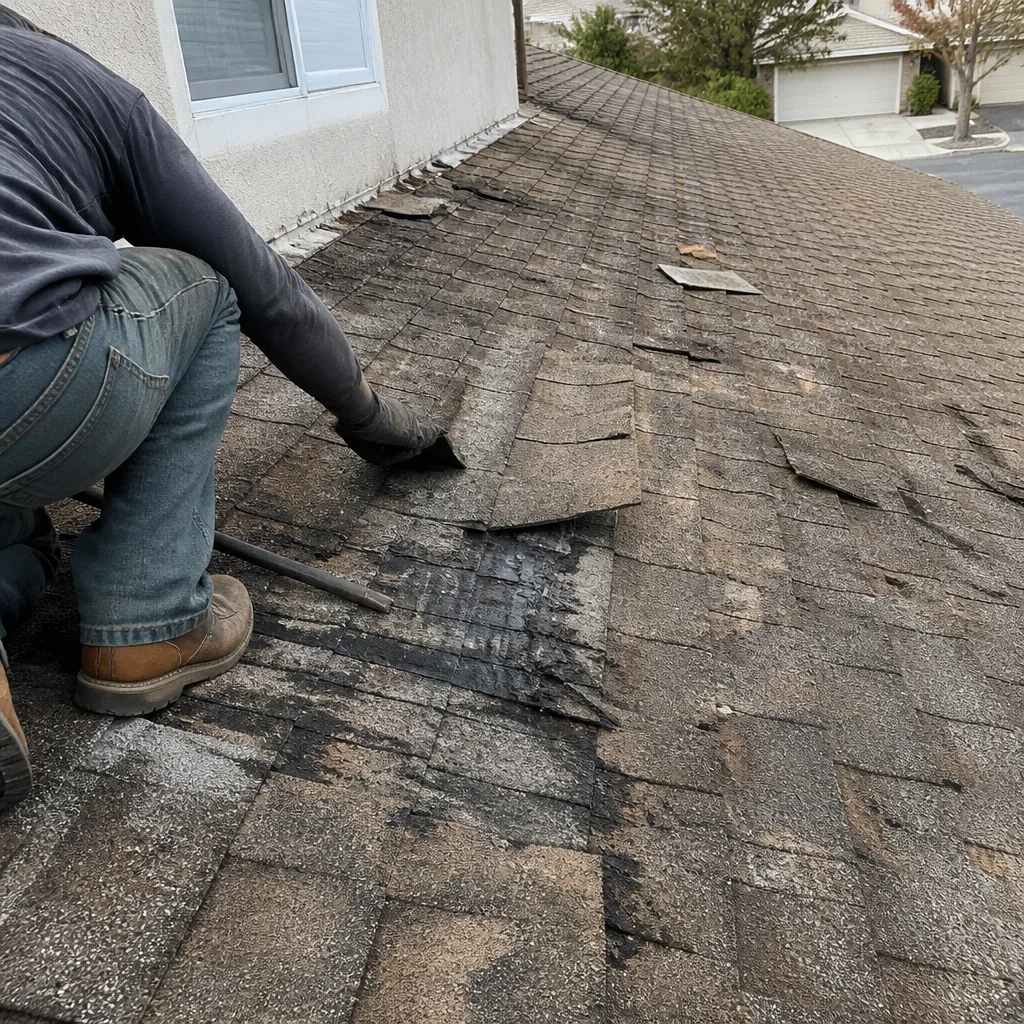 Before
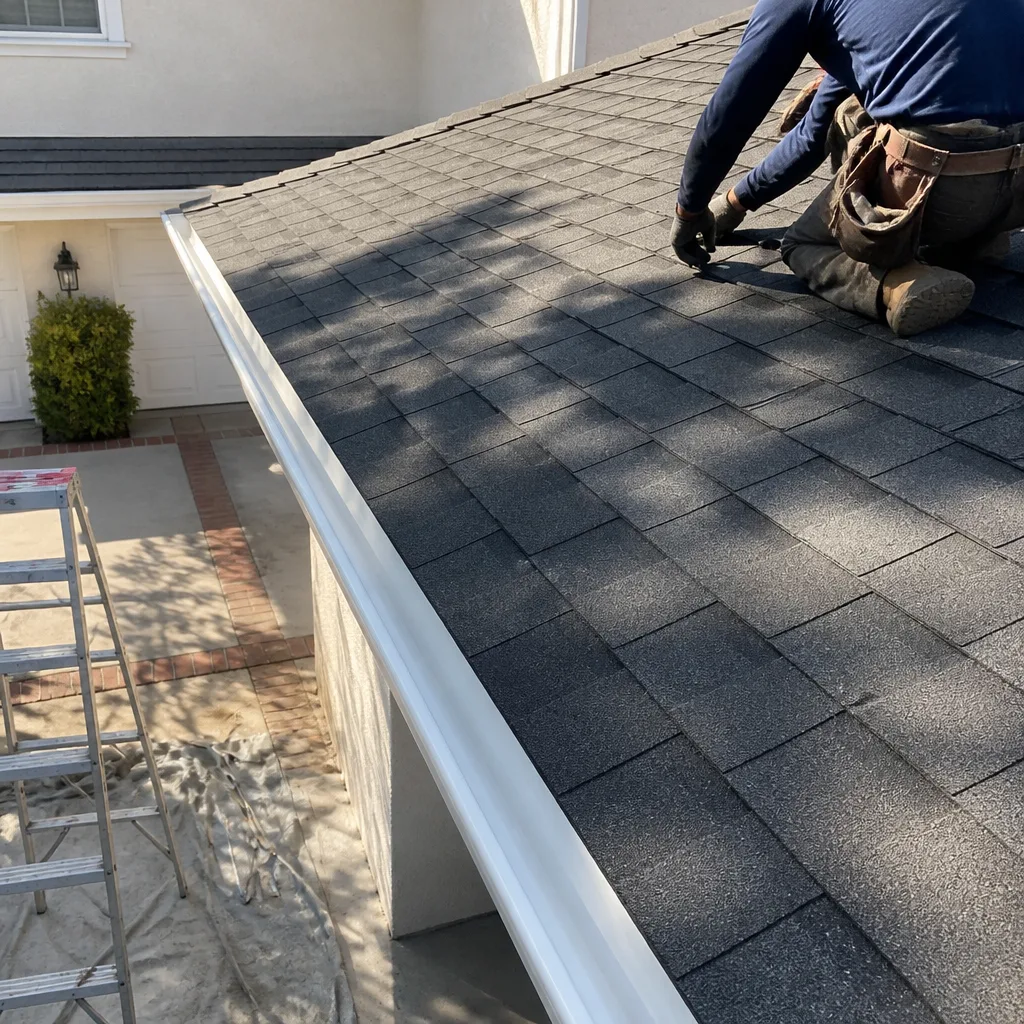 After
After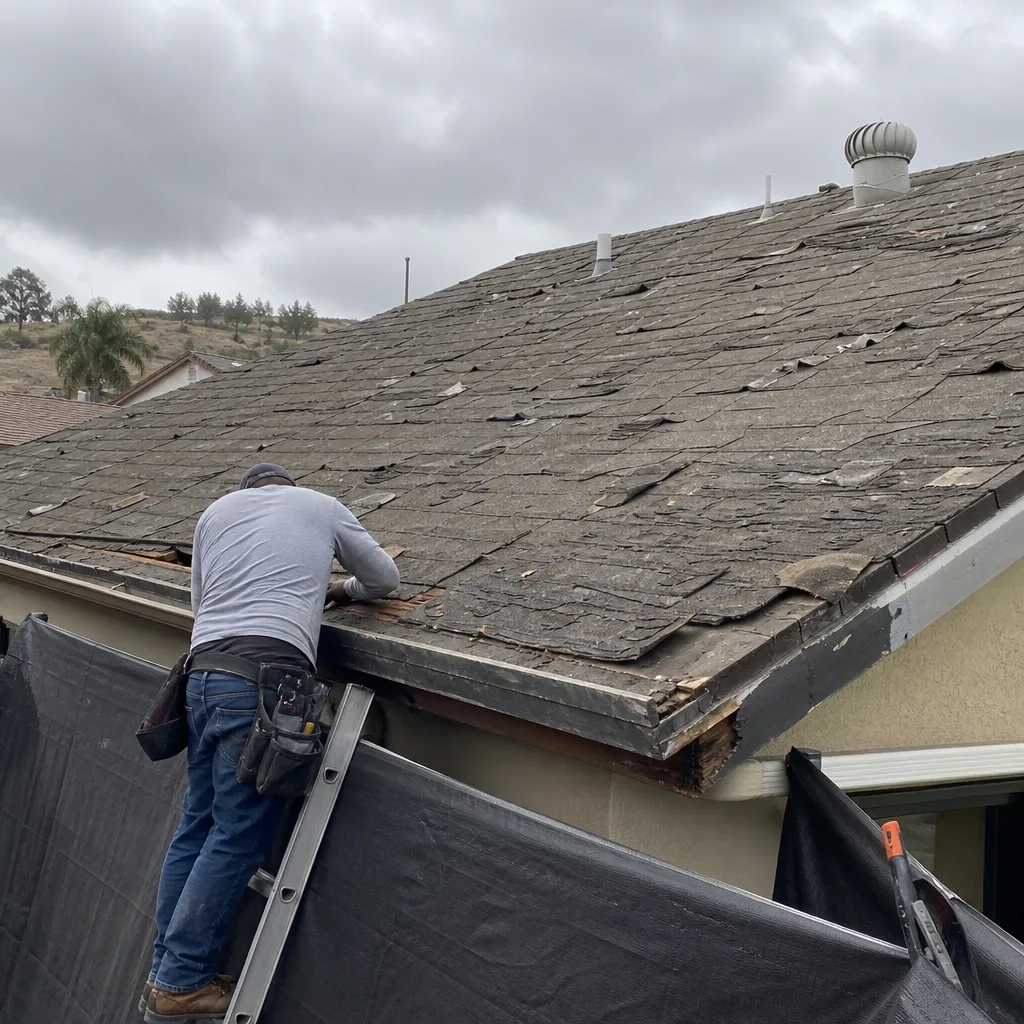 Before
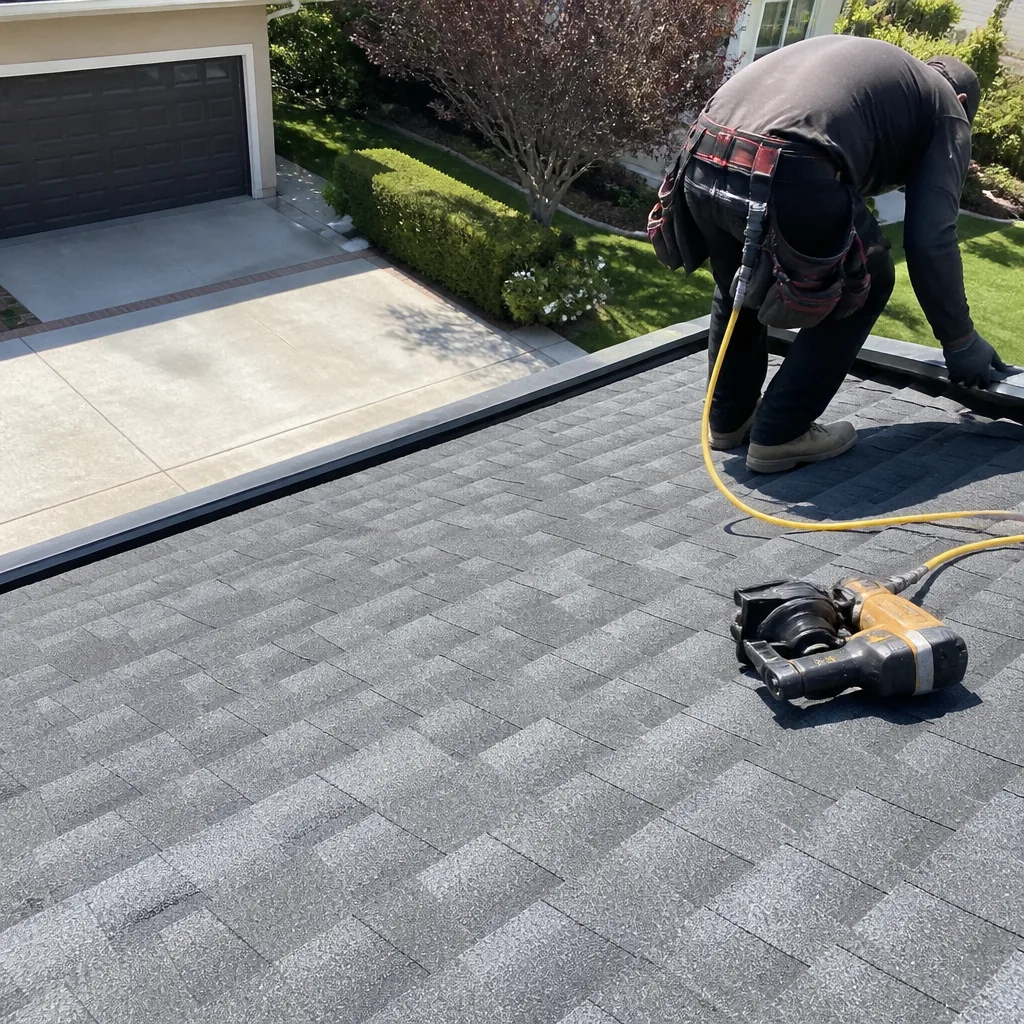 After
After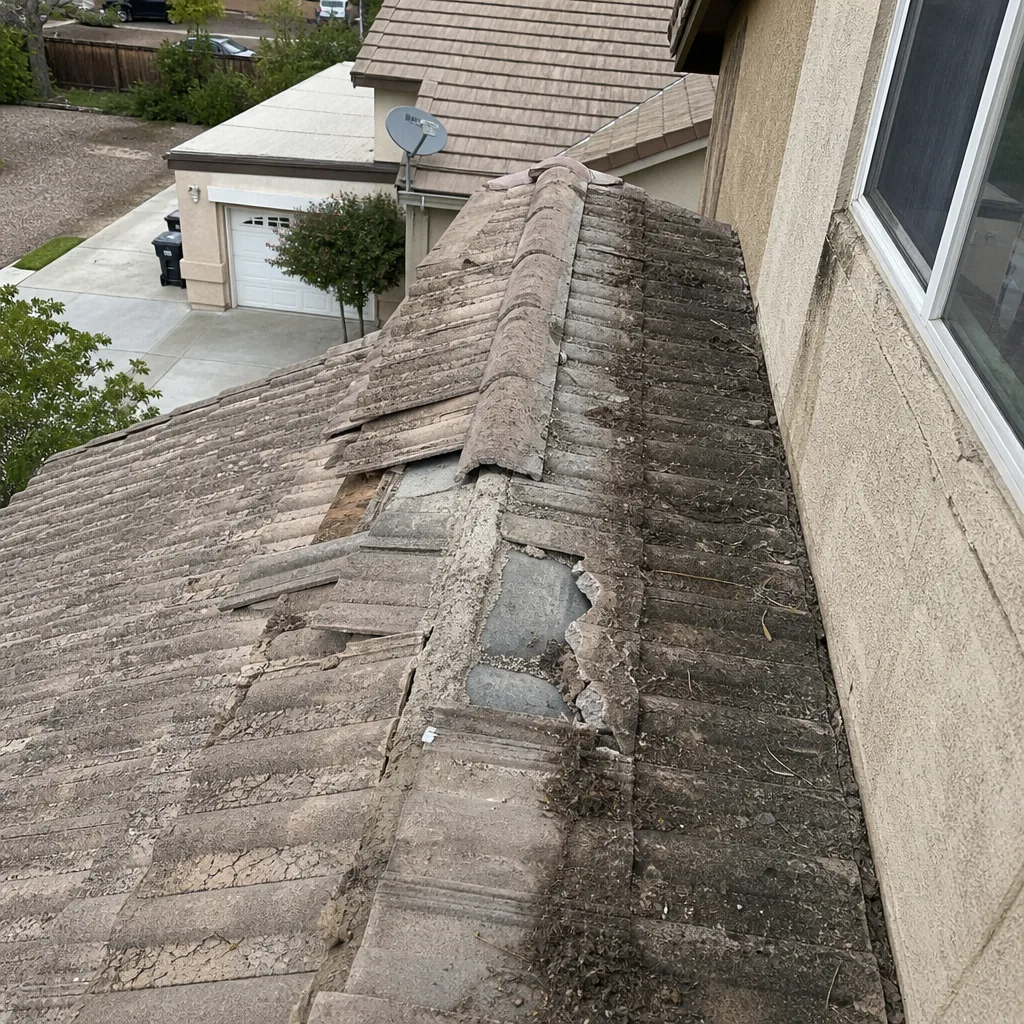 Before
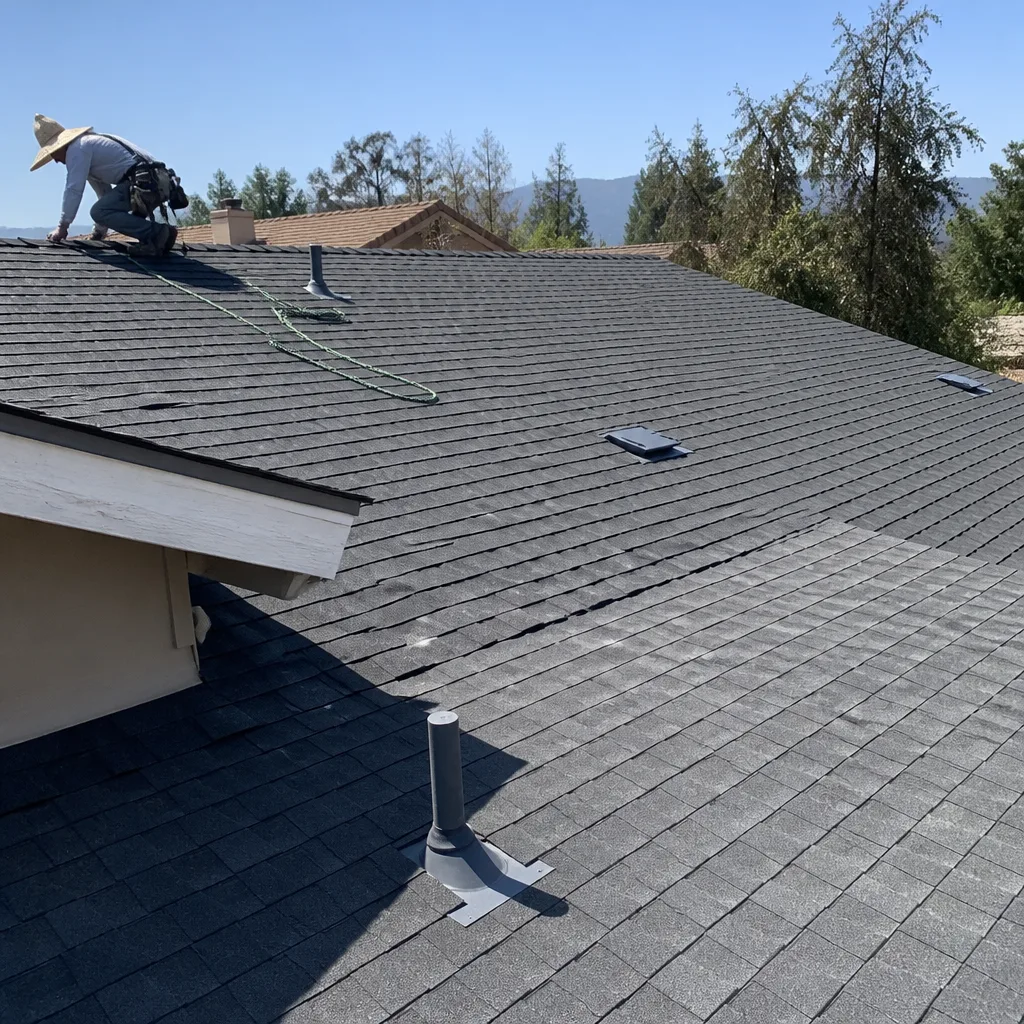 After
AfterReplacement Cost & What’s Included
For a standard single-story home in Santa Clarita, replacement of a failing CertainTeed ridge vent installation runs $850 to $1,600, with the material portion running $350 to $600 depending on whether we’re matching ShingleVent II or switching you to a rigid roll-form alternative. Two-story homes or roofs with steep pitches (common in Canyon Country and Sand Canyon) add $200 to $500 for safety equipment, longer ladder work, and extra labor. Here’s the breakdown we hand every homeowner in writing before work starts:
- Existing vent removal and haul-away: $150 – $250
- New CertainTeed-compatible ridge vent material: $350 – $600
- Ridge cap shingles and fasteners: $100 – $200
- Labor (2 – 4 hours): $250 – $550
That number on your written estimate is the number on the invoice. No change orders for “hidden damage” when we’ve already told you what we found. And every ridge vent replacement carries the 365-Day Done Right Promise: if the vent fails within a year, we come back and fix it at no charge, including a free second visit if the repair doesn’t hold the first time. That’s in writing, on every job.
DIY or Call Us?
The honest answer from Dylan Pace, who’s been on roofs across Santa Clarita for years: replacing a ridge vent means working at the highest point of your roof, on a slope, with a running nail line, and one misstep at the ridge is a fall to the ground. That’s not a scare tactic, it’s the reason our technicians are background-checked, uniformed, and trained on fall protection before they ever set foot on a Santa Clarita roof. What you can safely do yourself is identify the problem: check the attic temp, look for daylight at the ridge, snap photos of the vent from the ground with a zoom lens, and call us with what you see. That prep work helps us give you an accurate estimate faster.
If your CertainTeed ridge vent looks loose, is missing sections, or the shingles over it are peeling, call (661) 219-7793 and we’ll walk through what you’re seeing. A live person answers, day or night.
FAQs
A properly installed CertainTeed ShingleVent II should last 15 to 20 years in Santa Clarita’s climate, but the shingles over it typically fail first at the 12 to 15 year mark because ridge caps take double the sun exposure. If your vent is older than 15 years and showing any of the warning signs above, it’s time to replace.
Most of the time, no. The vent’s flange and baffles are a single molded unit, so a crack or blown-out baffle means section replacement, not a patch. We’ll reuse your existing vent if it’s still structurally sound and the problem is just loose fasteners or lifted shingles, and we’ll tell you that honestly. Call (661) 219-7793 and describe what you see; we’ll tell you if a repair will hold.
Most single-story ridge vent replacements in Santa Clarita take 2 to 4 hours from setup to cleanup. We remove the old vent, inspect the cut line in the decking, install the new vent with proper fasteners, set new ridge cap shingles, and take before-and-after photos so you can see exactly what we did.
We stock CertainTeed ShingleVent II and compatible rigid roll-form ridge vent on our trucks, along with ridge cap shingles that match the major brands we install: GAF, CertainTeed, Owens Corning, and more. If we need a specific CertainTeed SKU we don’t carry daily, we can have it at your home within 2 to 3 business days.
If you’re seeing signs of a failing ridge vent on your Santa Clarita home, or you just want an honest assessment of what’s going on up there, call us at (661) 219-7793 for a free estimate. You’ll get a written price before any work starts, and the number on that estimate is the number on the invoice. Every estimate we hand you is one we’d be comfortable signing twice.
Written by Dylan Pace, Owner, Crestview Roofing Co Santa Clarita at Crestview Roofing Co Santa Clarita, serving Santa Clarita and nearby areas.