
Last updated October 17, 2026
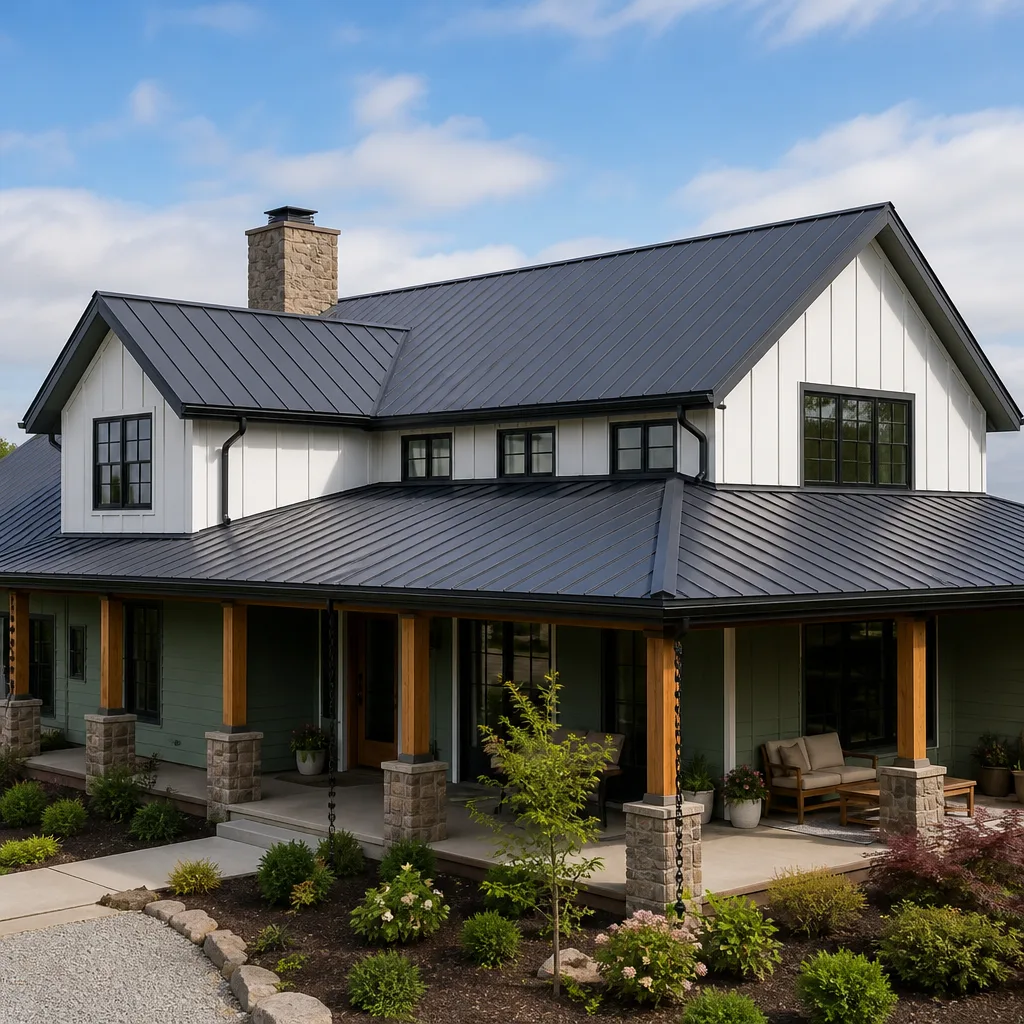 Metal roofing
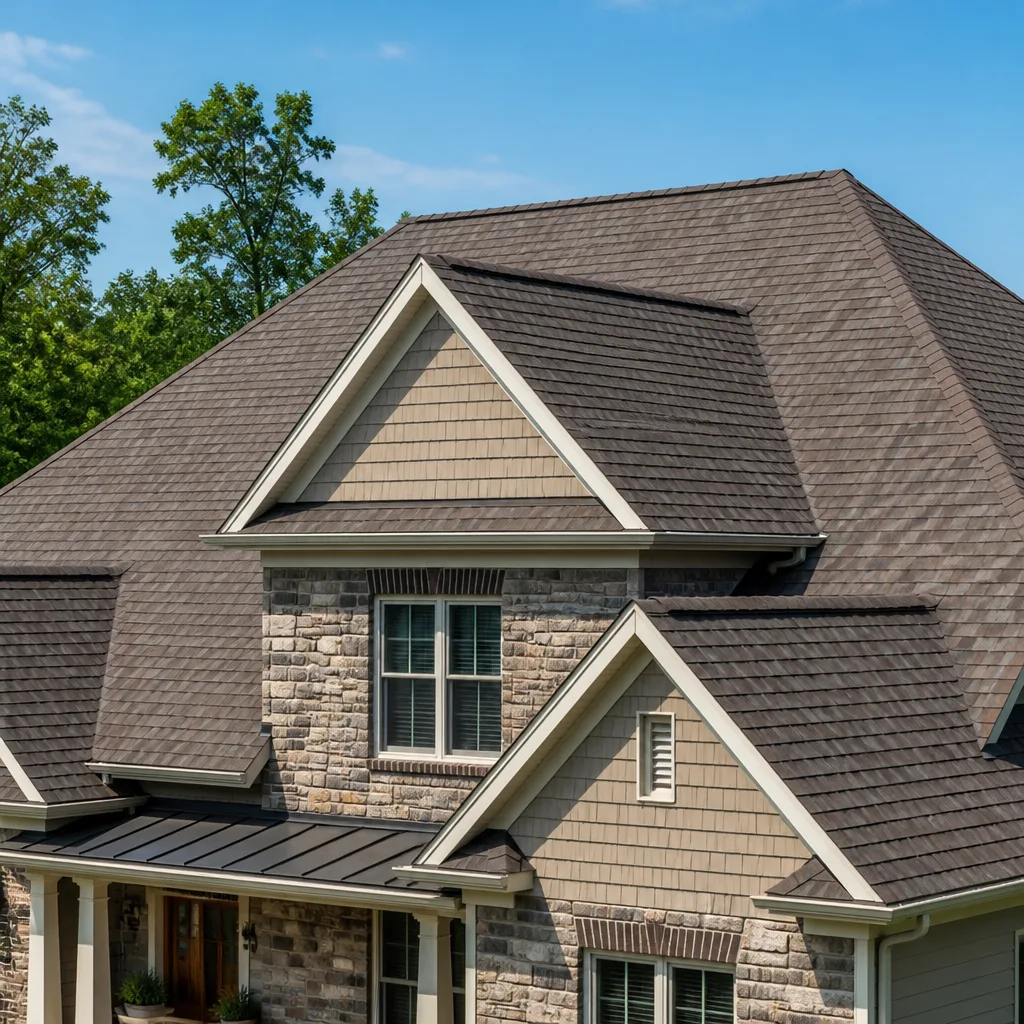 Architectural shingles
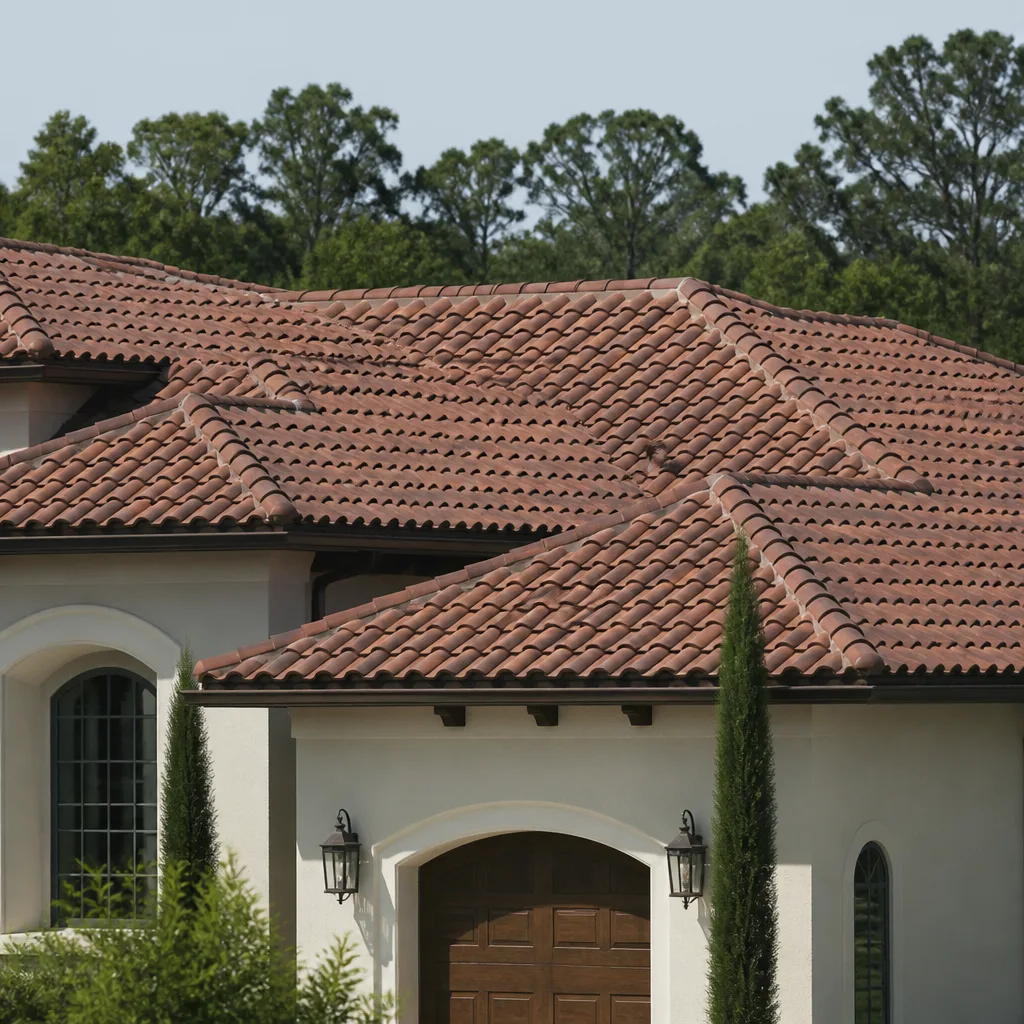 Tile roofing
 GAF
GAF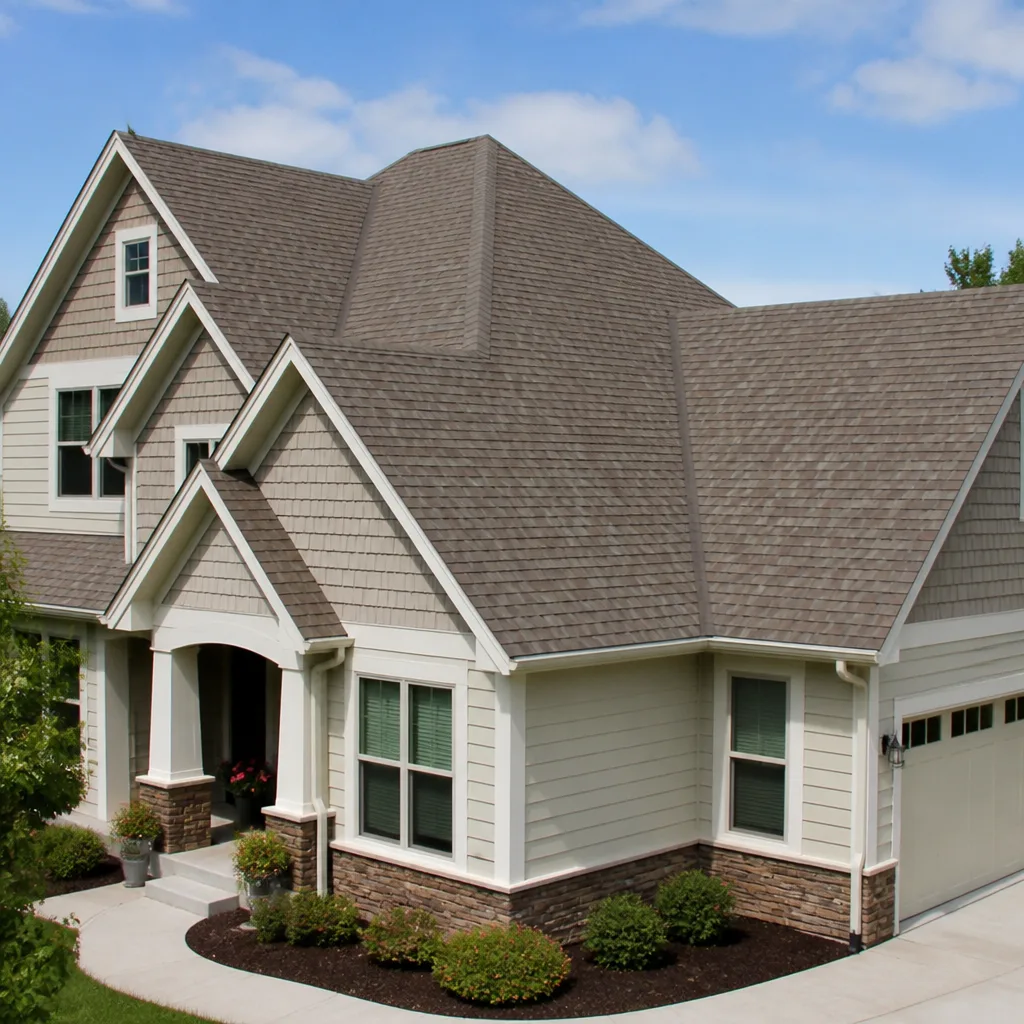 Owens Corning
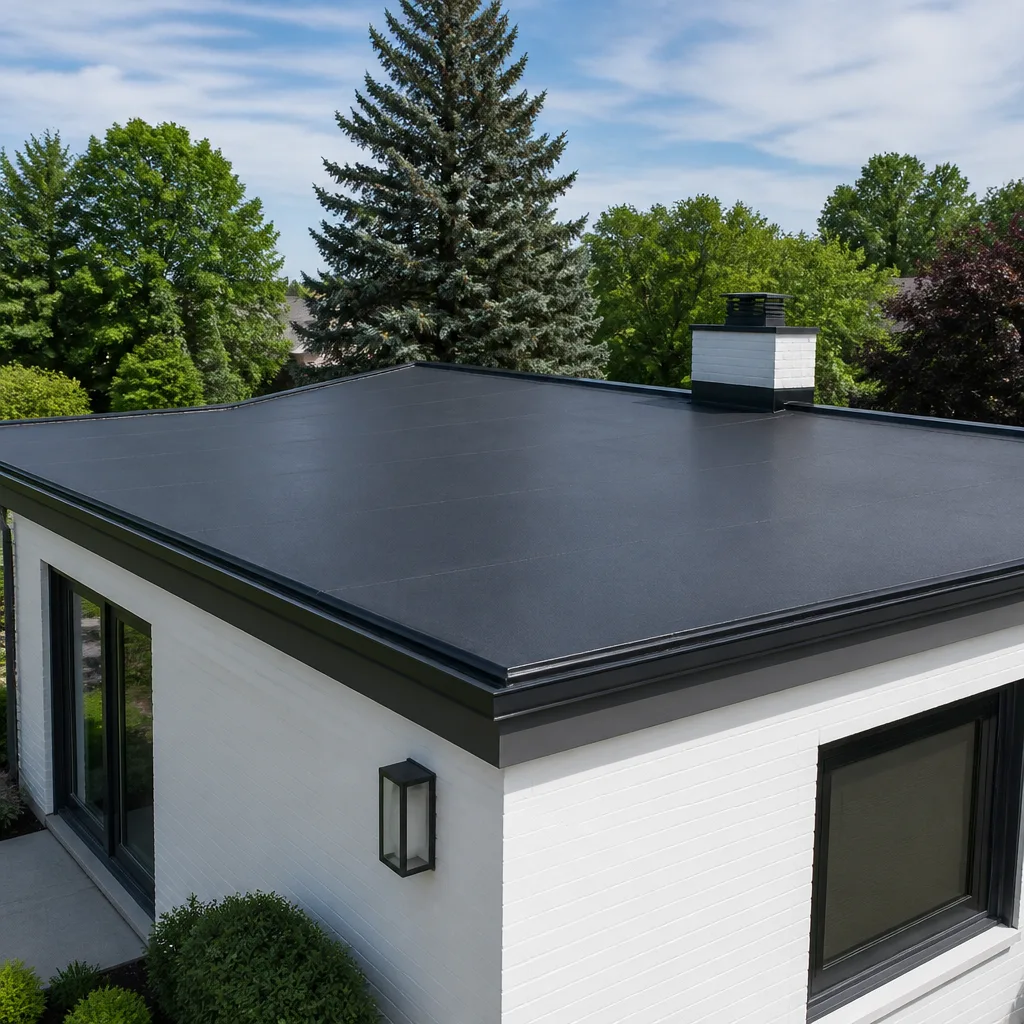 Flat & low-slope
Free roof inspection with deck photos before we talk money - GAF and Owens Corning certified installation
DIY vs Professional Roofing: The Santa Clarita Homeowner’s Decision Guide
Most roofing advice online treats “DIY vs. professional” as a simple math problem: materials cost X, a contractor charges Y, so doing it yourself saves Y minus X. That equation falls apart in Santa Clarita, where a city sits inside designated Very High Fire Hazard Severity Zones and the County enforces California’s strictest building codes. Before you rent a ladder, you need to understand what a permit actually protects, what your insurance policy quietly requires, and why a $40 bundle of shingles from a big-box store isn’t the same product a licensed roofer installs. This guide walks through the real economics and legal exposure of every type of roofing work, from gutter maintenance to full tear-off replacements, so you can make the call with your eyes open.
Styles & brands we work with
Quick Answer
For most Santa Clarita homeowners, professional roofing is the financially rational choice once you account for permit compliance, warranty requirements, and fire-zone insurance liability. DIY is reasonable for gutter clearing, visual inspections, and minor flashing sealant touch-ups, but any work that touches the roof deck, underlayment, or shingle system in a California WUI zone creates real legal and insurance exposure. The break-even point where DIY stops making sense arrives much sooner than most people expect.
Table of Contents
- Where DIY Actually Works
- The Permit Question Nobody Asks Until It’s Too Late
- WUI Zones and Insurance: What Your Policy Doesn’t Advertise
- Manufacturer Warranties: The Fine Print That Voids Itself
- The Real Cost of DIY Roofing in Santa Clarita
- When Professional Isn’t Optional: Three Structural Red Flags
- How to Hire a Santa Clarita Roofer You Can Actually Trust
- Common Mistakes to Avoid
- When to Call a Professional
- Frequently Asked Questions
- The Bottom Line
Where DIY Actually Works
Let’s be honest about what a confident homeowner can do safely without creating code, warranty, or insurance problems. The line is drawn at anything that changes the roof’s water-shedding system or fire rating. Routine maintenance on top of the finished roof surface is fine. Modifying the system beneath it is not.
Here’s what stays comfortably in the DIY lane:
- Gutter clearing and downspout flushing: Santa Clarita’s oak trees and wind patterns dump an impressive amount of debris into gutters between November and March. Clean gutters prevent water from backing up under the eaves. This requires no permit, no warranty impact, and no structural modification.
- Visual inspections from a ladder: Checking for lifted shingles, cracked tiles, rusted flashing, or granule buildup in gutters after Santa Clarita’s gusty fall days helps you catch problems before a rainy season turns them into leaks. You’re looking, not touching.
- Minor flashing sealant touch-up: A small bead of roof-safe sealant around a pipe boot or a chimney corner where you can reach it from a ladder, without walking on the roof surface, is manageable. If you have to step onto the roof plane to reach it, call a professional.
- Clearing debris off the roof surface: After a windstorm, removing branches and leaf accumulation from valleys and behind chimneys prevents trapped moisture. Use a roof rake or leaf blower from a ladder; walking on a steep Santa Clarita tile roof is how people end up injured.
Here’s the boundary line. Any task that involves lifting, replacing, or resealing shingles, tiles, vent boots, or underlayment crosses into professional territory, not because a homeowner can’t physically do it, but because the consequences of a small error compound into a roof leak that costs thousands to fix properly. In our experience across Santa Clarita neighborhoods like Valencia, Saugus, and Canyon Country, the most expensive roof repairs we’ve done started as well-intentioned weekend projects.
The Permit Question Nobody Asks Until It’s Too Late
California Building Code requires a permit for roof replacements and for repairs that involve replacing the roof deck, replacing underlayment, or changing the roof’s fire rating. That’s not a technicality. The City of Santa Clarita’s Building and Safety Division enforces this, and the reason matters more than most homeowners realize.
A permit creates a public record that the work was done, who did it, and whether it passed inspection. That record is what your insurance company wants to see if you ever file a claim involving the roof. It’s also what protects you when you eventually sell the home. A buyer’s inspector will flag an unpermitted roof replacement, and that becomes a negotiation point that costs you far more than the permit fee ever would.
Here’s what a permit actually gives you in Santa Clarita:
- Inspection verification: A city inspector verifies the underlayment, flashing, and fire-rated assembly meet California’s current Title 24 energy and fire codes before the final layer goes on. DIY roofers can’t get this inspection without pulling the permit, and they often don’t know it’s required.
- Insurance claim legitimacy: When a fire or storm damages your roof, the insurer will ask for the permit history. An unpermitted DIY roof is a reason to deny coverage, reduce payout, or drop the policy entirely.
- Disclosure protection: California real estate disclosure laws require you to disclose any unpermitted work when you sell. If the buyer discovers an unpermitted roof after closing, you can be held liable for retroactive permits, penalties, and sometimes the cost of a full re-roof.
The permit fee itself is modest, usually a few hundred dollars depending on the scope. The expensive part of an unpermitted roof is what happens later. We’ve walked into homes across Santa Clarita where a previous owner did a quiet DIY patch, the new buyer’s insurance company flagged it in the inspection report, and the entire roofing system had to be brought up to current code before the policy would be written.
WUI Zones and Insurance: What Your Policy Doesn’t Advertise
Santa Clarita sits almost entirely within California’s designated Wildland-Urban Interface, or WUI. The city’s own Fire Hazard Severity Zone maps classify large portions of Saugus, Newhall, Canyon Country, and the hillsides around Valencia as Very High Fire Hazard Severity Zones. This isn’t abstract zoning language. It’s the reason your homeowner’s insurance premium is what it is, and it’s the reason your policy contains language about “maintained fire-rated roofing assemblies.”
Here’s how that plays out in the real world. A homeowner in a Santa Clarita WUI zone decides to replace a few damaged shingles themselves. They grab a bundle of three-tab shingles from a local supply yard, nail them over the old underlayment, and call it done. What they’ve actually done is modify a fire-rated assembly without verifying that the replacement materials meet the Class A fire rating the original roof was approved for. If a wildfire approaches, or even if an ember lands on that section and starts a roof fire, the insurance adjuster will examine the work. Unpermitted, unverified material changes in a designated Very High Fire Hazard Severity Zone are a valid basis to deny the fire claim.
Insurers don’t need to prove your DIY patch caused the fire. They need to prove the policyholder materially changed the insured property without maintaining its approved condition. An unpermitted roof repair in a WUI zone does exactly that.
Beyond fire specifically, a roof leak that results from a DIY repair is generally excluded from coverage under standard homeowners policies if the insurer determines the damage was caused by improper workmanship. Insurance covers sudden, accidental damage, not damage that results from a homeowner’s unlicensed modification to the home’s most critical weather barrier.
The practical upshot for a Santa Clarita homeowner: if you touch the roofing system in a WUI-adjacent zone, you want a licensed contractor who pulls permits and installs manufacturer-approved, Fire Marshal-approved materials. That’s the paper trail that protects your claim.
Manufacturer Warranties: The Fine Print That Voids Itself
Every major shingle manufacturer, including GAF, CertainTeed, Owens Corning, and Boral, includes a warranty clause that requires licensed installation. The exact language varies, but the pattern is consistent: the warranty covers manufacturing defects, not installation workmanship, and it only applies when the product is installed according to the manufacturer’s published specifications by a qualified installer.
A homeowner who buys GAF Timberline shingles at retail and nails them onto their own roof has a stack of materials with effectively no manufacturer warranty. GAF’s standard limited warranty states coverage applies when the shingles are installed correctly on a properly prepared roof deck. “Correctly” is defined by GAF’s installation manual, and their warranty department reserves the right to inspect the installation before approving a claim. A homeowner-installed roof rarely survives that inspection.
This matters in dollars. A full roof replacement in Santa Clarita on a 2,000-square-foot home runs between $18,000 and $35,000 depending on material choice-see our Roofing Cost Breakdown: The Santa Clarita Homeowner’s Reference for 2026 for detailed line items. The manufacturer’s warranty is the mechanism that protects that investment if the shingles themselves fail. When a licensed contractor installs it, you get the full warranty term, often 30, 50, or lifetime depending on the product line. When a homeowner installs it, that warranty is effectively nonexistent the day the last nail goes in.
CertainTeed’s Integrity Roof System takes this further: certain warranty levels require installation by a CertainTeed-accredited contractor and include coverage for labor, not just materials. Boral tile warranties require installation by a trained tile installer. Owens Corning’s extended warranty programs require the contractor to be Owens Corning Roofing Platinum Preferred. In every case, the warranty structure assumes a professional installation by a contractor who has completed the manufacturer’s training program.
The DIY path forfeits all of this. You pay full retail price for materials that would have come with a multi-decade warranty, and you receive no warranty protection whatsoever. It’s the equivalent of buying a new car and immediately signing away the factory powertrain coverage.
The Real Cost of DIY Roofing in Santa Clarita
The honest math of a DIY roof repair starts with the assumption that you’re saving the labor cost. Most roofing labor in Santa Clarita runs between $60 and $100 per hour per crew member, and a repair crew handles work in hours that would take a weekend homeowner two full days. But the labor differential isn’t the whole picture.
Here’s what gets left out of the back-of-the-envelope calculation:
- Material markup without contractor discounts: Licensed roofing contractors buy shingles, underlayment, and flashing at wholesale pricing that’s typically 20 to 40 percent below what a homeowner pays at a retail supply counter. That discount alone wipes out a significant portion of the assumed labor savings.
- Equipment rental and tools: A proper roofing job requires a roofing nailer, coil nails with correct ring shank specs, a compressor, a hook blade knife, and for tile work a specialized tile cutter. Renting or buying the right tools for a one-time job adds $200 to $600.
- Disposal costs: A tear-off generates hundreds of pounds of old shingles and underlayment. A debris box rental in Santa Clarita runs $300 to $500. Contractors build this into their quoted price at their negotiated disposal rates.
- Time cost on an SCV summer roof: Santa Clarita summer temperatures routinely exceed 95 degrees in July and August, with roof surface temperatures hitting 150 degrees or higher. A two-day DIY roof project in those conditions is physically dangerous and realistically takes three to four days with breaks and hydration. A professional crew working early mornings finishes the same scope in a single day.
- The cost of errors: A single improperly nailed shingle or a missed flashing detail becomes a leak. That leak causes decking rot, insulation damage, and mold. The repair costs more than the original job would have. In our experience, that’s not the exception; it’s closer to the rule for complex repairs attempted without professional training.
Add it up honestly. A simple ridge cap replacement that might cost $450 to $650 as a professional repair in Santa Clarita could cost a homeowner $250 in retail materials, $150 in tool rental, and two days of weekend labor in the heat, with a realistic chance of doing it slightly wrong and creating a $2,000 leak. The DIY “savings” of $50 to $100 doesn’t survive contact with reality.
When Professional Isn’t Optional: Three Structural Red Flags
There are conditions found on Santa Clarita roofs that unequivocally require professional intervention. These aren’t judgment calls; they’re structural conditions where DIY work creates more liability than it saves money, and in some cases creates danger the moment you put a foot on the roof.
1. Decking Rot or Deterioration
The roof deck is the plywood or OSB layer beneath your shingles and underlayment. When a leak has persisted, that wood softens. Walking on a roof with a rotten deck is genuinely dangerous; the surface can give way. In Santa Clarita homes built during the 1980s and 1990s construction boom, sections of decking around valleys, chimneys, and pipe penetrations are particularly vulnerable because those are the most common leak points. A professional roofer identifies decking rot by walking the roof carefully and sounding it out before performing a repair. A homeowner stepping onto a soft deck risks falling through, and even if they don’t, a DIY patch over rotten wood just hides the problem behind new material.
2. Truss or Rafter Damage
A sagging ridge line, visible deflection in the roof plane, or cracked rafters in the attic indicate structural framing problems. This isn’t roofing work anymore, it’s structural engineering. In Santa Clarita, where seismic codes govern everything, a compromised truss system needs to be assessed by a licensed contractor who understands load paths and can pull the right permits. A homeowner shoring up a cracked rafter with a sistered 2×4 from Home Depot hasn’t fixed anything; they’ve created a non-engineered modification that will surface on the next home inspection.
3. Active Leaks With Visible Mold
When water has been entering a home long enough to produce visible mold on ceilings, walls, or attic surfaces, the scope of work extends beyond roofing into remediation. California law regulates mold remediation work in certain contexts, and the underlying water intrusion must be fully resolved before remediation can succeed. A DIY patch on the leak without addressing the mold and the damaged insulation produces a home that continues to hold moisture, continues to grow mold, and becomes a disclosure liability at sale.
Each of these conditions is common enough in Santa Clarita homes that we regularly see them during Roof Repair in Santa Clarita estimates. The pattern is always the same: a small leak was ignored or patched by a previous owner, and by the time we’re called the structural damage has spread.
How to Hire a Santa Clarita Roofer You Can Actually Trust
When you move past the DIY question and decide to hire a professional, the second decision is who. Santa Clarita has a crowded roofing market, and not every contractor operates with the same level of transparency. For a detailed walkthrough, read our How to Hire a Roofing Contractor in Santa Clarita: A Step-by-Step Guide.
- Demand a written price before any work starts. This is non-negotiable. The written quote should itemize materials, labor, permit fees, and disposal. If a roofer won’t put the number in writing before the crew shows up, that’s a red flag. Our company operates on a written-price-before-any-work model, every job, no exceptions.
- Verify the license. California requires roofing contractors to hold a C-39 roofing license through the Contractors State License Board. Look it up on the CSLB website. Check for any citations or license suspensions.
- Ask who is coming to your house. A roofer that can’t tell you who will show up, or sends a different crew every time, isn’t running a transparent operation. Background-checked, uniformed technicians are standard for the good operators in this market.
- Get the warranty in writing. Every repair should come with a written workmanship warranty. The manufacturer covers the materials; the contractor should cover the labor. We put a 365-day warranty on every repair, in writing, included at no extra cost. If it fails within the year, we come back and fix it, no charge, no negotiation.
- Ask about verification. A professional roofer should provide photo documentation before and after the work. You hired someone to fix something you cannot easily see from the ground; the photos are your confirmation the job was done correctly. We’re part of the Relay Home Co. family, and we’ve built our process around the Relay Visibility Guarantee: written prices before work, live trackable arrival times, before-and-after photos, and digital invoices sent by text.
- Match the contractor to the material. If you’re installing a Boral tile roof, you want a contractor with Boral installation training. If it’s a GAF or Owens Corning system, you want someone who can register the warranty properly. We install and repair with materials from GAF, CertainTeed, Owens Corning, IKO, Atlas, Tamko, and Boral, and we register every warranty through the correct channels.
For homeowners who want to start with an estimate, Roof Installation in Santa Clarita is where we walk through material options and accurate pricing, and Roof Replacement in Santa Clarita covers the full tear-off and re-roof process. Every estimate we provide is free, written, and itemized before any commitment.
Common Mistakes to Avoid
- Patching over damaged underlayment: The underlayment is the actual waterproofing layer; shingles and tiles are the protection on top of it. Patching the surface without replacing a compromised underlayment guarantees a future leak, often in a Santa Clarita gutter valley where water concentrates.
- Skipping the permit on a roof replacement: In Santa Clarita’s fire hazard zones, an unpermitted roof replacement can make your home uninsurable. The permit fee is a few hundred dollars; the insurance fallout can cost you a policy renewal.
- Using standard sealant instead of roof-safe flashing sealant: Household caulk breaks down under UV exposure in a single SCV summer. Roof-safe sealants are formulated for years of direct sun and temperature swings from freezing winter nights to 150-degree summer roof surfaces.
- Walking on a Santa Clarita tile roof without knowing how: Concrete and clay tile roofs require foot placement on specific points of each tile; a misstep cracks tiles across the entire path, and each cracked tile is a leak point. Professionals who work on tile roofs in Valencia and Saugus know the walking pattern; most homeowners don’t.
- Ignoring clogged gutters until winter: Santa Clarita’s first big rain arrives somewhere between November and January. Gutters clogged with oak debris and dust from the dry season overflow and dump water against the fascia and into the eaves, creating rot that becomes a roof repair.
- Accepting the cheapest bid: A roof is your home’s primary defense against weather. The lowest bid in Santa Clarita is usually low because something is missing: the permit, the warranty, the worker’s comp insurance, or the quality of the materials. You’ll pay for the missing part later.
When to Call a Professional
Call a professional when you see granule buildup in the gutters that suggests shingle breakdown, when ceilings develop water stains after anything more than a light drizzle, when you notice cracked or displaced tiles after a windstorm, when attic insulation feels damp, or when you’re selling the home and the buyer’s inspector flagged the roof. Also, call when you simply don’t want to climb a ladder in July on a roof that’s been baking in 100-degree Santa Clarita sun. Crestview Roofing Co Santa Clarita home offers free estimates in Santa Clarita. Call (661) 219-7793 and we’ll send someone out to take a look, no obligation, no high-pressure pitch.
Frequently Asked Questions
Most standard roof repairs in Santa Clarita run between $450 and $1,500, depending on the scope. A simple flashing reseal or a few shingle replacements sits at the low end; decking replacement, valley work, or underlayment repair pushes toward the high end and sometimes beyond. Call (661) 219-7793 for an exact quote on your specific repair. Estimates are free and always written before any work starts.
Generally, no. Homeowners insurance covers sudden and accidental damage. Damage caused by improper amateur workmanship is classified as maintenance failure or negligence, and insurers regularly deny those claims. In a Santa Clarita WUI zone, an unpermitted roof modification can also void fire coverage entirely.
California allows a homeowner to pull their own building permit under the owner-builder exemption, but the work still must meet current code and pass inspection. Walking a DIY roof through a Santa Clarita Building and Safety review means signing an owner-builder declaration acknowledging you’re responsible for the work. If you sell the home within a specific period, you may face disclosure consequences.
All major shingle and tile manufacturers, including GAF, CertainTeed, Owens Corning, and Boral, condition their warranty coverage on correct installation by a qualified contractor. A homeowner-installed roof effectively has no manufacturer warranty, even if the materials were purchased new.
For a typical 1,800 to 2,500 square foot home, a full tear-off and roof replacement in Santa Clarita takes 2 to 4 working days from tear-off to final inspection, weather permitting. The schedule depends on the roof’s pitch, the material choice, and the condition of the decking beneath.
Look for granule-pile accumulation in gutters, water stains appearing on ceilings after rain, daylight visible through the attic boards, damp insulation, or any visible sag in the roof plane. If you notice any of these, call (661) 219-7793 for a professional inspection. We photograph what we find and show you the problem before quoting a fix. For a complete seasonal overview, see our Roof Repair Maintenance Checklist for Santa Clarita Homeowners.
The Bottom Line
The DIY vs. professional roofing decision in Santa Clarita isn’t really about your confidence with a hammer. It’s about fire-zone liability, permit compliance, manufacturer warranty conditions, and the cost of fixing mistakes you can’t see from the ground. For gutter maintenance and visual checks, DIY makes sense. For anything that touches the roofing system, the math points to a licensed professional every time. A written price, a permit, a real warranty, and a paper trail your insurance company can accept are not optional extras. They’re the difference between a roof that protects your home and a weekend project that quietly unravels into a five-figure repair.
Written by Dylan Pace, Owner at Crestview Roofing Co Santa Clarita, serving Santa Clarita since 2000.
See the difference
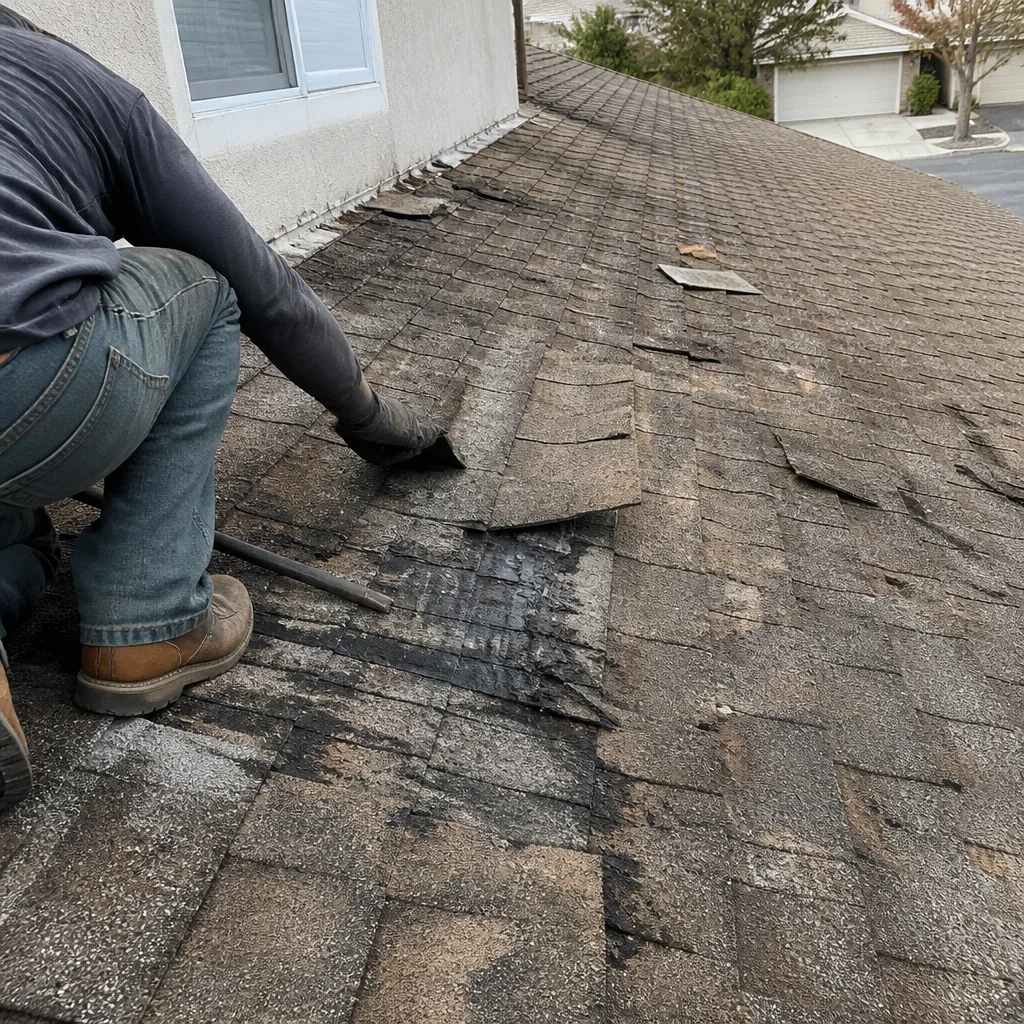 Before
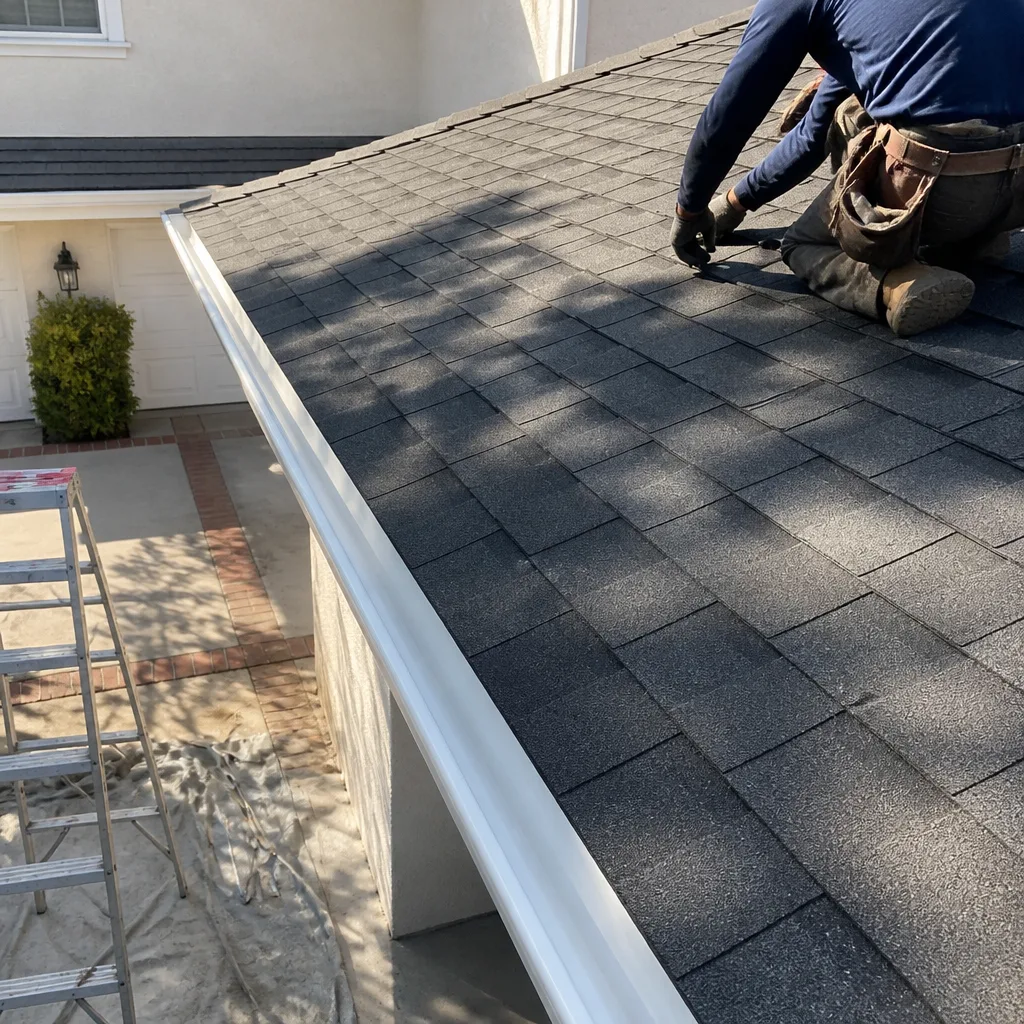 After
After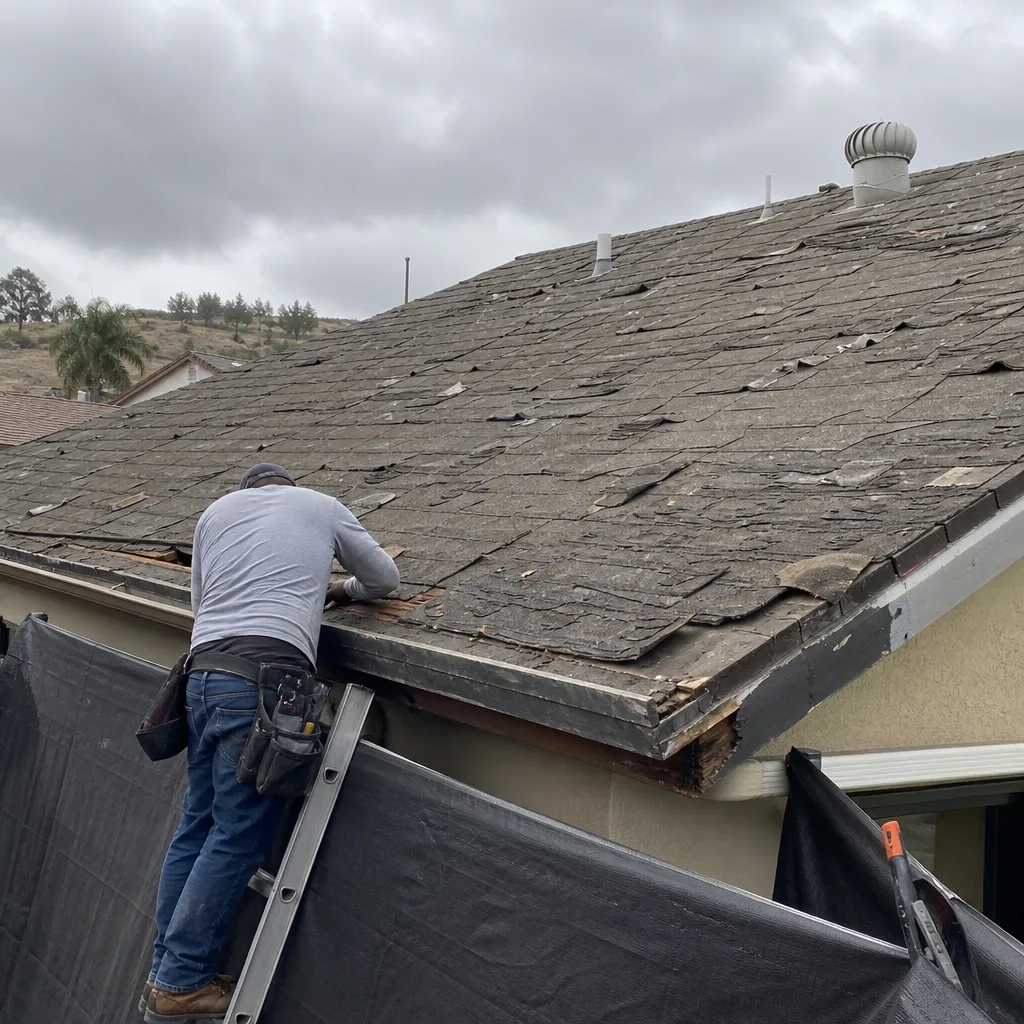 Before
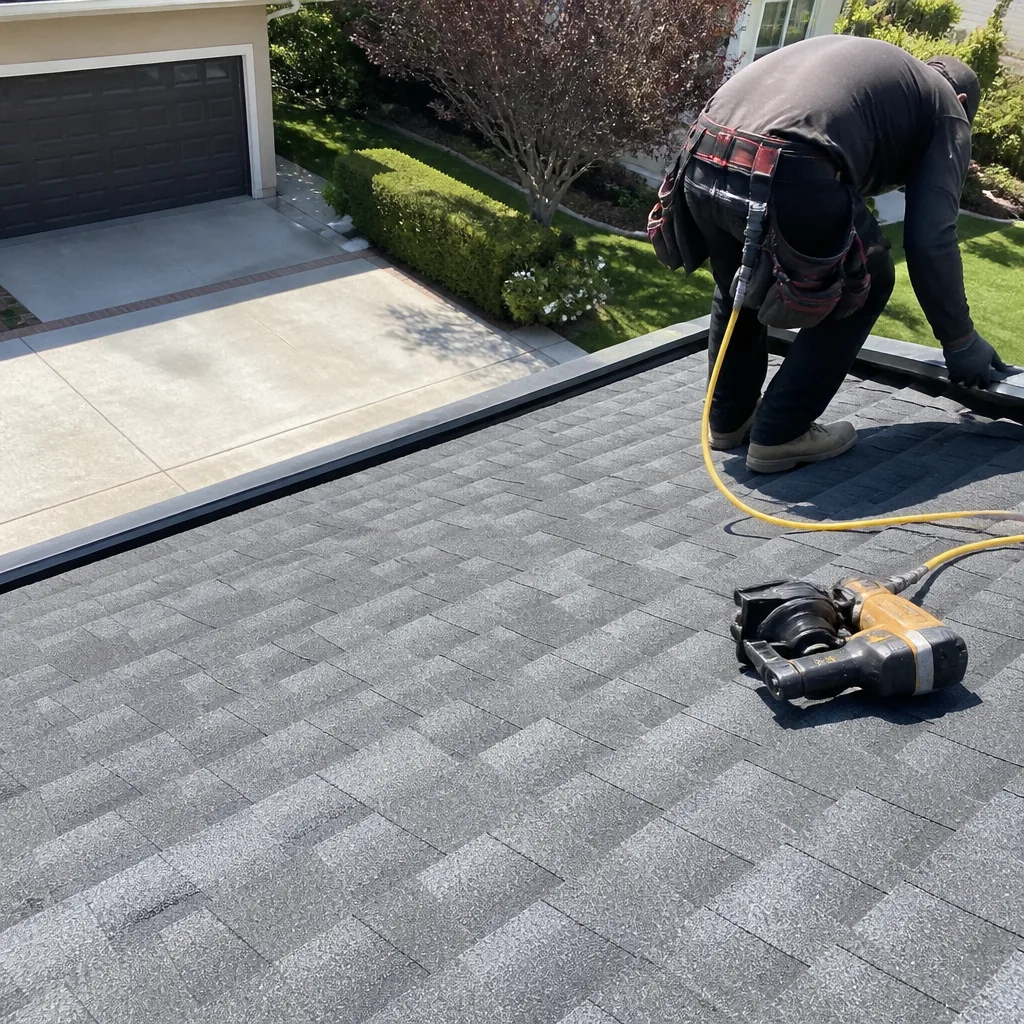 After
After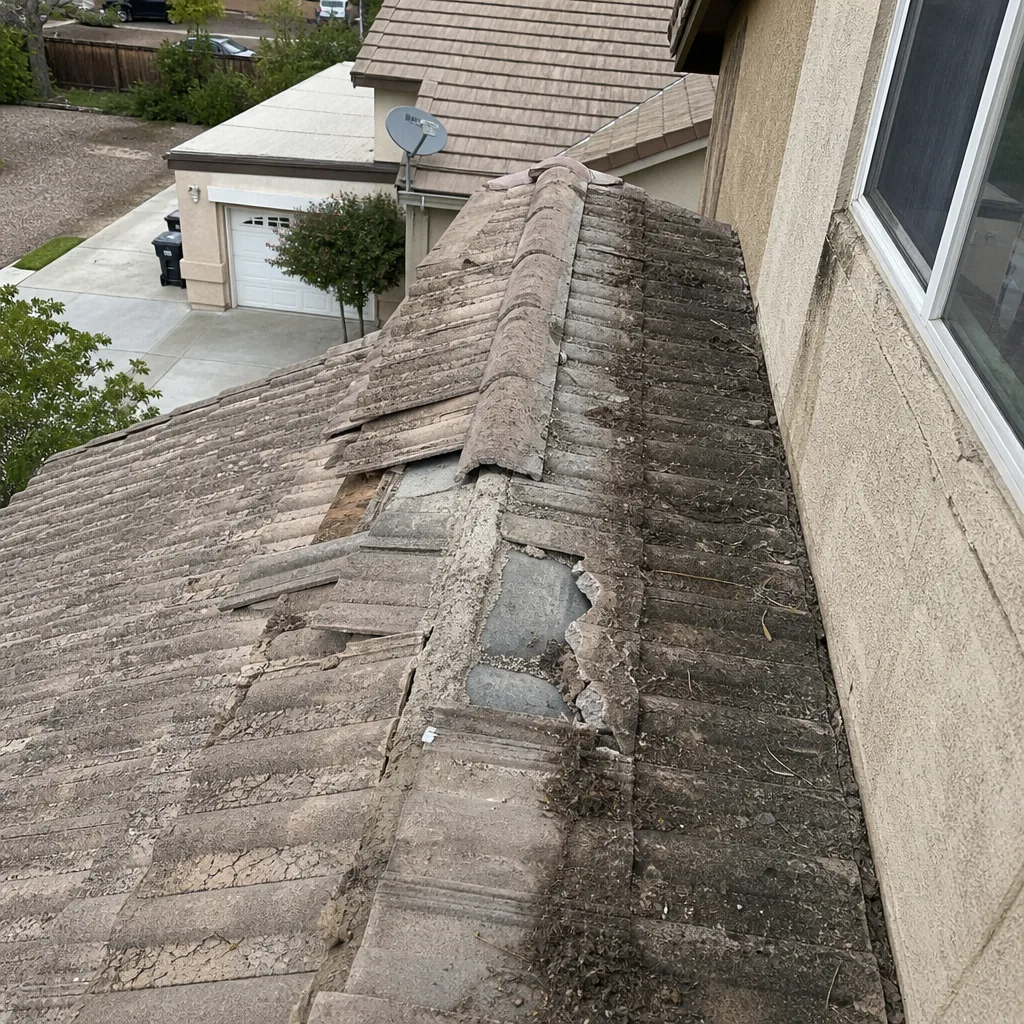 Before
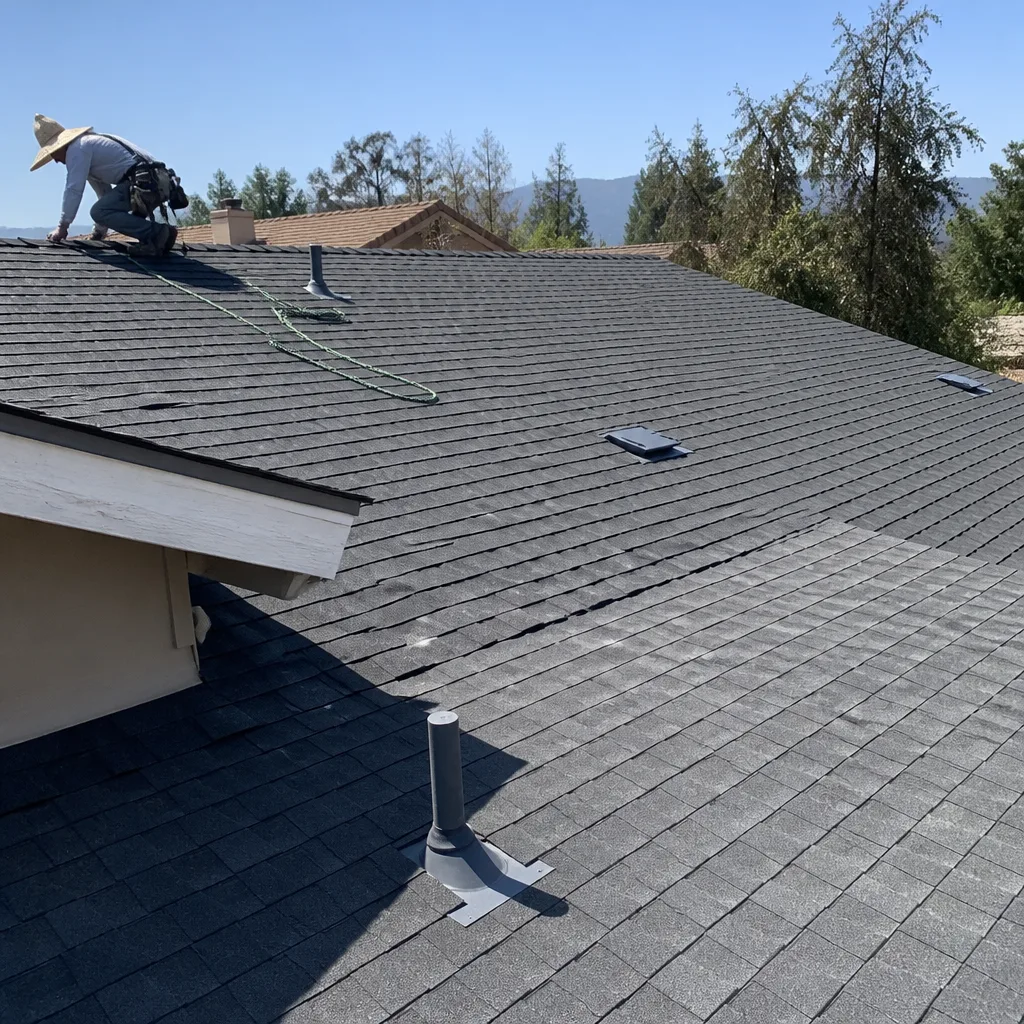 After
After