
Last updated October 17, 2026
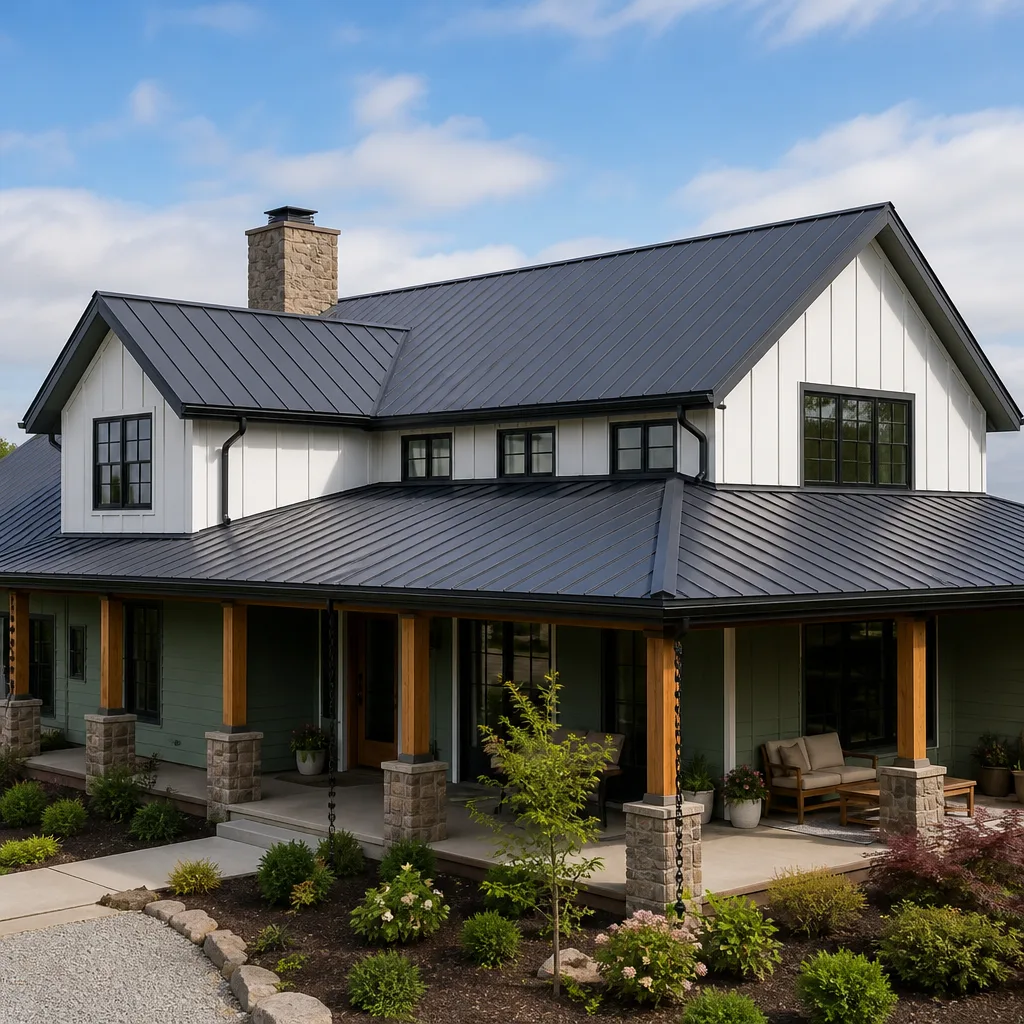 Metal roofing
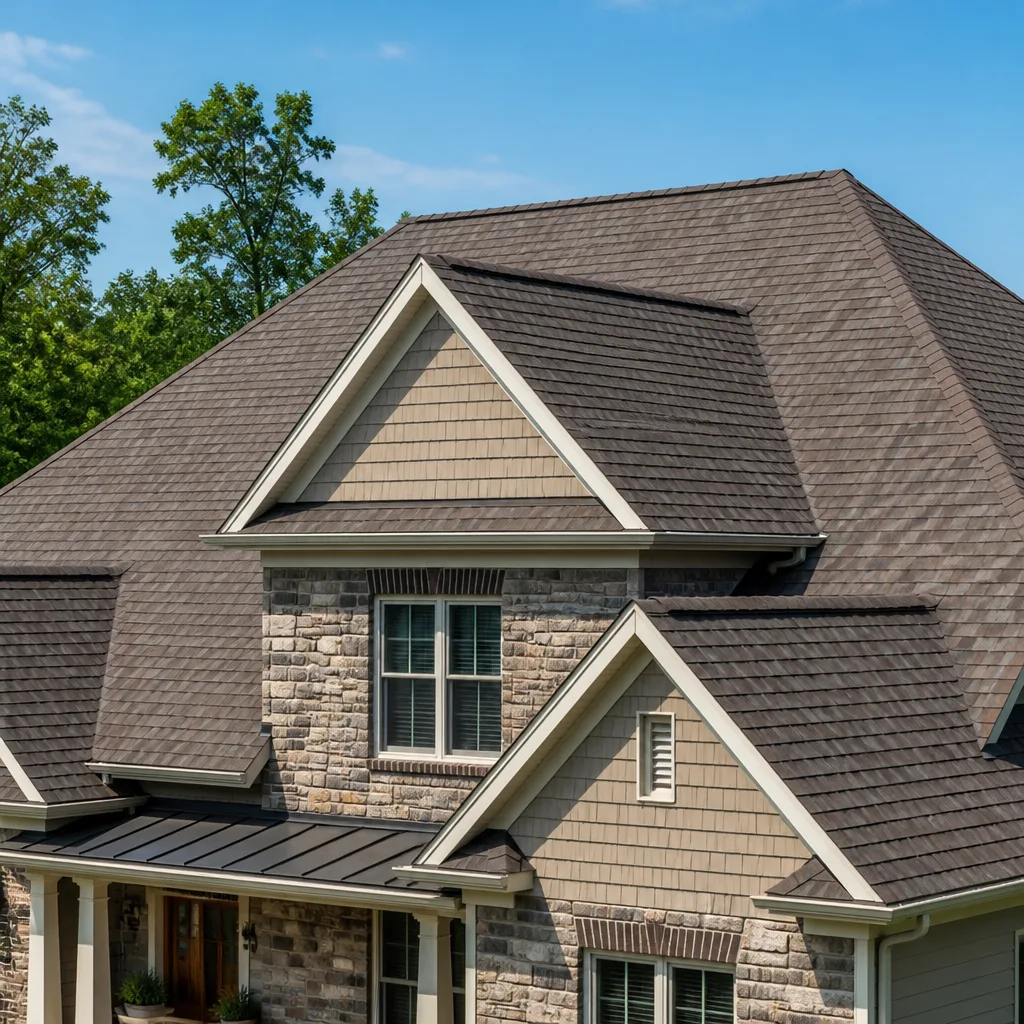 Architectural shingles
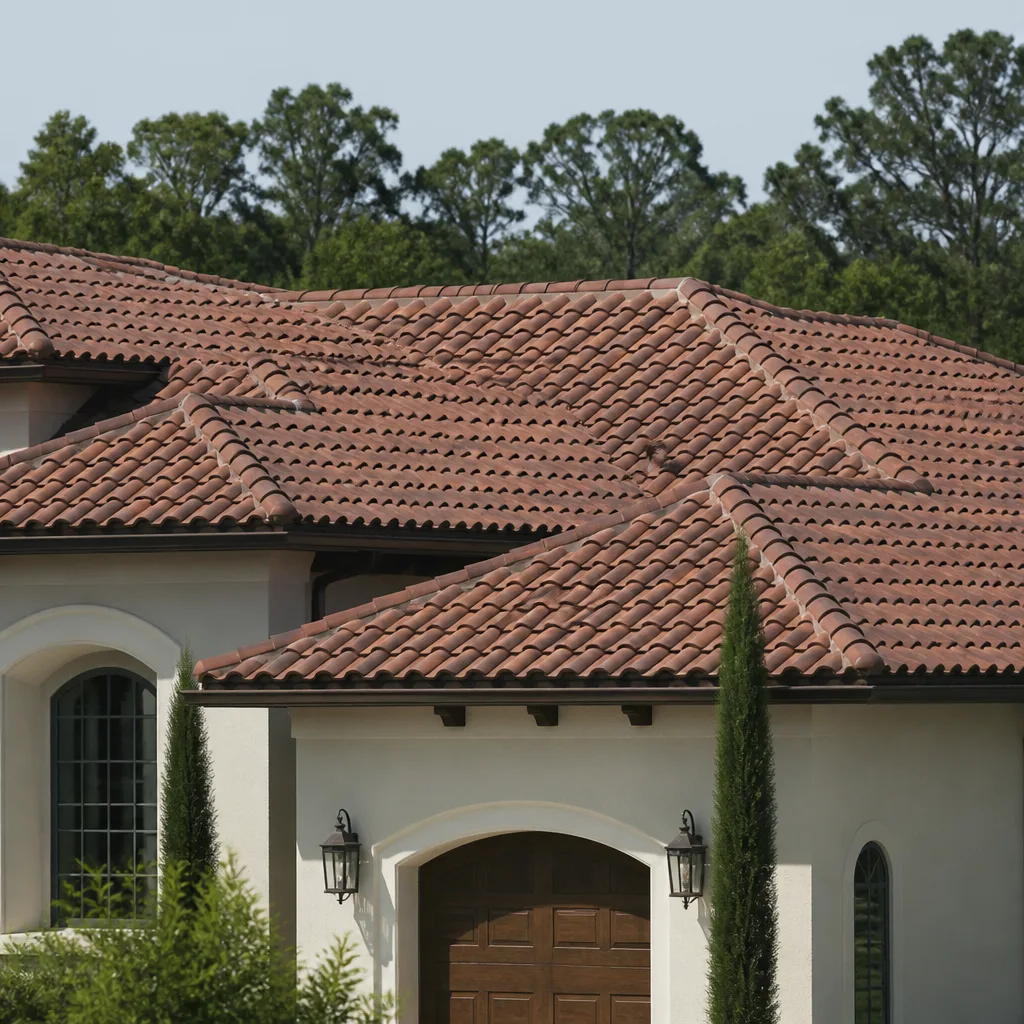 Tile roofing
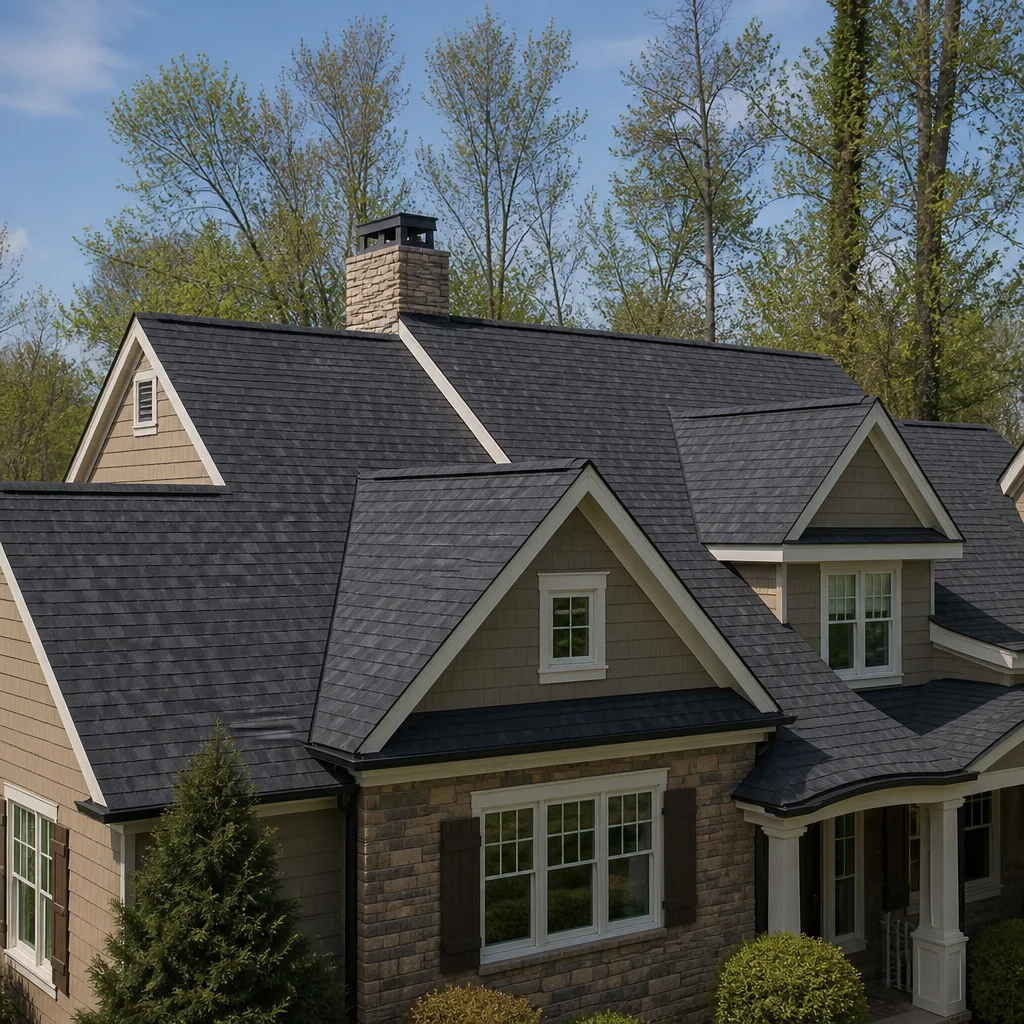 GAF
GAF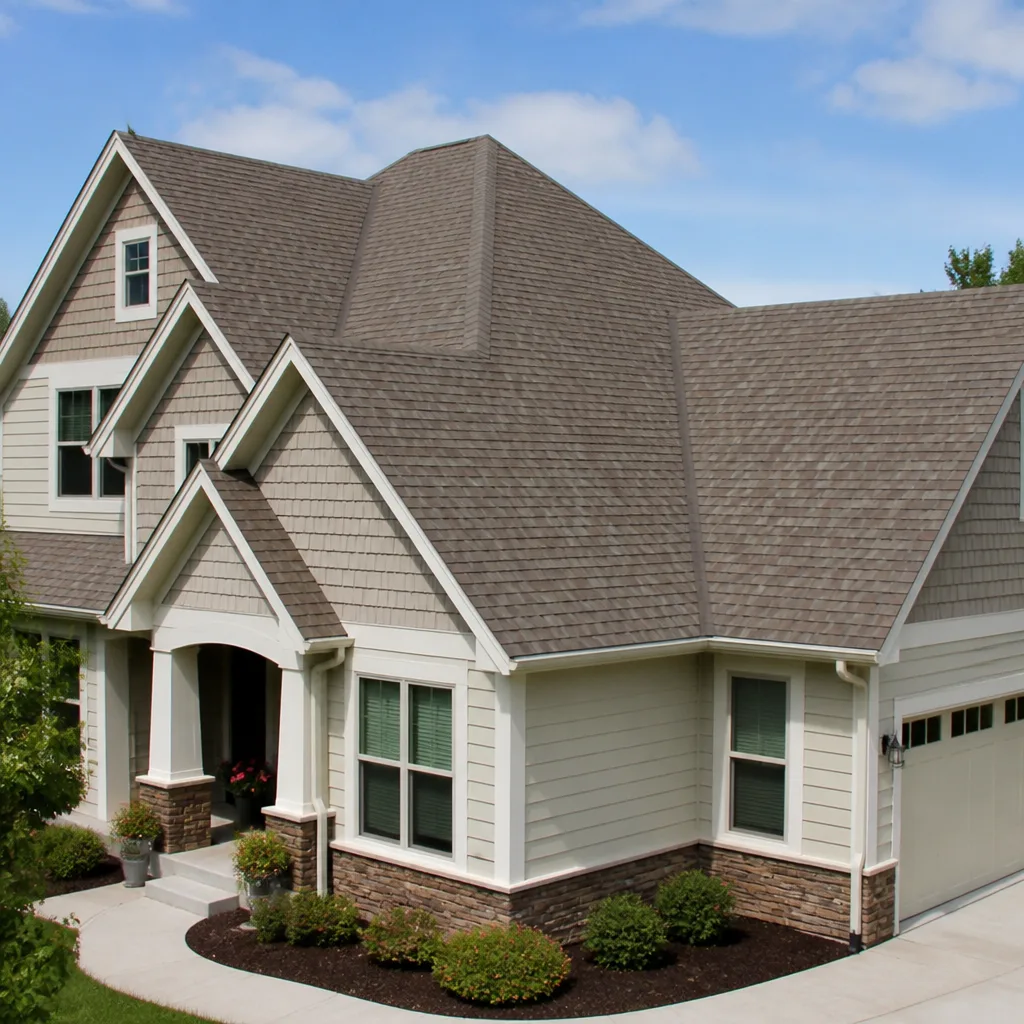 Owens Corning
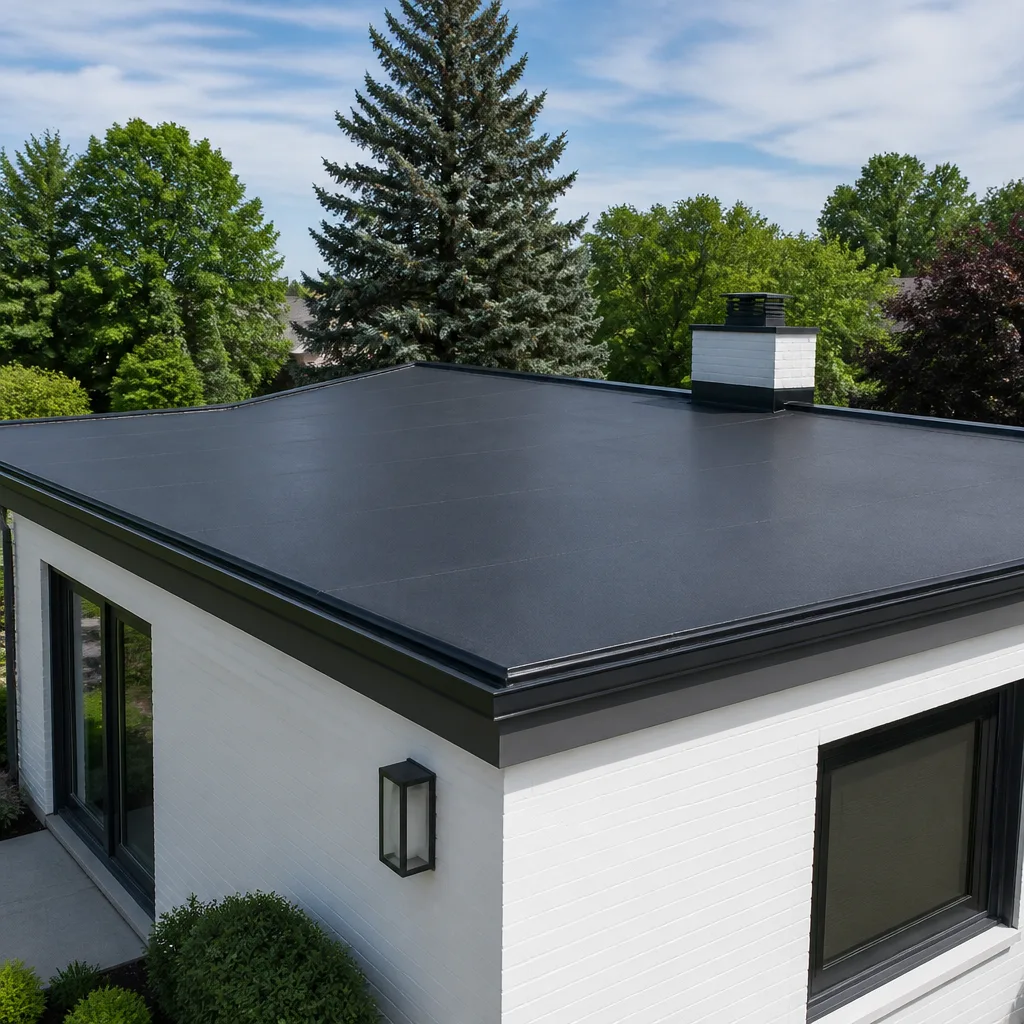 Flat & low-slope
Free roof inspection with deck photos before we talk money - GAF and Owens Corning certified installation
The Complete Guide to Roofing in Santa Clarita
Most roofing guides written for Southern California were drafted with coastal conditions in mind: morning marine layers, salt air, and temperatures that rarely crack 85°F. Those guides have almost nothing useful to tell a homeowner in Santa Clarita, where July afternoons push past 105°F, asphalt bakes under UV radiation at 1,500 feet of elevation, and October winds carry embers through canyons in the Wildland-Urban Interface. This guide treats roof failures the way they actually happen here: driven by heat cycling, dry-rot physics that belong in Arizona more than LA, and a Santa Clarita permitting map that confuses even experienced contractors. If you own a home in Valencia, Saugus, Canyon Country, or Newhall, you’ll finish this page knowing what your roof is up against, what it costs to fix, and how to read a bid without getting taken.
Quick Answer
A complete roofing strategy in Santa Clarita starts with choosing a material that can survive 40-degree daily temperature swings and triple-digit summer heat, followed by verifying your home’s fire-rating zone and permit jurisdiction before any work begins. Roof repairs in Santa Clarita typically run $450 – $1,400 for most common failures like flashing leaks or shingle replacement, while full replacements range from $9,000 – $22,000 depending on material and square footage. To get a written price before any work starts, call Crestview Roofing Co Santa Clarita at (661) 219-7793.
Styles & brands we work with
Table of Contents
- How Santa Clarita’s Climate Destroys Roofs Differently
- Fire-Rated Roofing and WUI Requirements in Santa Clarita
- Santa Clarita Permits: City vs. LA County Jurisdiction
- Best Roofing Materials by Santa Clarita Microclimate
- What Roofing Actually Costs in Santa Clarita
- How to Read a Roofing Bid Line by Line
- The 1990s Tract Home Replacement Wave
- Seasonal Maintenance for Santa Clarita Roofs
How Santa Clarita’s Climate Destroys Roofs Differently
Santa Clarita sits in a high-desert valley that behaves nothing like the Los Angeles Basin 35 miles south. The numbers tell the story: average July highs in Valencia reach 96°F with spikes past 110°F, while overnight lows in February can drop below freezing in Canyon Country and Sand Canyon. That’s a 40-degree daily temperature swing in shoulder seasons, and it’s the single biggest driver of roof deterioration across the SCV.
Asphalt shingle roofs fail through a process called thermal cycling. During the day, shingles expand as they heat to 140°F or higher on a direct-exposure south-facing slope. At night, they contract rapidly. Each cycle stretches the bonding between the asphalt and the fiberglass mat, and after roughly 2,500 to 3,000 cycles, most standard-grade shingles start showing granule loss, curling at the edges, and cracking along the nail line. In coastal Los Angeles, a roof might experience 200 intense thermal cycles per year. In Santa Clarita, with its extreme diurnal temperature swings, that number approaches 300 cycles annually, meaning a 25-year shingle in Santa Monica becomes closer to an 18-year shingle in Saugus.
We repeatedly see a particular failure pattern on Santa Clarita homes with east-west roof planes. The south-facing slopes degrade noticeably faster than north-facing slopes, sometimes by a factor of 30 to 40 percent. On standard three-tab architectural shingle roofs that are 17 to 20 years old, we’ll often find the southern plane with bare fiberglass showing at the keyways while the north plane still has intact granules. That’s not poor workmanship. That’s physics, and it means maintenance schedules should be asymmetric: inspect the south-facing slopes every year after year 12, and budget for a full replacement on that plane first if you plan to phase the work.
Low-slope sections, common on 1980s and 1990s tract homes with mixed-pitch designs, face a different kind of abuse. Ponding water after the brief but intense winter rains becomes a magnifying glass for UV radiation once the sun returns. A quarter-inch of standing water can heat to 160°F on a clear Santa Clarita afternoon, which accelerates the breakdown of modified bitumen and single-ply membranes faster than sun exposure alone. If you see standing water on a flat section of roof 48 hours after a rain, that area is on borrowed time.
Fire-Rated Roofing and WUI Requirements in Santa Clarita
Santa Clarita contains large swaths of designated Wildland-Urban Interface zones, areas where homes sit directly against the brush-covered hillsides that dominate Placerita Canyon, Bouquet Canyon, and parts of Stevenson Ranch. If your property falls within a WUI boundary, your roofing material choice is not just a matter of preference; it’s regulated by California Building Code Chapter 7A and enforced at the local level.
The core requirement is straightforward: in WUI-designated areas of Santa Clarita, new roofing installations and full replacements must use a Class A fire-rated roof assembly. Class A is the highest rating under ASTM E108 and means the roofing system, including the underlayment and the material itself, can withstand a burning brand the size of a two-by-four dropped on its surface without igniting the structure beneath. The three fire-rating classes break down like this:
- Class A: Concrete tile, clay tile, fiberglass-asphalt shingles (not organic-mat), standing seam metal, and certain single-ply membranes installed over gypsum or fire-retardant underlayment.
- Class B: Some pressure-treated wood shakes and certain modified bitumen systems. Not acceptable for new work in WUI zones in Santa Clarita.
- Class C: Standard untreated wood shingles and shakes. Banned for new installations in most of the SCV, and effectively unbuyable through any reputable supplier.
One of the most common misunderstandings we hear from homeowners in WUI zones concerns stone-coated steel. Many assume any metal roof is automatically Class A. That’s usually true, but the full assembly rating includes the underlayment. If you install a Class A stone-coated steel roof over an old organic felt underlayment that itself only carries a Class B rating, the entire assembly drops to Class B, and the city’s building department will flag it on the final inspection. We install roof systems rather than just shingles or panels, which means we verify that every layer, from the deck up, meets the fire rating your specific parcel requires.
Santa Clarita’s Wildland-Urban Interface map is not uniform across the valley. Some neighborhoods in central Newhall and much of Valencia’s flatlands fall outside the WUI boundary entirely, which means standard building code fire ratings apply (Class C minimum in most cases, though we never recommend going below Class A). Homes in Sand Canyon, Placerita Canyon, and the hillside developments above Friendly Valley are almost certainly inside the WUI boundary, and if you’re planning a roof replacement in Santa Clarita in one of those neighborhoods, the permit reviewer will require specific documentation. Always check your parcel’s designation with the city before buying materials. It costs nothing to verify, and it prevents a very expensive redo.
Santa Clarita Permits: City vs. LA County Jurisdiction
The permitting landscape in the SCV trips up homeowners and even some contractors who work primarily in other parts of Los Angeles. The City of Santa Clarita, incorporated in 1987, issues its own building permits through the city’s Building and Safety Division. But when you look at a mailing address, you’d never know the difference. Homes in unincorporated areas including Val Verde, Castaic (in some pockets near Lake Hughes Road), Agua Dulce, and parts of Acton fall under Los Angeles County Department of Building and Safety jurisdiction, not the City of Santa Clarita.
Here’s why that matters for your roofing project. The City of Santa Clarita requires reroofing permits for any roof replacement that involves removing more than 50 percent of the existing roof surface. That threshold is standard across California, but the city also maintains specific requirements for roof sheathing nailing patterns in high-wind zones and for skylight curb dimensions, and those inspection points may not appear on a county checklist. Meanwhile, LA County Building and Safety handles Val Verde reroofing permits through a different portal, different inspectors, and different correction notice formatting. Homeowners who assume their Val Verde address is “Santa Clarita” and hire a crew that pulls a City permit end up with a stop-work notice and a very awkward conversation with the inspector.
As of the most recent code cycle, the City of Santa Clarita also enforces California’s Title 24 cool roof standards for low-slope residential roofs. This means a flat roof replacement in a City jurisdiction likely requires a roofing material with a minimum solar reflectance index of 16 for low-slope applications. County jurisdictions enforce the same state code, but inspection emphasis varies by office, and we’ve seen county inspectors accept documentation that city inspectors reject outright.
The practical advice if you’re unsure about your jurisdiction: go to the County Assessor portal, enter your address, and look at the parcel detail. If the property’s jurisdiction section says “Unincorporated Los Angeles County,” your permits go through LA County, even if Google Maps says Santa Clarita. When you hire a roofer, ask them which jurisdiction they are pulling the permit from and what permit number they’ve applied for. A licensed contractor should be able to show you the permit application within a few days of signing a contract. The transparency around this step is where good contractors distinguish themselves: you should know what was filed, when, and what the inspector is checking for.
We pull permits on every job that requires one. The process is a core part of the Crestview Roofing Co Santa Clarita home service standard: you get a permit application confirmation, the scheduled inspection date, and a digital invoice showing the permit fee as a line item. No permit fees get absorbed into a vague “miscellaneous” category on our bids. Ask any roofer working on your home to show you the same.
Best Roofing Materials by Santa Clarita Microclimate
Santa Clarita’s microclimates vary enough that a single roofing material recommendation across the whole valley would be bad advice. What works on a sun-exposed Valencia hillside differs from what makes sense on a shaded lot in Saugus next to the wash, and the extreme heat of the west side of the valley changes the calculus around color choice. Here’s how we break it down by area and by material.
Asphalt Shingles: The Default Choice, With a Heat Caveat
Asphalt shingles remain the most common roofing material in Santa Clarita because they are cost-effective and install quickly. Brands like GAF Timberline HDZ, CertainTeed Landmark, and Owens Corning Duration all manufacture Class A fiberglass-asphalt shingles that meet fire code in non-WUI zones. But not all asphalt shingles perform equally in SCV heat. We recommend architectural shingles over three-tab in every case, because the laminated construction provides more structural rigidity at high temperatures, and because the additional thickness slows the rate of thermal breakdown. We see three-tab roofs in Canyon Country and Newhall fail at the 12 to 14 year mark routinely, while architectural shingles from the same manufacturer consistently reach 18 to 22 years in the same neighborhoods.
Color choice is a functional decision in Santa Clarita, not just an aesthetic one. Lighter shingles, think Weathered Wood, light gray, or tan, reflect more solar radiation than dark brown or black, which translates to lower attic temperatures and a measurable reduction in cooling costs during June through September. Darker shingles absorb more heat, survive wind-driven rain better in cold climates (irrelevant in SCV), and look striking on certain home styles, but they will degranulate faster in direct sun. We don’t recommend dark asphalt shingles on south-facing roof planes here. We’ve seen granule loss on dark shingles on a Valencia hillside after just nine years. Light-colored architectural shingles from GAF or CertainTeed consistently hit or exceed their rated lifespan in the same spots.
Concrete and Clay Tile: Built for Heat, But Watch the Weight
Concrete tile and clay tile are the most heat-tolerant materials we install in Santa Clarita. They carry Class A fire ratings automatically, they don’t degrade under UV exposure in any meaningful way, and they can last 50 years or more with proper maintenance. A concrete tile roof on a Sand Canyon home may outlive the homeowner. But tile brings two issues specific to SCV construction.
First, tile is heavy. Concrete tile adds 600 to 1,100 pounds per square to the structure, while clay tile is slightly lighter depending on profile. Many 1990s tract homes in Santa Clarita were stick-framed with 2×4 roof trusses spaced at 24 inches on center, which may not be structurally adequate for a tile retrofit without reinforcement. If you’re considering tile on a home that currently has asphalt shingles, the roof structure needs to be evaluated by an engineer. Second, tile roofs in Santa Clarita need regular visual inspection after earthquakes and after the fall Santa Ana wind season. Loose tiles slide, crack, or get dislodged, and then the underlayment begins taking direct sun exposure that it was never designed to handle.
Standing Seam Metal: The Quiet Upgrade for SCV Homes
Standing seam metal roofs are growing in popularity throughout Santa Clarita, and for good reason. Metal reflects solar radiation more efficiently than any asphalt product, handles 105°F days without perceptible thermal degradation, carries a Class A rating, and is already the dominant roofing material in the high desert communities just north of the SCV in Palmdale and Lancaster. The two concerns we hear from homeowners are cost (standing seam runs roughly 2.5 to 3 times the price of architectural asphalt shingles) and noise during rain. The noise issue is mostly misunderstood: properly installed standing seam over a solid deck with insulation is quieter than many expect, and Santa Clarita receives only about 15 inches of rain per year, so rain noise ranks low on the practical concern list.
For homes in Sand Canyon, Placerita Canyon, and other WUI-adjacent areas, standing seam metal is the best material choice available apart from tile or stone-coated steel, and it comes without the structural weight penalties. We also recommend it for homes with low-slope sections where asphalt underperforms.
What Roofing Actually Costs in Santa Clarita
Roofing prices in Santa Clarita run slightly above the national average, in line with the rest of Los Angeles County, and the premium is driven by three factors: local labor costs, permit fees, and the cost of hauling materials into the SCV from distributor yards in the Valley or beyond. Here are realistic price bands for common roofing jobs in the area, based on the work we quote regularly.
- Minor roof repair (small leak, flashing patch, a few shingles): $450 – $850
- Standard repair (chimney re-flashing, valley replacement, vent boot replacement, 20 – 40 shingle replacement): $850 – $1,900
- Flat roof section repair (up to 300 square feet, modified bitumen or TPO patch): $1,200 – $2,800
- Full roof replacement, architectural asphalt shingles (1,500 – 2,200 sq ft home): $9,000 – $15,000
- Full roof replacement, standing seam metal (1,500 – 2,200 sq ft home): $22,000 – $38,000
- Full replacement, concrete tile (1,500 – 2,200 sq ft home): $18,000 – $35,000, assuming structure is adequate
- Roof inspection with photo documentation: $150 – $350, often credited back if repairs are booked
These ranges assume a straightforward roof with standard pitch, no more than two layers of existing material, and accessible roof access. Adders are common and should always be itemized in writing before work starts: additional plywood decking at $75 – $110 per sheet for dry-rotted or delaminated sections, chimney crown repair, gutter replacement or repair, and upgraded underlayment. At Crestview Roofing in Santa Clarita, every one of these adders appears on a written line-item estimate before the first nail is driven. The number on the estimate is the number on the invoice. That’s the standard, and we put it in writing on every job.
One pricing misconception we hear often concerns tear-off versus overlay. An overlay installs new shingles over the existing layer without removing the old roof. It costs less upfront, sometimes $2,000 – $4,000 less depending on roof size, and many budget-focused contractors in the SCV will offer it as a standard option. We strongly advise against overlays in Santa Clarita for two reasons. First, the additional layer traps heat against the older shingles, accelerating degradation of both layers in SCV summer conditions. Second, an overlay hides decking problems, leaks, and structural issues that only become visible once the old roof is stripped. A full roof replacement in Santa Clarita with tear-off costs more upfront but catches problems while they’re still cheap to fix, and the resulting roof lasts meaningfully longer in this climate.
How to Read a Roofing Bid Line by Line
A roofing bid should function like a transparency document, not a sales brochure. If a bid is one page with a single bottom-line number and nothing else, you are buying a mystery. When we price a Santa Clarita roof, our bids run several pages and the homeowner should expect the same from any reputable contractor. Here is how to read what you receive, line by line, so you know what is standard, what is padding, and what is missing entirely.
- Scope of work description: This is the narrative section that says exactly what the roofer will do. Standard language includes “remove existing roofing material down to deck,” “inspect decking and replace delaminated or water-damaged sheets,” “install synthetic underlayment,” “install [material type and brand],” and “remove all debris from site.” If the scope says only “install new roof” with no specifics, the bid is inadequate and the work will be undefined at inspection time.
- Decking replacement line item: Many bids say “replacement decking at $X per sheet, billed based on actual usage.” A per-sheet line item is standard practice because no one can know how much decking is rotted until the old roof comes off. The lowest bids often omit this line entirely, then back-charge at a higher rate once the roof is open. Your bid should list the per-sheet rate upfront, and you should agree to it before work begins.
- Underlayment specification: The underlayment is the waterproofing layer under the roof material, and it’s where cheap bids hide cost savings. Standard synthetic underlayment (the good stuff) runs $8 – $15 per square and installs quickly. Cheap felt underlayment runs $5 – $8 and fails faster in Santa Clarita’s heat. If the bid doesn’t specify the underlayment brand or type, ask for it. We use synthetic underlayment on every job, no exceptions, and the brand appears on the bid.
- Flashing line items: Flashing, meaning the metal strips that seal joints around chimneys, vents, and roof valleys, should appear as a specific line item, not be left implicit. Standard roofing jobs include re-flashing of chimney, plumbing vent boots, and valley metal. Some bids omit new flashing and reuse the existing metal, which is substandard practice. We replace flashing on every full replacement and repair, because old flashing is the most common leak source after work is done.
- Permits and fees: The permit line item should include the actual City of Santa Clarita or LA County reroofing permit cost, plus a reasonable processing fee. If the bid says “permits included” with no dollar figure, it either means the contractor is not pulling a permit at all (a serious problem) or the cost is buried in another line item. Your bid should show a permit cost line and a scheduled inspection.
- Warranty and guarantee language: The bid should state the manufacturer’s warranty term, the installation workmanship warranty, and the contractor’s own guarantee in writing. Our 365-Day Done Right Promise covers every repair for a full year: if a covered repair fails within 365 days, we correct it at no charge, including a free second visit. That language appears on every bid we issue, and it’s non-negotiable.
What’s genuinely missing from low bids in Santa Clarita? The three most common omissions we see are the permit line, the decking replacement allowance, and the upgraded underlayment specification. A low bid that omits all three will typically balloon by 25 to 40 percent once the job is underway. A complete bid includes those items on paper before the first hammer swing. The difference between a $13,000 bid and a $17,000 bid for the same roof on the same street in Castaic is often just this transparency gap.
The 1990s Tract Home Replacement Wave
Santa Clarita’s housing stock exploded in the 1990s, and that growth created a predictable maintenance timeline. The master-planned communities of Valencia, Saugus, and Canyon Country were built out by major developers using production roofing crews, often during periods of extremely high construction volume. Asphalt shingle roofs installed in that era typically went down fast, with lower-cost three-tab shingles and 15-pound felt underlayment, both of which were industry standard at the time. Those roofs are not failing because they were poorly installed. They are failing because they’ve reached the end of their engineered service life.
The math is straightforward. A three-tab asphalt shingle roof installed in Santa Clarita in 1995 or 1996 would be rated for roughly 20 to 25 years in a moderate climate. Santa Clarita’s heat cycling accelerates the degradation by 25 to 30 percent. That puts the functional replacement window at roughly 16 to 19 years, which means the 1995 installation reaches replacement territory around 2011 to 2014, and the 2000 installation hits it between 2016 and 2019. Many of those roofs have been limping along with repeated repairs, and the patchwork approach has a finite shelf life. We are now in a period where hundreds of these homes across the SCV need full replacements within the same 24 to 36 month window, which is exactly what we’re seeing across Valencia and Saugus.
This convergence has practical implications for homeowners in these neighborhoods. Material costs for asphalt shingles have risen roughly 35 percent since 2020, and manufacturers including GAF and Owens Corning have consolidated their distribution networks. The days of three competing supply houses within a 15-minute drive of your home are mostly gone. More importantly, the labor pool for experienced roofing crews in the SCV is stretched thin. Wait times for quality roofing work in Santa Clarita right now range from 2 to 6 weeks for standard replacements, with certain manufacturers and tile profiles running longer. If your 1990s tract home in Saugus or Valencia still has its original roof and you are considering a replacement, start the process before the roof reaches the point of visible failure, because a leak in the middle of a backlogged season means roof tarping, water damage remediation, and a much higher total bill.
Step one if you think you’re in this window: schedule a roof inspection with photo documentation of the actual condition. Our process at Crestview Roofing, which handles roof installation in Santa Clarita, includes before photos, after photos, and a written condition report. You’ll see every area of concern before you ever see a number. Then decide with full information in hand, not under the pressure of an active leak.
Seasonal Maintenance for Santa Clarita Roofs
Roof maintenance in Santa Clarita follows the valley’s two real seasons: the long dry stretch from April through October, and the short but intense wet season from November through March. The maintenance tasks shift accordingly, and homeowners who understand this rhythm get substantially longer service life from their roofs.
Fall maintenance (September – October) is the critical window. The priority is clearing Santa Ana wind debris before the first heavy rain. Santa Ana winds carry sand, dry brush, and ember material into gutters, valleys, and roof penetrations. Debris that sits in a valley or against a chimney during the first November rain creates a dam that forces water sideways into the roofing system, which is how many leaks on SCV homes begin. Fall maintenance should also include checking all flashing points (chimney, vents, skylights), clearing gutters and downspouts, trimming overhanging branches, and verifying that bathroom and kitchen vents have intact screens.
Winter maintenance (November – March) is reactive. Walk the exterior of the home after each significant rain, looking for water stains on eaves, soffits, and interior ceilings. Check the attic during or immediately after a rain, looking for wet insulation, damp rafters, or daylight visible through the decking. Santa Clarita receives its entire annual rainfall in these months, and leaks that appear as tiny stains in January become structural problems by March.
Spring and summer maintenance (April – August) is about sun damage. Visual inspection should focus on south-facing and west-facing roof planes, the surfaces that take the brunt of SCV UV radiation. Look for granule buildup in gutters, which signals shingle wear. Check for curling at shingle edges, which signals thermal fatigue. Check for any buckling, which often indicates inadequate attic ventilation, a common problem on 1990s tract homes in the valley. Attic heat in a Santa Clarita summer can reach 140°F or higher without proper ventilation, which cooks shingles from below and shortens their life. If the upstairs feels hotter than the rest of the house even with the AC running, your attic ventilation likely needs upgrading, and your roof is absorbing the damage.
One final note on maintenance documentation: photos matter. Take dated photos of any area that worries you, then compare them six months later. Roof deterioration in the SCV is usually gradual, but the photo record shows the progression, which makes the decision to repair or replace clearer. We provide before-and-after photo documentation on every visit, and we encourage homeowners to keep their own records between inspections.
Common Mistakes to Avoid
- Choosing materials based on a coastal California guide: Shingle ratings and material recommendations written for Santa Monica or Long Beach don’t account for SCV heat cycling, and homeowners who follow coastal advice end up with roofs that underperform by 25 percent or more.
- Skipping the permit because the roofer says it’s “not needed”: The City of Santa Clarita and LA County both require reroofing permits for full replacements, and skipping the inspection creates liability issues when the home is sold. We pull permits on every job that requires one, and we’ve never had a permit denied.
- Choosing a dark shingle for a south-facing roof plane: Dark colors absorb more solar radiation, which accelerates granule loss and shortens shingle life in Santa Clarita’s intense summer sun. Lighter shingles genuinely last longer here.
- Accepting a roof overlay instead of a full tear-off: Overlays trap heat and hide decking damage, and they almost always fail earlier than a proper tear-off installation. The upfront savings disappear within a few years.
- Ignoring attic ventilation until the roof fails: California roofs degrade from below when attic temperatures exceed safe thresholds, and the SCV’s summer attic heat is brutal on shingles. Ventilation upgrades are inexpensive compared to early roof replacement.
- Hiring a roofer without checking their insurance certificate: Roofing is high-risk work, and uninsured crews leave the homeowner exposed. Ask to see a current certificate of insurance with you named as an additionally insured party. Any reputable contractor will provide it the same day.
- Waiting until an active leak to start the replacement process: Santa Clarita’s peak roofing season is already competitive, and emergency repairs cost more than planned replacements. If the roof is past year 15, get the inspection done before the rainy season, not during it.
See the difference
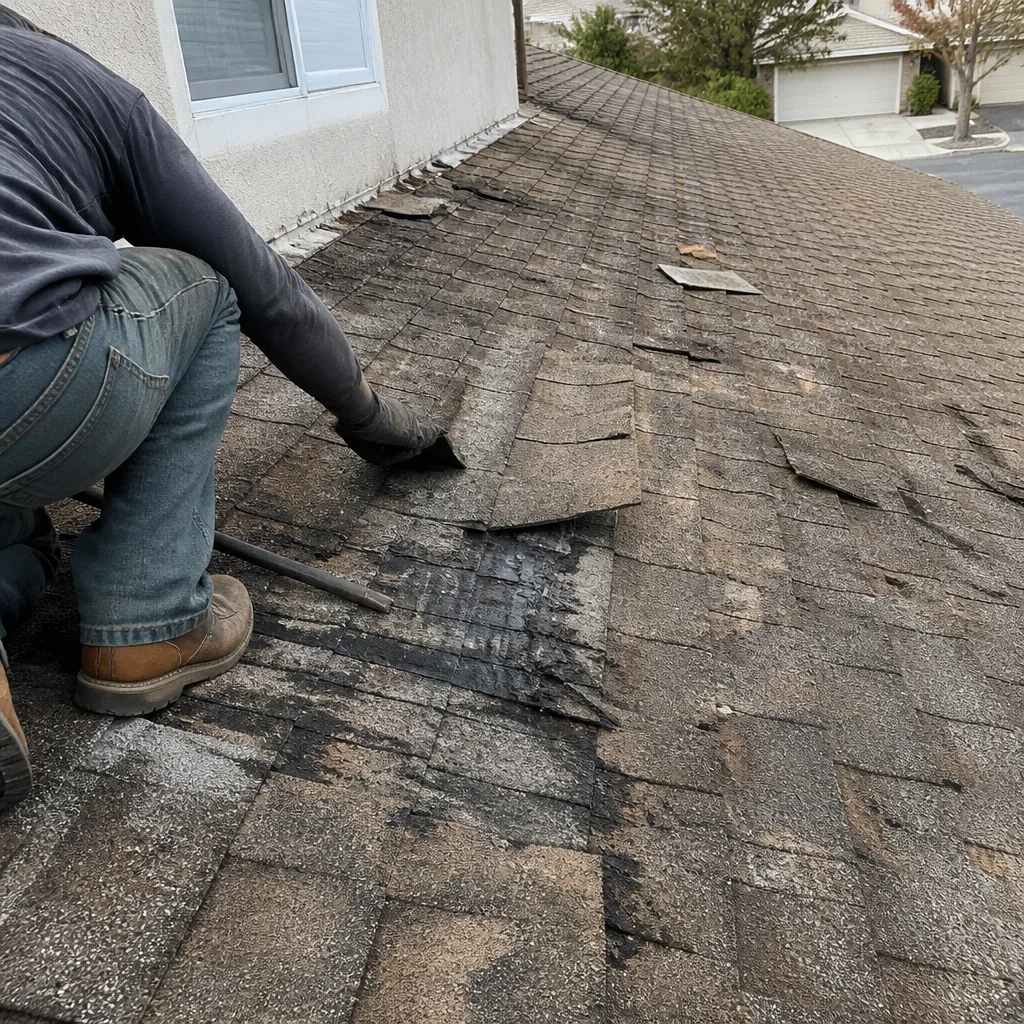 Before
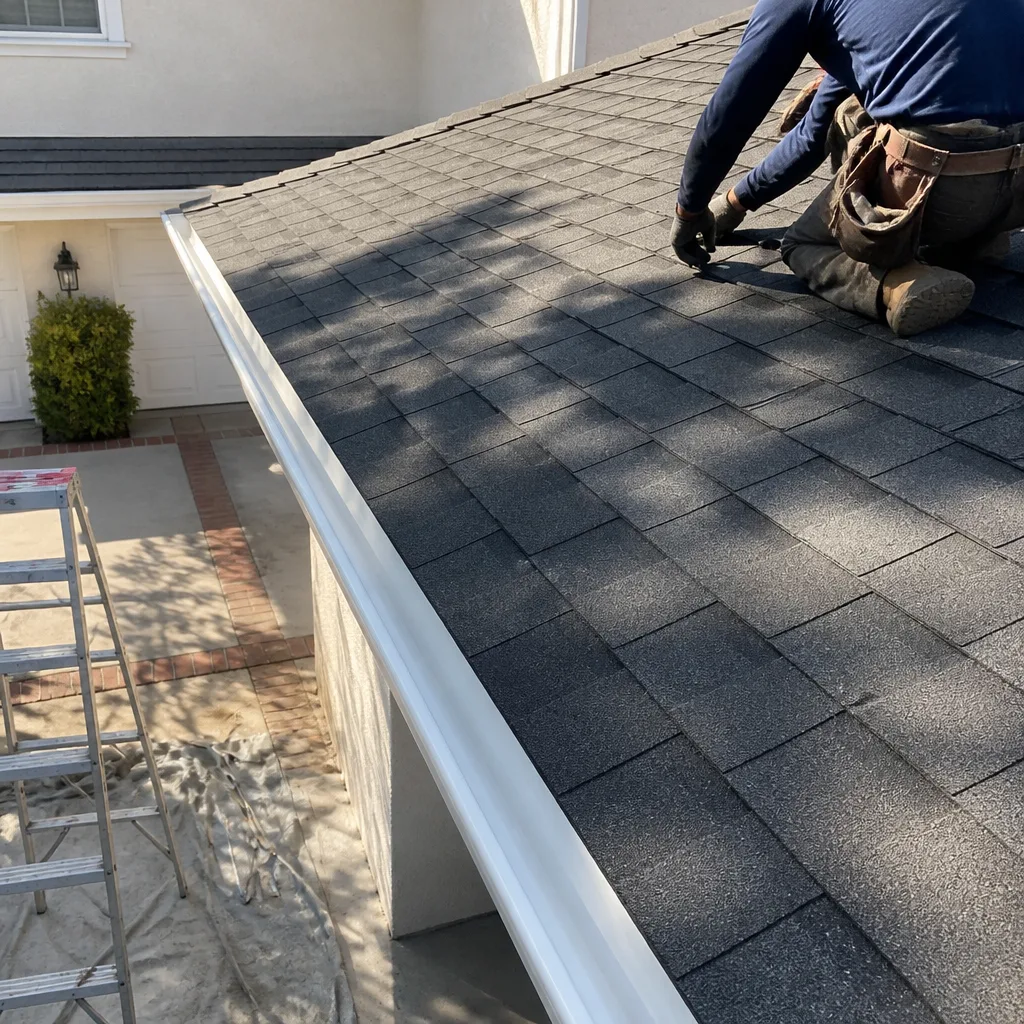 After
After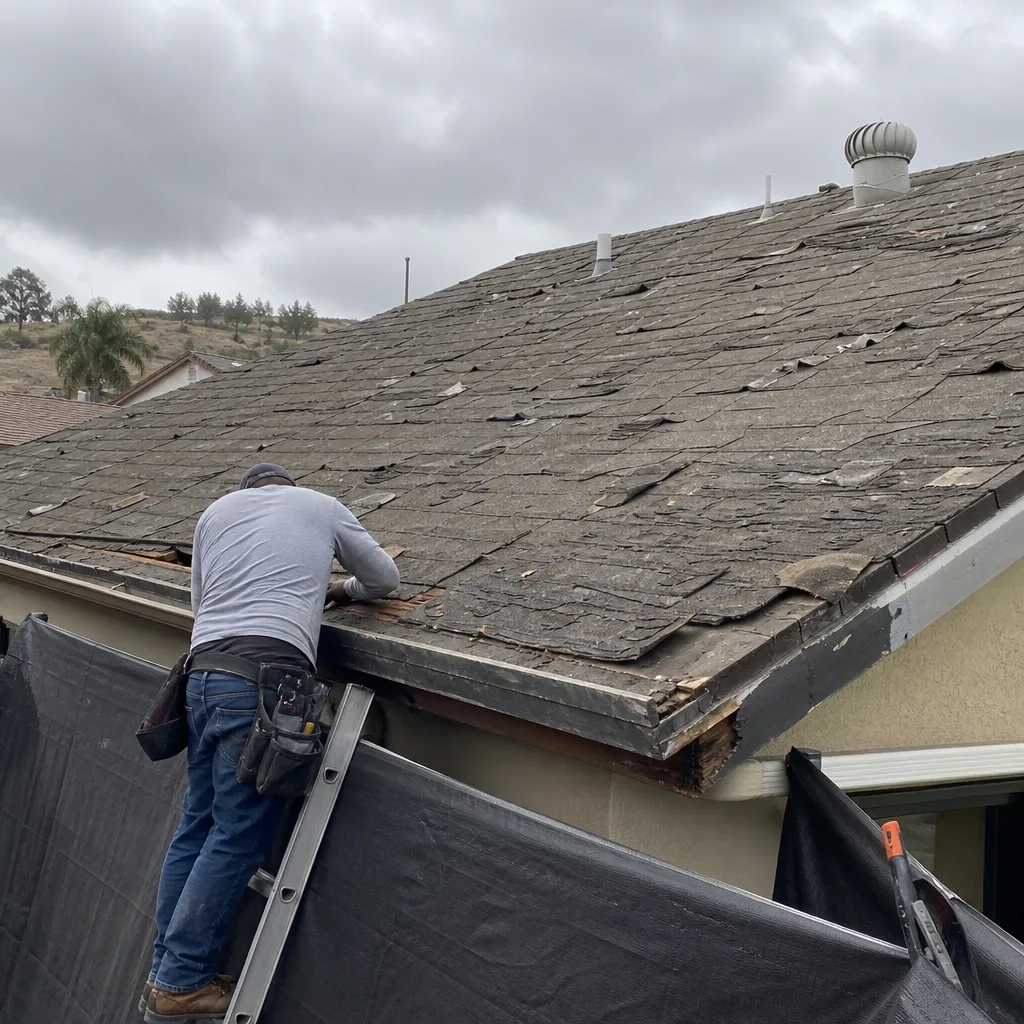 Before
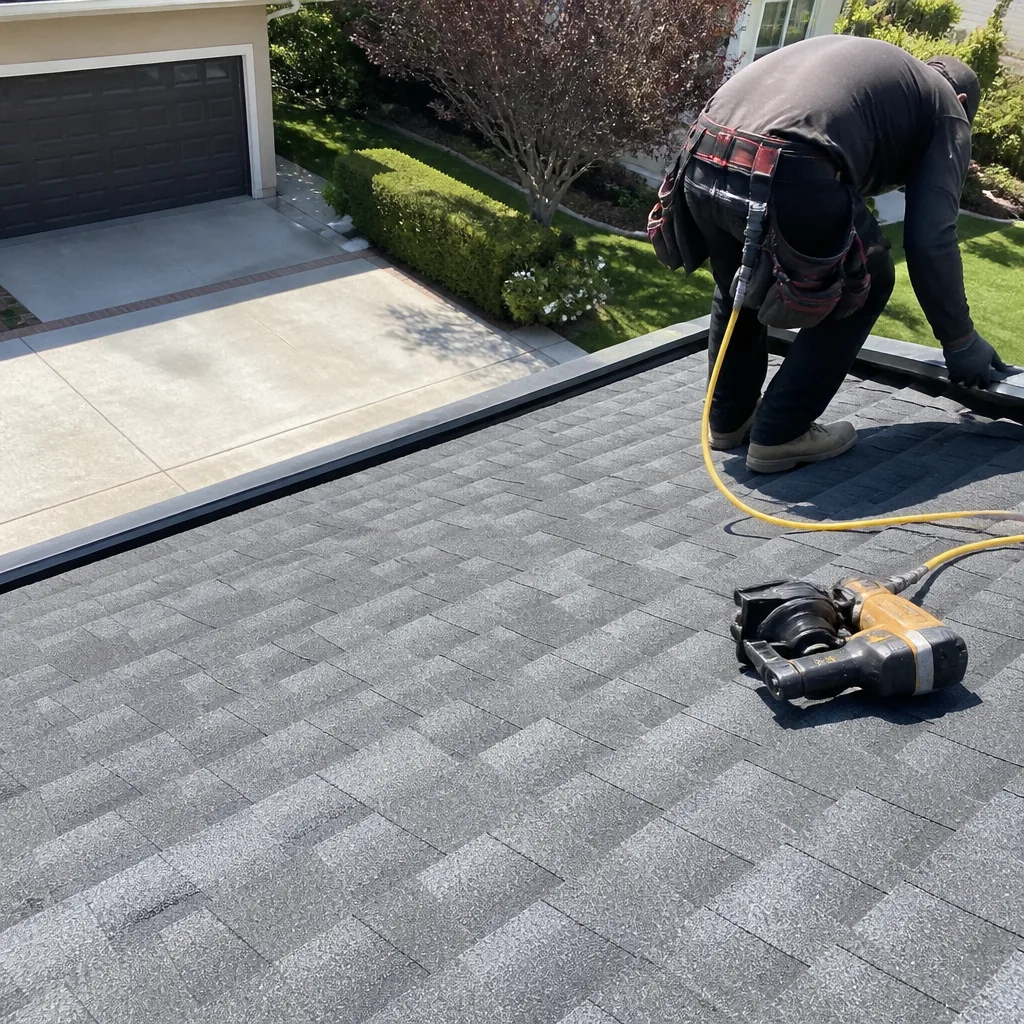 After
After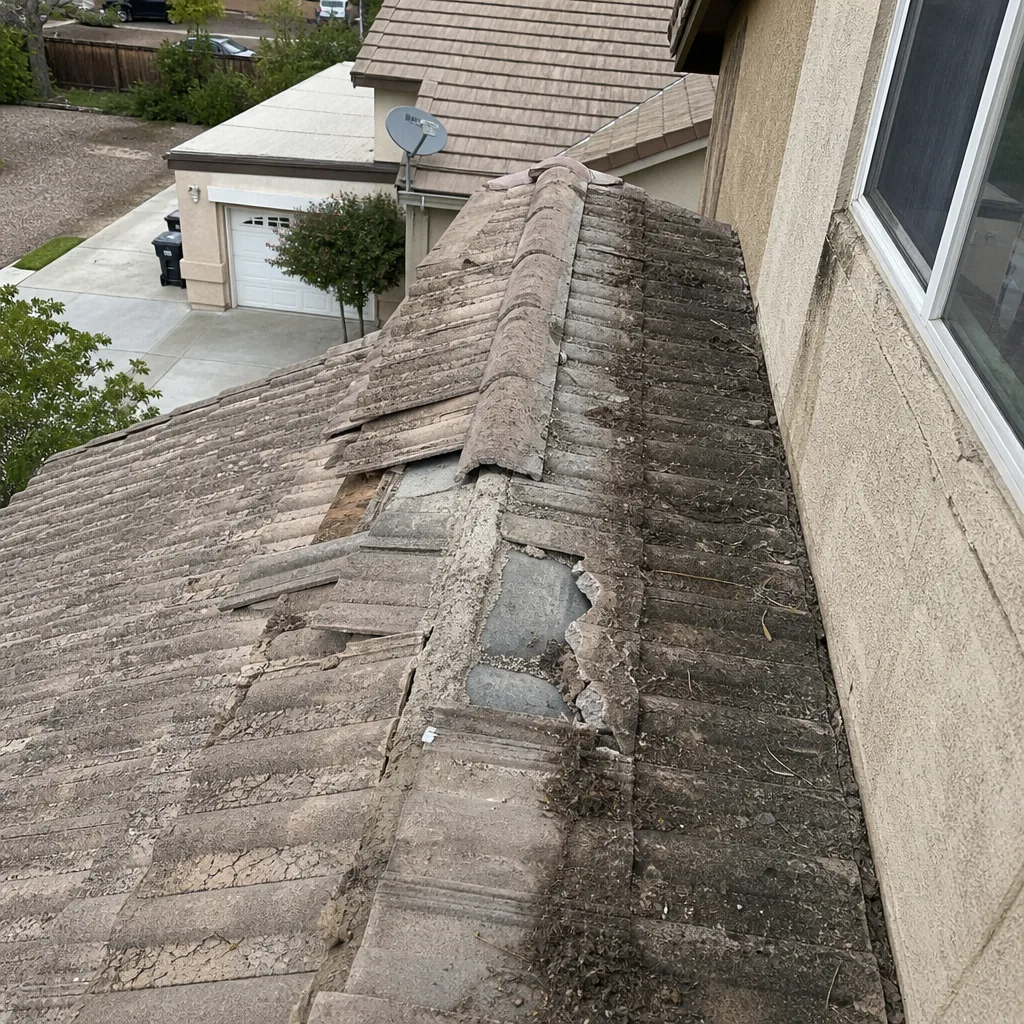 Before
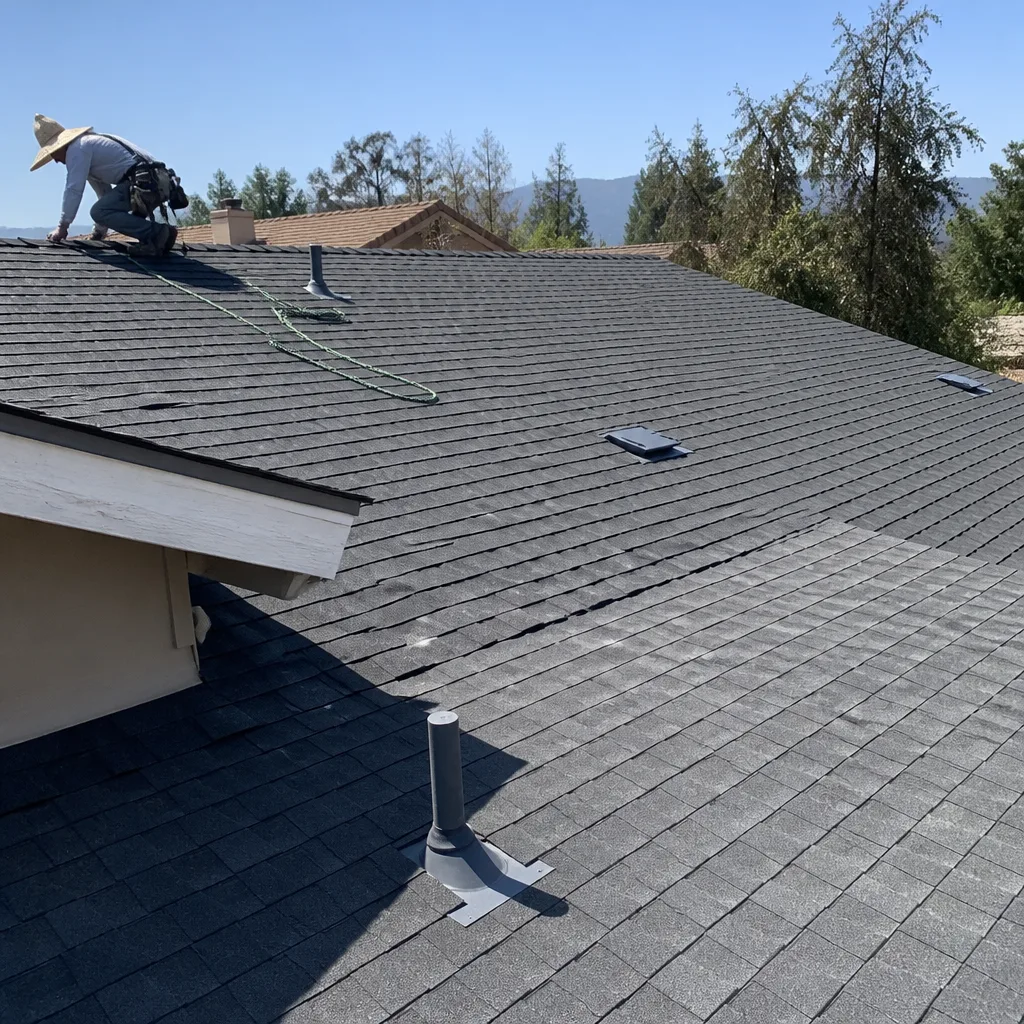 After
AfterWhen to Call a Professional
Some roofing issues are obvious emergencies, like active water intrusion during rain or visible sagging along the ridge line. Others are quieter: granules accumulating in the gutters, a shingle found in the yard after a windstorm, or a dark stain on the ceiling that appears only after a heavy downpour. Any of those signs warrants a professional inspection, and in Santa Clarita’s climate, waiting typically turns a $600 repair into a $6,000 replacement. Roof leaks in SCV homes follow a predictable pattern: the longer they go unaddressed, the wider the damage spreads into the decking, insulation, and drywall. Also call a professional before you list a Santa Clarita home for sale. Buyers’ inspectors in this market are thorough about roofing, and a pre-listing roof inspection gives you the option to address issues on your own timeline rather than surrendering money at the negotiation table. Crestview Roofing Co Santa Clarita offers free estimates in Santa Clarita – call (661) 219-7793.
Frequently Asked Questions
A full roof replacement in Santa Clarita typically costs $9,000 – $22,000 for standard architectural asphalt shingles on a 1,500 – 2,200 square foot home, while standing seam metal and concrete tile run higher. The exact price depends on roof complexity, tear-off requirements, decking condition, permit jurisdiction, and material choice. For a written estimate with no hidden line items, call (661) 219-7793.
Architectural asphalt shingle roofs in Santa Clarita typically last 18 to 22 years, compared to 25 or more in coastal Los Angeles, because the valley’s extreme heat and daily temperature swings accelerate shingle degradation. Three-tab shingles from the 1990s often need replacement by year 15 or 16. Concrete tile, clay tile, and standing seam metal can last 50 years or more with proper maintenance.
Yes, full roof replacements in both the City of Santa Clarita and unincorporated LA County areas like Val Verde require a reroofing permit. The permit process costs between $300 and $700 depending on jurisdiction and roof size, and the final inspection verifies code compliance. The permit cost should appear as a line item on your bid.
Standing seam metal and concrete tile are the most heat-tolerant roofing materials for Santa Clarita, while lighter-colored architectural asphalt shingles from manufacturers like Owens Corning or CertainTeed offer the best balance of cost and longevity for homes in non-WUI zones. Dark shingles absorb more heat and degrade faster on south-facing roof planes.
Homes in Santa Clarita’s Wildland-Urban Interface zones, including Sand Canyon, Placerita Canyon, and parts of Stevenson Ranch, must use Class A fire-rated roofing assemblies for new installations and full replacements. Many flatland areas outside the WUI boundary have less restrictive requirements, but we recommend Class A materials everywhere given the valley’s fire risk.
Yes, and that’s the standard, not the exception. Every inspection and estimate from Crestview Roofing Co Santa Clarita includes a written price with itemized line items, a documented scope of work, and the permit fee shown separately. The number on the written quote is the number on the final invoice. Call (661) 219-7793 to schedule a free estimate and see the full condition of your roof in photos before you make a decision.
The Bottom Line
Santa Clarita roofing is a different discipline than coastal LA roofing, and the difference comes down to heat, fire risk, and permit geography. The valley’s 105°F summer afternoons and cold winter nights wear out asphalt shingles faster than any coastal guide would predict. Homeowners in WUI zones like Sand Canyon or Placerita Canyon need Class A assemblies and documentation that flatland homeowners never see. And the City-versus-County permitting split between Santa Clarita proper and places like Val Verde means your roofer needs to know exactly which building department has authority over your address. The solution is not more guesswork. It’s documentation: a written scope, a written price, a permit number, and before-and-after photos. That’s how roofing in Santa Clarita should work, and it’s the standard we hold ourselves to on every job. Call (661) 219-7793 for a free estimate, and get the full picture in writing.
Written by Dylan Pace, Owner at Crestview Roofing Co Santa Clarita, serving Santa Clarita since 2000.