
Last updated October 17, 2026
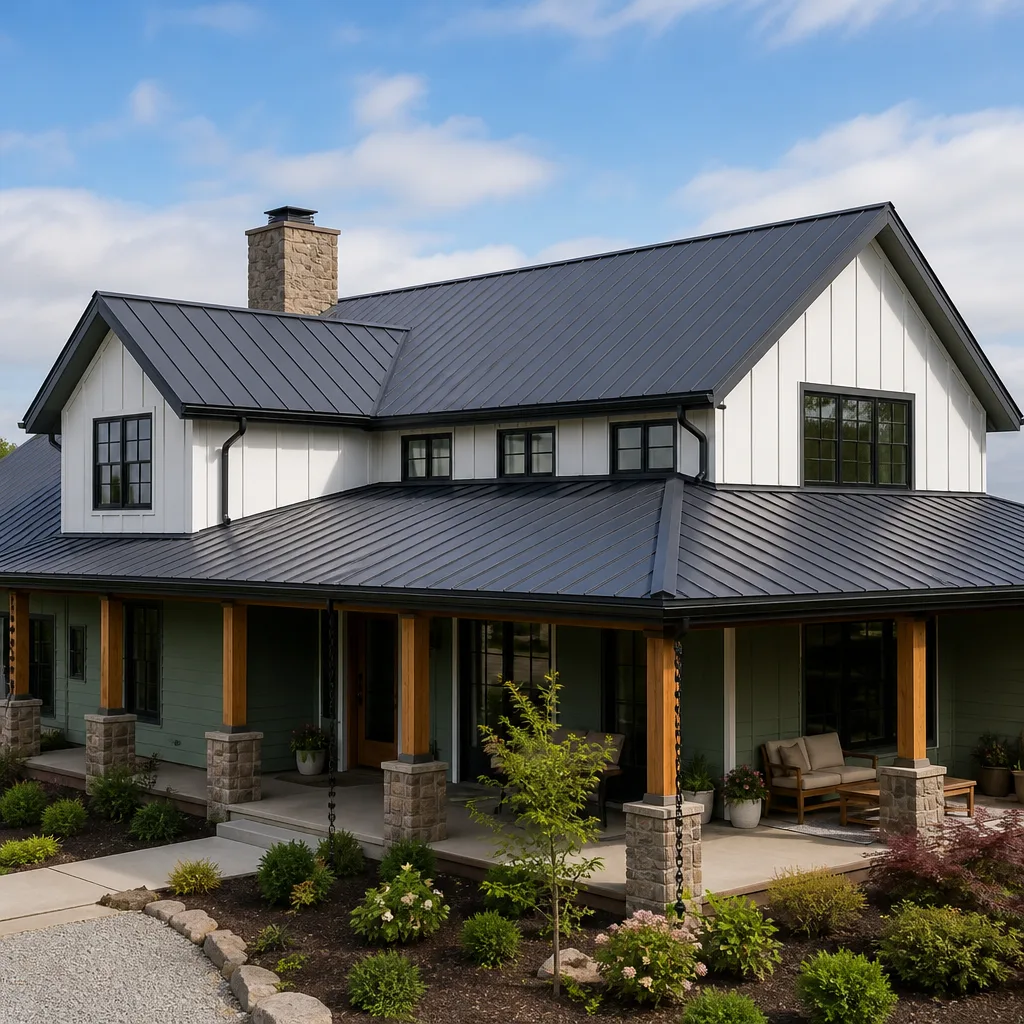 Metal roofing
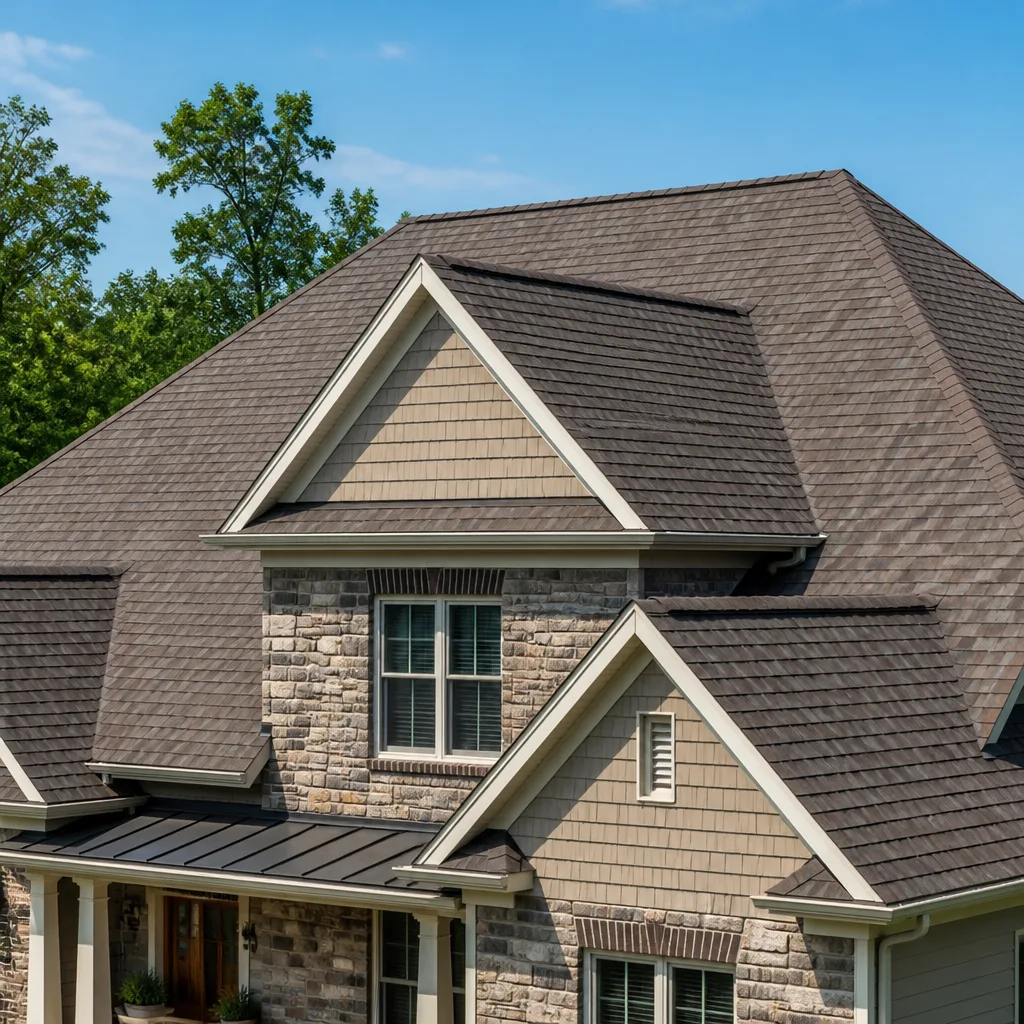 Architectural shingles
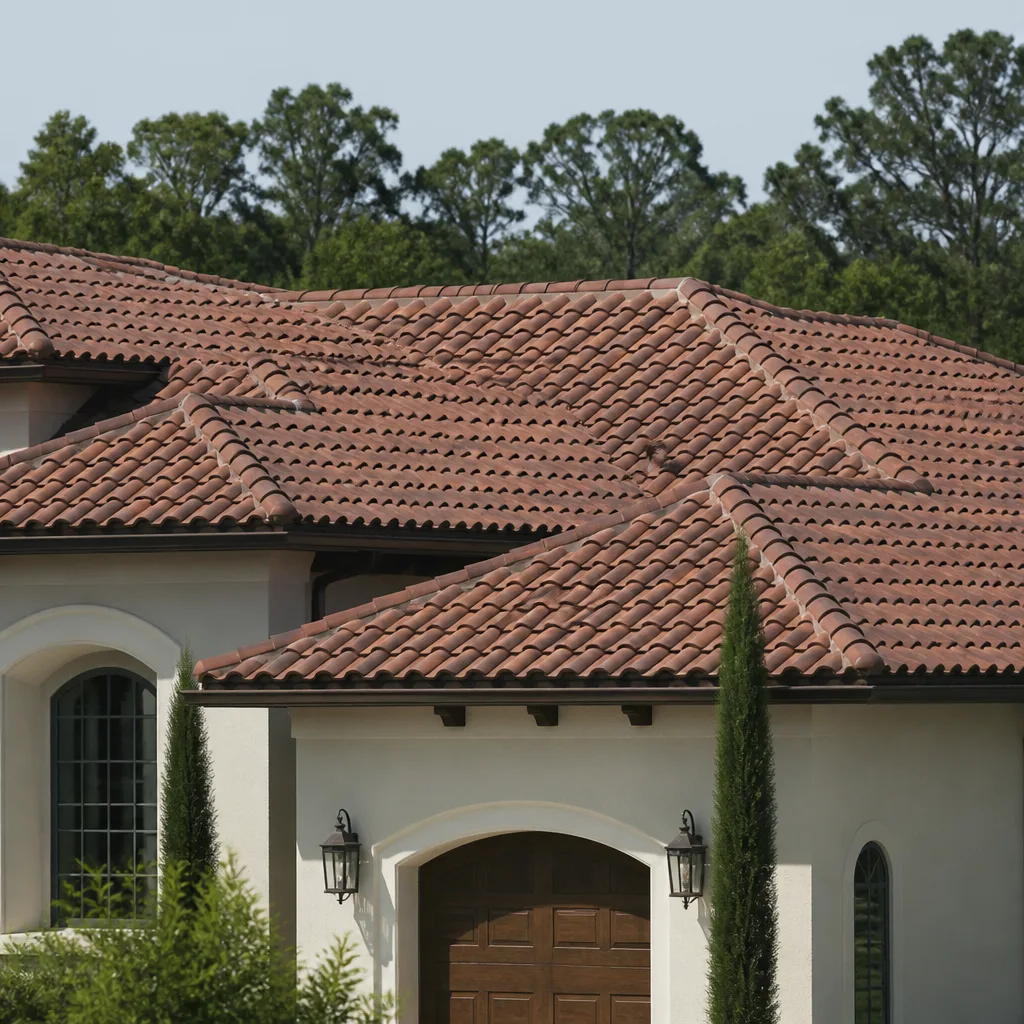 Tile roofing
 GAF
GAF Owens Corning
 Flat & low-slope
Free roof inspection with deck photos before we talk money - GAF and Owens Corning certified installation
Roofing Permits, Codes & Inspections in CA: What You Need to Know
Here’s the statistic most homeowners never hear until it’s too late: insurance adjusters routinely deny or reduce roof damage claims when the original roof was installed without a permit. They pull the permit history. They look for the final inspection sign-off. If it isn’t there, the roof becomes unpermitted work, and unpermitted work is an exclusion in almost every standard California homeowners policy. That’s the real cost of skipping the permit office, and it’s a cost measured in five figures. This guide covers what the State of California requires, how Santa Clarita splits between city and LA County rules, what Title 24 adds to the bill, and what an inspector actually looks for before signing off. For more on protecting your roof year-round, see our Seasonal Roofing Care for Santa Clarita: Year-Round Homeowner’s Guide.
Styles & brands we work with
Quick Answer
Yes, you need a permit to replace, repair, or install a roof in California and specifically in Santa Clarita. The process depends on whether your home falls under City of Santa Clarita jurisdiction or unincorporated LA County. You’ll pay roughly $250 to $600 in permit fees, your roofer must pull the permit (or you can as the owner), and the job isn’t legally complete until a final inspection passes. If you skip it, you risk insurance claim denial, resale complications, and a code enforcement notice.
Table of Contents
- Who Requires a Roofing Permit in California
- Santa Clarita City vs. LA County: Two Different Jurisdictions
- Title 24 Energy Compliance: When a Roof Replacement Triggers Insulation Work
- WUI Fire Codes in Santa Clarita: Class A Roofing and What Fails Inspection
- What a Final Inspection Actually Checks
- The Homeowner’s Right to Pull Their Own Permit (and When That’s a Bad Idea)
- What Roofing Permits Cost in Santa Clarita
- Common Mistakes to Avoid
- When to Call a Professional
- Frequently Asked Questions
- The Bottom Line
Who Requires a Roofing Permit in California
Every city and county in California requires a building permit for roof replacement and most repairs beyond minor surface work. The California Building Standards Code (Title 24, Part 2) is the statewide baseline, but each local jurisdiction adds its own amendments, fee schedules, and enforcement quirks. In Santa Clarita, that means city residents go through the City’s Building and Safety Division, while residents in unincorporated areas like Castaic, Val Verde, and Stevenson Ranch fall under LA County’s jurisdiction. Same state code, different application process, different inspectors, different timelines.
Here’s the plain-English version of where the legal trigger sits. Any time you remove or replace more than 10% of the roof covering in a single repair, the state treats it as a re-roof job, not a repair. That threshold comes from the California Building Code and it’s the most commonly misunderstood line in roofing. Patch two or three torn shingles after a Santa Ana wind event? You’re fine without a permit. Replace an entire slope because the underlayment is showing? That’s a re-roof. Pull a permit.
The following all require a permit in California:
- Full roof replacement, regardless of material
- Partial replacement covering more than 10% of the roof area
- Installing a new roof on a new structure or addition
- Converting from one material to another (e.g., asphalt shingles to tile)
- Structural repairs to decking, rafters, or trusses
- Any work that involves removing and reinstalling more than the top covering layer
One more thing: if you’re in a designated historical district in Santa Clarita, an additional design review may apply. The same goes for homes in an HOA with architectural guidelines – the HOA is separate from the city’s permit process, and both approvals are needed before materials hit the driveway. We tell every homeowner we work with at Crestview Roofing Co Santa Clarita home to check their HOA rules in writing before we file the permit application. An HOA objection can stall a job as fast as a city denial.
Santa Clarita City vs. LA County: Two Different Jurisdictions
Santa Clarita is not one permitting jurisdiction. It’s two, and which one you belong to changes the phone number you call, the forms you file, the inspector you meet, and how many weeks the approval takes. This is the single most confusing part of roofing in this valley, and most homeowners learn it only after their roofer files an application with the wrong office. For a deeper look at local requirements, read The Complete Guide to Roofing in Santa Clarita.
Here’s the breakdown:
- City of Santa Clarita: Covers the incorporated city limits – Valencia, Newhall, Saugus, Canyon Country, and most of the core SCV residential zones.
- Unincorporated LA County: Covers Castaic, Val Verde, Stevenson Ranch, Agua Dulce, and parts of Canyon Country outside the city boundary.
Both jurisdictions use the same California Building Code as their backbone, but the local amendments differ. LA County has its own environmental review layer for certain hillside and flood-zone properties. The City of Santa Clarita has stricter WUI (Wildland-Urban Interface) checklists because much of the incorporated city sits inside designated fire hazard zones.
Timelines also differ. In our experience, a straightforward roof replacement permit in the City of Santa Clarita typically clears in 5 to 10 business days when the paperwork is clean. LA County applications for the same job often take 2 to 4 weeks because the county routes through a larger, higher-volume plan check queue. If your home is in a county fire hazard zone, add another 1 to 2 weeks for the fire district clearance.
Here’s a practical step-by-step for either jurisdiction:
- Confirm your jurisdiction. Look up your parcel number on the LA County Assessor site, or check your property tax bill. It says “Unincorporated” if you’re county, or it lists Santa Clarita if you’re city. When in doubt, your roofer should verify before filing. A misfiled application means a reset on day one.
- Pull the required documents. That means the application form, a roof plan or sketch (most reroofs only need a simple drawing), and the manufacturer’s installation specs for whatever material you’re putting on.
- If you’re on a hillside, on the edge of a canyon, or anywhere west of Bouquet Canyon, prepare for a WUI check. More on that below.
- File the application and pay the fee. Either jurisdiction will assign a case number you’ll use for all follow-up.
- Schedule the inspection after the work is done. Both jurisdictions require a final inspection before the permit is closed.
The bottom line: “Santa Clarita” is not one process. It’s two, and the wrong assumption adds a week or more to a job. That’s exactly why our Roof Replacement in Santa Clarita process starts with a jurisdiction check before any written price is delivered.
Title 24 Energy Compliance: When a Roof Replacement Triggers Insulation Work
California’s Title 24 energy standards aren’t technically part of the building permit for a reroof, but they interact with it. Here’s the rule: if you’re reroofing and you replace more than 50% of the roof surface, and your attic has less than R-22 insulation (that’s the measure of insulation thickness and effectiveness), you are required to bring the attic insulation up to at least R-30 in climate zones 10 and 16, which cover Santa Clarita. That’s not a roofer’s recommendation. That’s a legal trigger.
This is the hidden cost of a roof replacement in Santa Clarita. Most homes built before 2010 have attic insulation in the R-11 to R-19 range. When a roofer pulls the permit for a full replacement, the inspector will check the attic insulation level. If it’s below R-30, you’ll be required to add insulation. That adds roughly $1,200 to $2,500 to the total job cost, depending on attic size and accessibility. It’s not optional.
Table of typical Title 24-related costs on a Santa Clarita roof replacement:
- Attic insulation upgrade to R-30: $1,200 to $2,500, depending on square footage
- Radiant barrier (if required by a local amendment): $800 to $1,500 for an average 2,000-square-foot attic
- Title 24 documentation and verification: $200 to $400, usually included in the roofer’s permit service fee
- Total typical add-on for energy compliance: $2,000 to $4,000 on top of the roof work itself
The important part: this is predictable, not a surprise. A roofer who knows the Santa Clarita market will check the attic during the estimate visit and put the insulation cost in the written price before the job starts. A roofer who doesn’t mention it either doesn’t know the code or plans to hit you with a change order after the inspector flags it. At Crestview, this is one of the first boxes we check. The written price always includes any required insulation upgrade, because change orders are for companies that didn’t do their homework.
WUI Fire Codes in Santa Clarita: Class A Roofing and What Fails Inspection
A large share of Santa Clarita sits inside designated Wildland-Urban Interface zones, or WUI (pronounced woo-ee). This matters for roofing because WUI building codes prescribe fire-rated roof assemblies. The rule in a WUI zone: your roof covering must carry a Class A fire rating under the test standards in California Building Code Chapter 7A. That means the material is tested against exposure to flaming brands and resists spreading fire.
Which materials qualify as Class A? Most asphalt composition shingles rated per ASTM E108 or UL 790 pass. That includes the product lines we install most often from GAF and CertainTeed. Concrete and clay tile pass. Standing-seam metal passes. Untreated wood shake and shingle do not pass. In fact, wood shake is largely illegal as a new covering in WUI zones in California. Some Santa Clarita homeowners in older Canyon Country and Saugus neighborhoods still have original wood shake roofs, and those are grandfathered until replacement. When the replacement comes, the new roof must be Class A.
What actually fails a WUI roof inspection:
- Gaps in the roof decking that allow embers to enter the attic. Even a quarter-inch gap fails.
- Leaf litter and pine needles accumulated in valleys and at the roof-to-wall intersections. That debris is fuel, and inspectors in Santa Clarita’s fire hazard zones will flag it.
- Missing or damaged fire-rated underlayment. WUI zones require specific underlayment products, not economy felt.
- Vents that aren’t ember-resistant. The classic open attic vent with 1/4-inch mesh fails. WUI code requires ember-resistant vent covers with 1/16-inch mesh or narrower.
- Non-Class-A ridge caps or flashings that break the continuous fire-rated surface.
The practical takeaway: if your home sits north of Copper Hill Drive, anywhere along the foothills of Castaic, or on the edges of the canyon areas, your roofer should be quoting a WUI-compliant system from the first conversation. It costs more. Expect $2 to $5 per square foot more than a non-WUI assembly, depending on materials. The alternative is ordering standard materials and failing the inspection, which means tearing off the underlayment and starting that portion over. That’s a $5,000 to $8,000 mistake, and it happens more often than it should.
What a Final Inspection Actually Checks
The final inspection is not a walk-through. It’s a checklist, and the inspector will fail the job if even one item is off. Here’s what they’ll check on a Santa Clarita re-roof.
- Fastener count and placement. Inspectors verify that the roof uses the nail pattern specified by the manufacturer for the stated wind zone. Santa Clarita sits in a 90-mph wind zone, and the pattern is 6 nails per shingle on most architectural shingles. If a roofer uses 4 nails to save time, the inspector will catch it.
- Underlayment installation. The inspector will look at laps, overlaps, and whether the underlayment is the correct type for the local fire zone. In WUI areas, they check the product label against the approved list.
- Flashing details. Flashing – the metal strips that seal joints around chimneys, vents, skylights, and walls – is the number one source of roof leaks. The inspector will check each transition. They look for proper step flashing on sidewalls and counter-flashing on chimneys.
- Ventilation ratios. California requires one square foot of net free attic ventilation for every 150 square feet of attic floor area. The inspector checks the intake and exhaust vents. If the roofer skipped ridge vents or cut the intake size, the job fails.
- Title 24 compliance. The inspector verifies the insulation in the attic if the project triggered an energy upgrade. This is not visual guesswork. They measure the insulation depth.
- Roof-to-wall drip edges and edge metal. The inspector looks for proper drip edge at eaves and rakes. Bare decking at the edge fails.
- Drainage and roof slope clearance. California requires a minimum slope for each material type. Flat or nearly flat sections need specific low-slope systems, not standard shingles. The inspector will check the slope math.
Passing the final inspection is the moment the roof becomes a legal, insurable, resellable asset. The permit is the application. The final inspection sign-off is the proof. Insurance companies verify the final inspection, not just the permit number. Real estate disclosures in a sale require you to state whether any work was permitted. If you can’t produce the final inspection report, you’re disclosing unpermitted work, which reduces the sale price or scares buyers entirely. If a roofer offers to do the work without a permit or without scheduling the final inspection, walk away.
This is the standard we build every job around at our Roof Installation in Santa Clarita practice: permits pulled, inspections scheduled, documentation handed to the homeowner in a digital package when the job closes.
The Homeowner’s Right to Pull Their Own Permit (and When That’s a Bad Idea)
California law allows a property owner to pull their own building permit for work on their own residence. It’s legal, and in some simple projects, it makes sense. For a roof, it’s usually a bad idea, and here’s the honest reason why.
When you pull the permit yourself, you become the contractor of record. That means you assume legal liability for the work. If the roof leaks three years later and the installer is already out of business, the insurance claim walks back to the permit holder – you. If the inspector finds a code violation, the correction notice is issued to you, not to the roofer. If the roofer walks off the job mid-project, the city’s enforcement path is against you, the property owner, even though you didn’t hold the nail gun.
You know that 10-year workmanship warranty most roofing companies advertise? It evaporates when the roofer isn’t the permit holder. The manufacturer’s warranty on the shingles also requires installation by a licensed contractor and a permit record. No permit = no manufacturer’s warranty, even if you bought the shingles at full retail.
When pulling your own permit does make sense: if you’re doing a small patch on a flat roof or shed under the 10% threshold, you probably don’t need a permit at all. For anything larger – a re-roof, a replacement, a conversion – have the roofer pull the permit. The name on the permit is the name on the legal liability. It belongs to the company doing the work.
The other reason to let the roofer pull the permit: it forces them to be licensed and insured. The City of Santa Clarita and LA County both verify the contractor’s license before issuing a permit. It’s a free legitimacy check. If you pull the permit as an owner, the city verifies nothing about the installer. That’s how unlicensed guys get onto roofs.
What Roofing Permits Cost in Santa Clarita
Roofing permit fees in Santa Clarita run higher than the California average because the jurisdiction charges a base permit fee plus a plan check fee and, in some cases, a fire district review fee. Here’s a realistic breakdown:
- Base building permit for a re-roof (City of Santa Clarita): $180 to $350, depending on project valuation
- Plan check fee: $80 to $150
- LA County base permit for re-roof (unincorporated areas): $200 to $450
- WUI/fire district review: $75 to $200, when applicable
- Total typical permit cost in Santa Clarita: $250 to $600
If the project includes structural work – replacing decking, repairing rafters, or changing the roof structure – the permit cost rises because the plan check is more involved. Add $150 to $400. If the home is in a designated historic overlay zone, expect the city’s historic preservation review fee on top of that.
These numbers are the fee exactly as charged. They’re not marked up. A roofer who charges a “permit service fee” on top of the base fee is adding their time for the paperwork. That’s legitimate if it’s disclosed. Ask for it in writing before you sign. At Crestview, the written price includes the permit fee and our time to file it – one number, no line-item games. If the number on the page is the number on the invoice, there’s nothing to question.
Common Mistakes to Avoid
- Skipping the permit on a “small” re-roof. Small is defined by the 10% rule, not by the roofer’s workload. Replacing one slope of a 2,000-square-foot roof is usually more than 10%. If you skip the permit, the insurance claim on a later fire or storm is at risk. This is the most expensive mistake in this guide.
- Filing with the wrong jurisdiction. Santa Clarita city and unincorporated LA County are different offices, different timetables, different inspectors. A homeowner in Stevenson Ranch who files with the city waits two weeks just to find out the application was rejected. Verify before you file.
- Ignoring the Title 24 attic insulation trigger. Most pre-2010 homes in Santa Clarita have below-code insulation. The inspector will check. If the roof is already stripped and the attic is below R-30, you’re paying for insulation on the spot or failing the inspection. Budget for it before the job starts.
- Skipping the ember-resistant vents in a WUI zone. Standard vents fail inspection in most of the SCV’s foothill and canyon neighborhoods. The re-inspection fee and the second trip to correct it cost more than doing it right the first time.
- Choosing wood shake “because it matches the house.” Wood shake is not a legal new roof in most WUI zones. If your home is in one of the older Canyon Country or Saugus neighborhoods, the replacement must be Class A. Putting down shake without checking means a stop-work order and a full tear-off.
- Not getting the final inspection sign-off. The permit number is not enough. The final inspection report is what insurance adjusters and real estate buyers check. A roof with a permit but no final sign-off is still legally incomplete work.
- Allowing a roofer to pull an “as-built” permit after the fact. An as-built is a correction permit filed after work was done without one. It’s not an easy path. The city often requires opening up walls or decking to verify the work, and the corrections cost more than the original permit would have. Avoid the situation entirely.
When to Call a Professional
You should call a licensed roofer for anything beyond a single patch or a few shingles. The reason isn’t just workmanship – it’s liability. The roofer’s name goes on the permit, their license is verified by the city, and their insurance covers the crew on your roof. If you pull the permit as the homeowner and bring in a handyman, you’re the one liable if someone falls off the roof. That’s a workers’ comp claim against your insurance, and it’s not pretty.
Call a professional, specifically, when: your roof is more than 15 years old and you’re unsure of its condition, you see daylight through the attic decking, your ceiling shows water stains after rain, your shingles are curling or losing granules, or you’re buying a home and the inspection report flags the roof. In Santa Clarita, our climate punishes roofs fast: UV exposure from 300 days of sun per year, Santa Ana winds that lift edges, and the occasional heavy winter storm that finds every weak seam. Learn what damage to watch for in our Roofing Warning Signs: A Santa Clarita Homeowner’s Reference Guide.
If you’re in Santa Clarita and want a straight answer about what a permit will cost, what your roof needs, and what it all adds up to, Roof Repair in Santa Clarita or replacement estimates start with a phone call. Crestview Roofing Co Santa Clarita offers free estimates – call (661) 219-7793. You’ll get a written price before any work starts, so the permit question isn’t a mystery. It’s a line item.
Frequently Asked Questions
If the repair covers less than 10% of the total roof area and doesn’t expose the underlayment, you don’t need a permit. Anything over 10% is legally a re-roof in California and requires a permit from either the City of Santa Clarita or LA County, depending on your jurisdiction. Call (661) 219-7793 if you’re unsure – we’ll tell you which situation you’re in, free of charge.
City of Santa Clarita roof permits typically clear in 5 to 10 business days. LA County permits for unincorporated areas around Castaic, Val Verde, and Stevenson Ranch take 2 to 4 weeks, longer if the property is inside a designated fire hazard zone. Plan accordingly, because material delivery shouldn’t happen until the permit is in hand.
Expect $250 to $600 total for a standard re-roof permit, including the plan check fee. Structural work or historic overlay reviews push the total higher. The permit fee is a fixed cost you should see itemized in your written estimate. If it’s not listed, ask why.
Yes. When you file a claim for roof damage, the adjuster pulls permit history as part of the claim file. If the roof was installed without a permit or without a final inspection sign-off, the claim can be denied or reduced. This applies to fire claims and to storm damage claims, including Santa Ana wind events.
California law requires you to disclose unpermitted work on the seller’s transfer disclosure statement. Buyers routinely walk away from unpermitted roofs or demand a credit at escrow. You can see a $10,000 to $20,000 hit on the sale. It’s cheaper to replace the roof with a permit before listing than to negotiate it during escrow.
Yes. The inspector needs exterior access and, for Title 24 checks, sometimes attic access. If you’re not home, make sure the inspector can access the attic through an unlocked side door or a key you leave with the roofer. Most roofers in Santa Clarita handle the inspection scheduling as part of the job. Confirm it in writing before work starts.
The Bottom Line
Roofing permits in California are not optional paperwork. They’re the legal record that a roof exists the way it’s supposed to: to code, fire-rated, energy-compliant, and verified by an inspector. In Santa Clarita, the key is knowing your jurisdiction, budgeting for Title 24 insulation if your attic is under-insulated, and ensuring your roofer never cuts the Class A fire rating in a WUI zone. The permit is also your insurance policy and your resale asset. Get the permit, pass the final inspection, keep the records. And if the roofer in your driveway says the permit isn’t necessary, call someone else. For more guides & resources on roofing in Santa Clarita, visit our blog.
Written by Dylan Pace, Owner at Crestview Roofing Co Santa Clarita, serving Santa Clarita since 2000.
See the difference
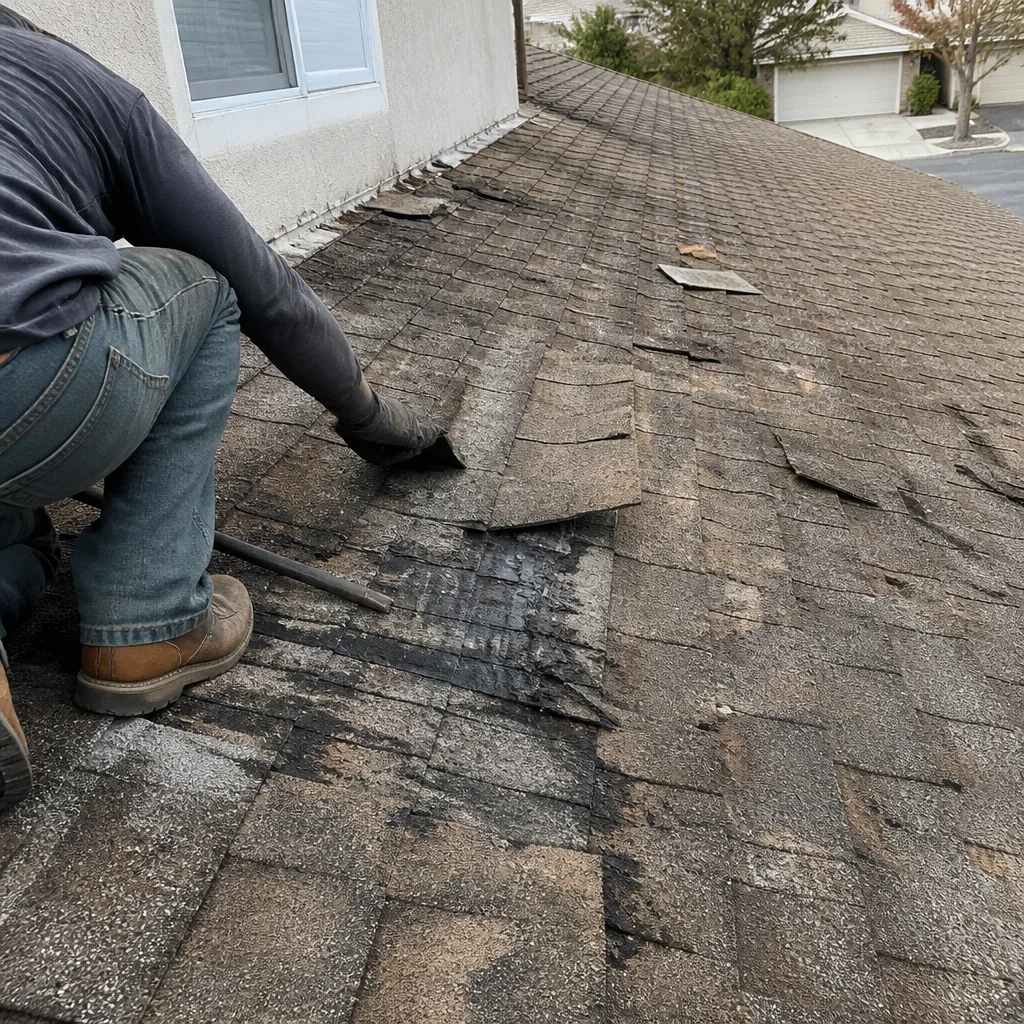 Before
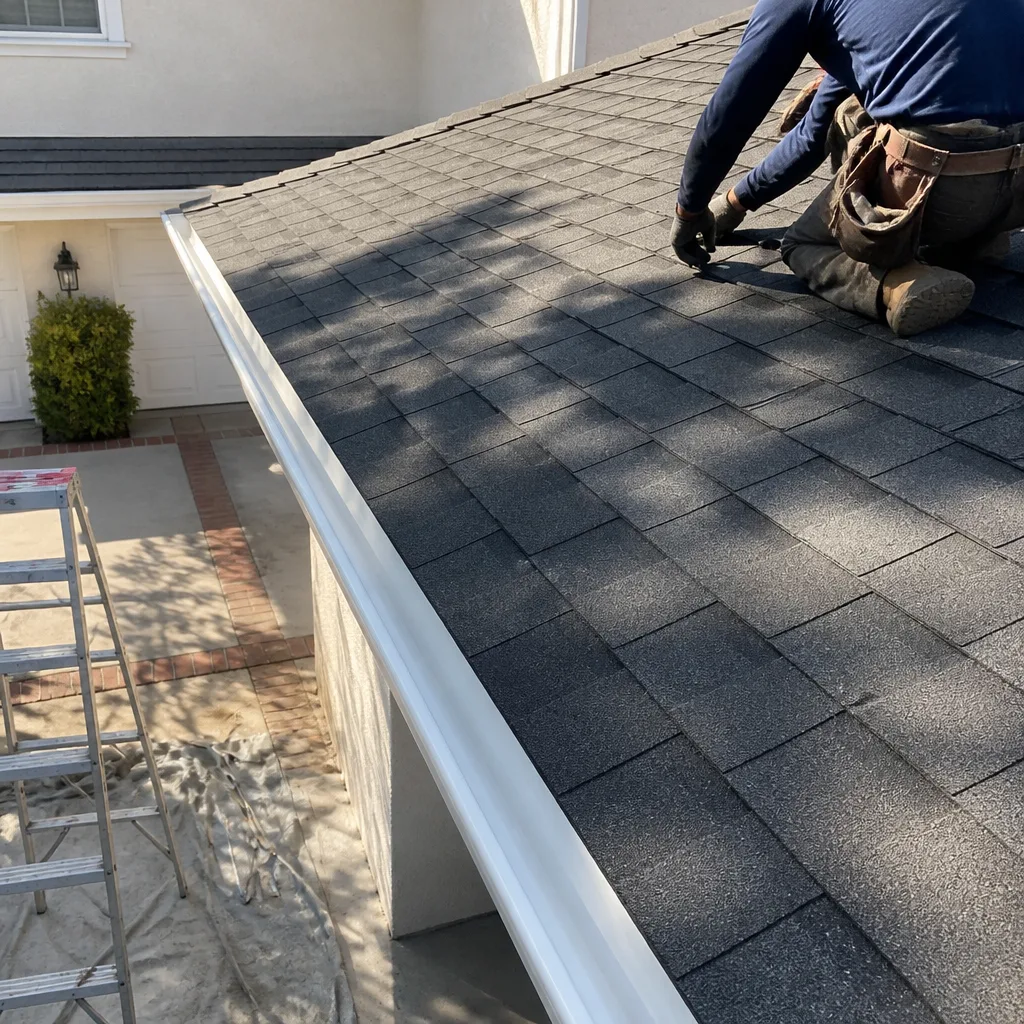 After
After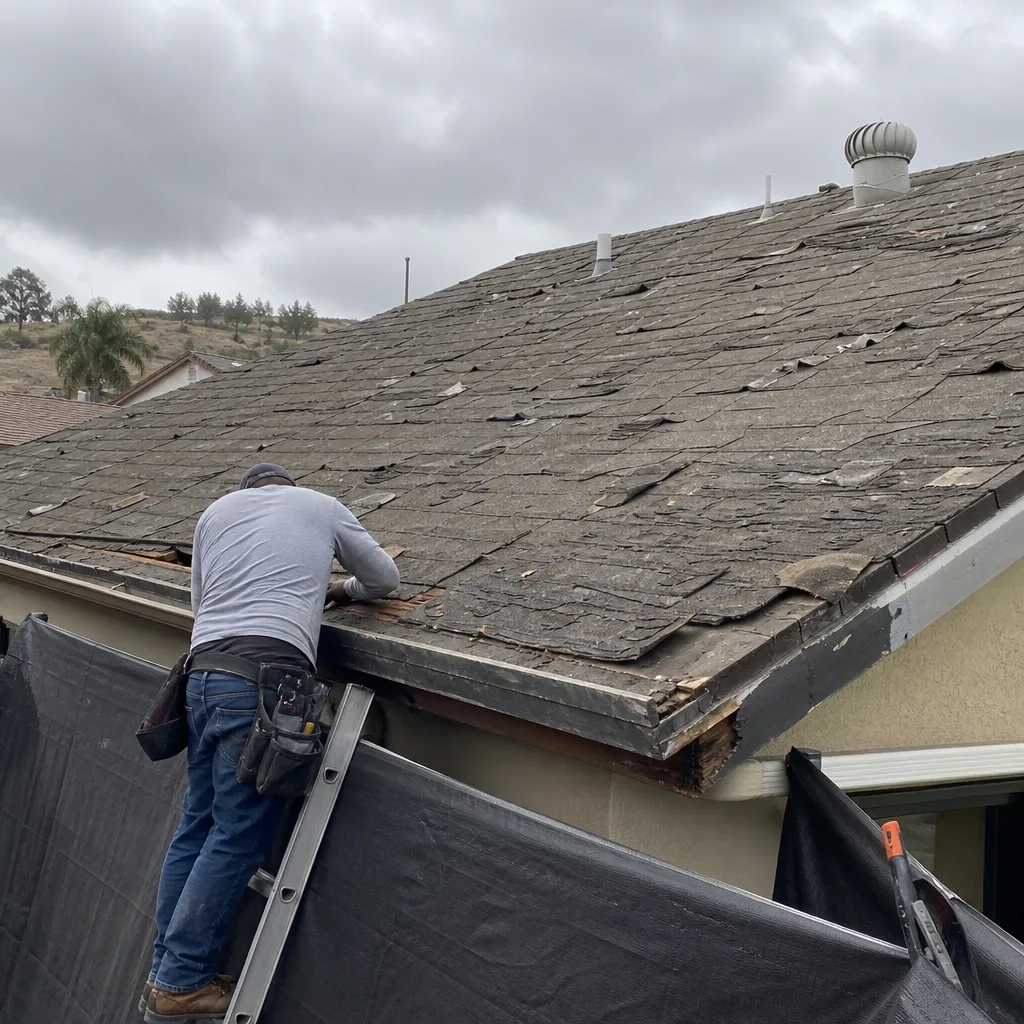 Before
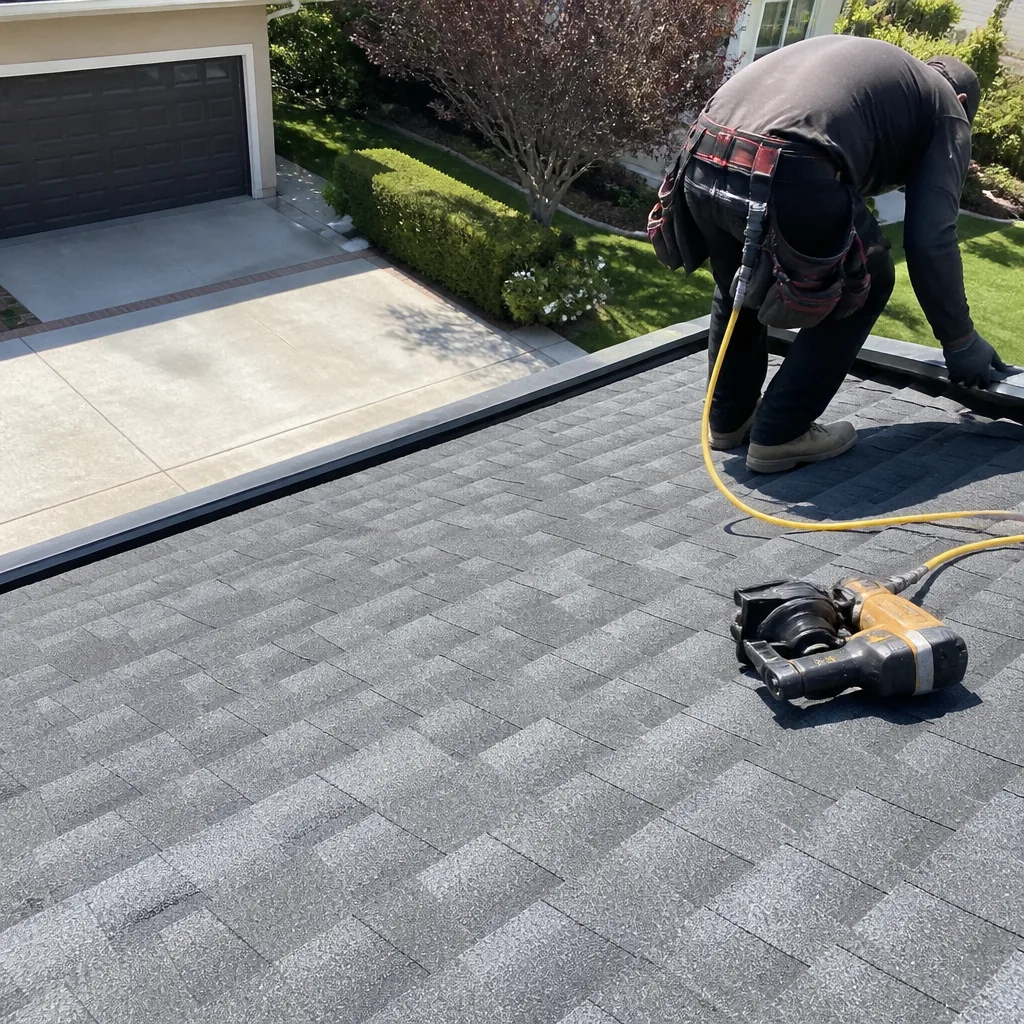 After
After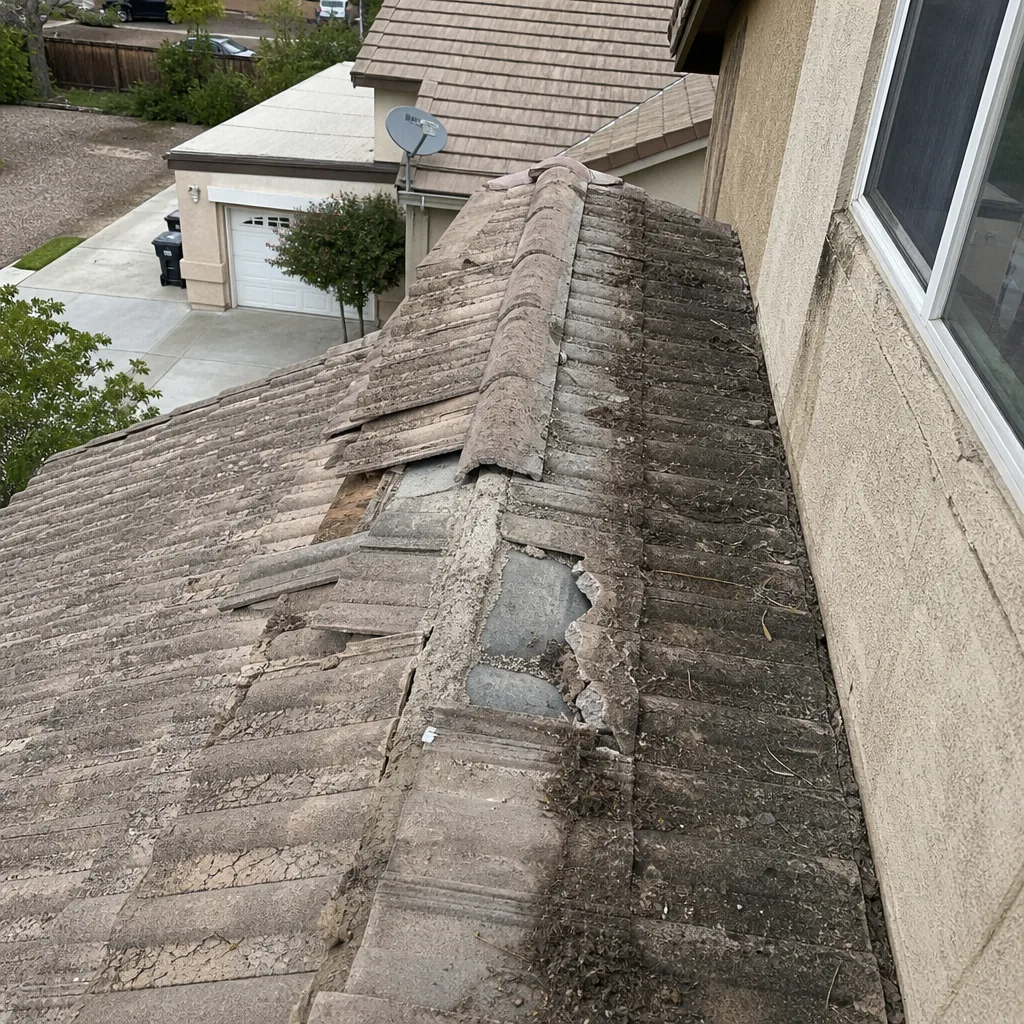 Before
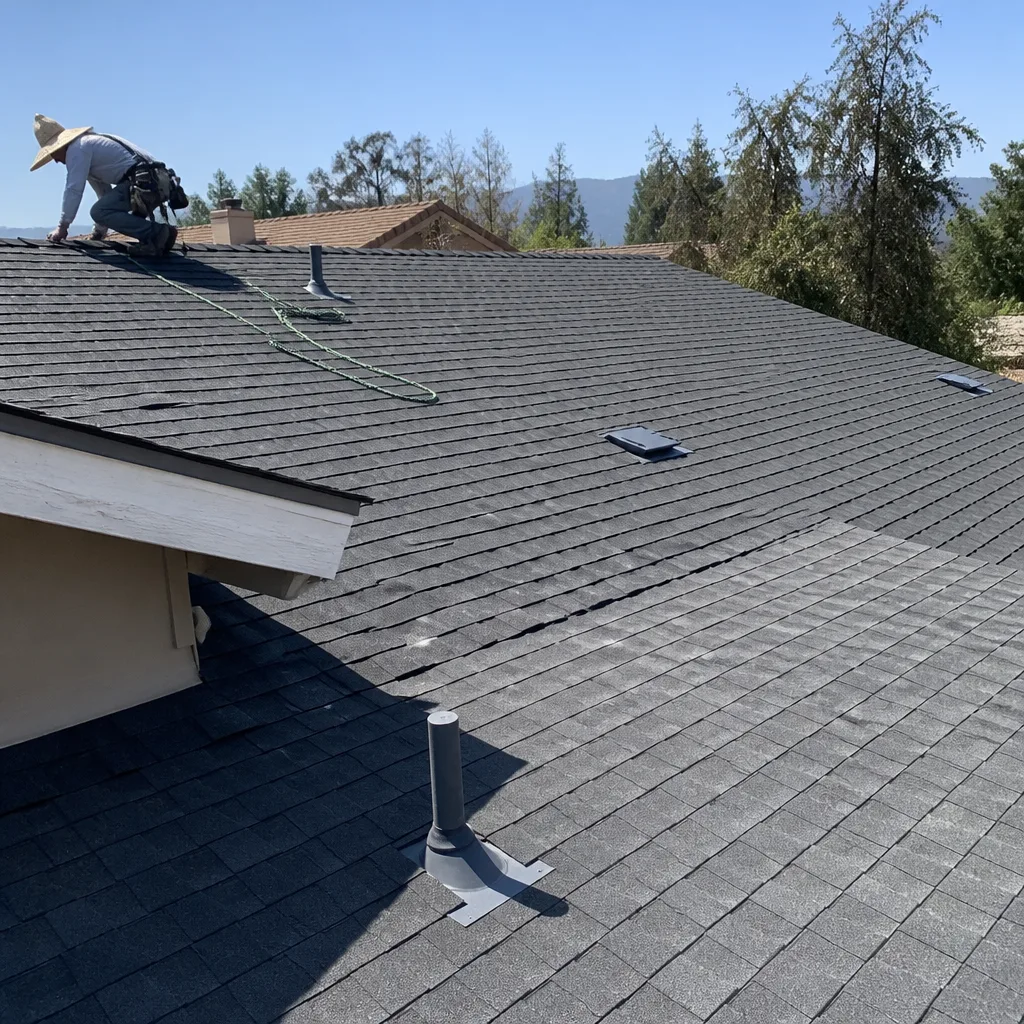 After
After